A buyer-focused guide to separating advertised parking amenities from residence-specific rights at Continuum and Faena House, with practical questions on valet key custody, authorized drivers, and arrival logistics.
For a Miami Beach buyer, the arrival experience is part of the residence. A smooth departure, a discreet pickup, and luggage transferred without confusion can matter as much as the garage itself. Behind that experience are three distinct questions: what parking rights accompany the purchase, who controls the vehicle keys, and where an authorized driver may wait.
At Continuum on South Beach and Faena House Miami Beach, advertised valet services establish an amenity-not the complete operating arrangement for a particular household. The decisive information belongs in the residence documents and current written management rules. Evaluate parking entitlement separately from service convenience.
Approach parking as both a transaction issue and a daily-use issue. The first concerns what transfers at closing. The second concerns how the household arrives, retrieves cars, and authorizes others to act on its behalf.
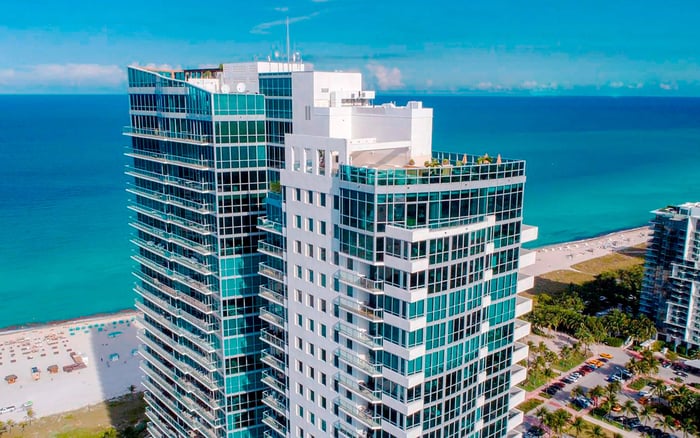
Continuum North Tower is at 50 South Pointe Drive in South Beach’s South of Fifth area. Advertised amenities include 24-hour valet service, private garage parking spaces available per residence, and covered, secure parking for residents and guests. Those descriptions do not establish a particular apartment’s legal entitlement or unrestricted guest privileges.
The North Tower’s described features include assigned parking and garage capacity for two cars per unit. Capacity is not equivalent to deeded ownership of two spaces. Ask whether the residence carries specific assignments, another form of parking right, or an arrangement subject to condominium rules. Have the purchase documents resolve that distinction; amenity language is no substitute.
A concrete South Tower example is 100 South Pointe Drive, Unit 3702, described with a two-car garage, assigned parking, guest parking, and valet parking. That combination is specific to this residence. It should not be extended to every Continuum apartment or treated as confirmation of the parking rights conveyed at closing.
For buyers also considering Apogee South Beach, the useful comparison is documentary: apply the same residence-by-residence questions without assuming that one property’s arrangements carry over to another.
Faena House is at 3315 Collins Avenue in Mid-Beach. Its advertised services include a 24-hour doorman, valet, and five-star concierge, alongside separately identified 24-hour security surveillance. Secure private underground parking with valet service is also advertised.
These amenities do not establish the number of spaces attached to a residence or whether the parking right is deeded, assigned, or otherwise granted. Obtain the unit-specific parking schedule and have it reconciled with the declaration, purchase contract, and title commitment.
Keep residential operations separate from hotel expectations. Faena hotel valet timing or arrival practices should not be applied to Faena House residences without confirmation from residential management. If Setai Residences Miami Beach is also on the shortlist, use the same distinction between service branding and residence-specific permissions. This is a due-diligence approach, not a claim that the properties share operating rules.
Before closing, request the declaration, purchase contract, title commitment, and parking schedule for the exact residence. Ask counsel to identify the entitlement type, space count, and any transfer restrictions. Management should separately confirm vehicle-registration limits and the process for recognizing the buyer’s vehicles after ownership changes.
The practical questions are straightforward. Are particular spaces identified? Can the household register every vehicle it intends to keep? What permissions apply to guest vehicles? If an additional parking arrangement is offered, what document establishes it, and does it transfer with the residence?
Distinguishing legal rights from operating permissions avoids an attractive but unreliable conclusion: that a generous garage description automatically accommodates every household vehicle. Written confirmation should address the buyer’s intended use, not merely repeat that parking is available.
Continuum’s described features include an electronic key system for privacy and security, but its scope is not specified: garage, elevator, or residence access. That description does not establish how physical vehicle keys are handled.
North Tower features also include a smart-building interface for valet, amenities, and concierge services, plus paperless text-to-retrieve valet service. These support electronic service requests; they do not establish who retains a car key, how it is stored, or who may collect it.
For either building, ask management whether valet retains the physical key, how keys are secured and tracked, and whether an owner or authorized driver may retain the key. Confirm whether self-parking is permitted rather than assuming private parking includes that option. Request the procedure for resolving a missing key or disputed handoff. None of these arrangements should be inferred from 24-hour staffing or security surveillance alone.
Continuum’s gatehouse controls vehicular access to the arrival court. For a household using a driver, entry authorization is therefore distinct from permission to retrieve a resident’s vehicle.
Obtain written procedures for registering a regular driver, authorizing a temporary replacement, and approving retrieval when the owner is absent. Ask which credentials are required, how after-hours arrivals are handled, and who can update the authorization record. An electronic retrieval request is not proof that any arriving driver may take possession of the car.
Apply the same questions to the Faena House review without assuming identical procedures. Include access revocation when household staff changes. Written instructions should make clear who may enter, who may request the vehicle, and who may receive it.
Driver staging is not simply parking. Ask where a driver may wait, when the arrival call should be placed, how long loading is permitted, and who handles luggage. Confirm alternate arrangements when the designated arrival area is congested.
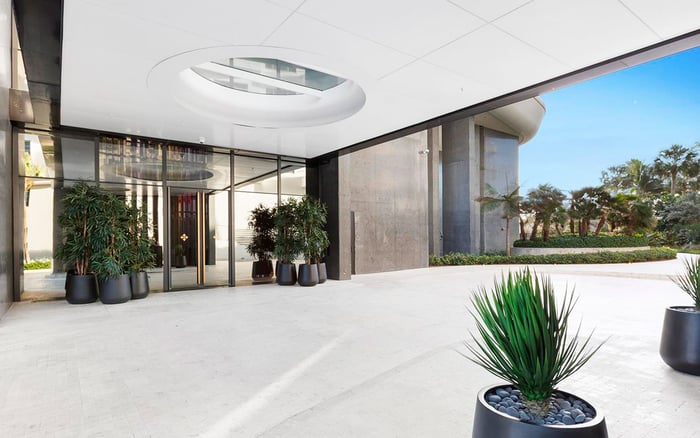
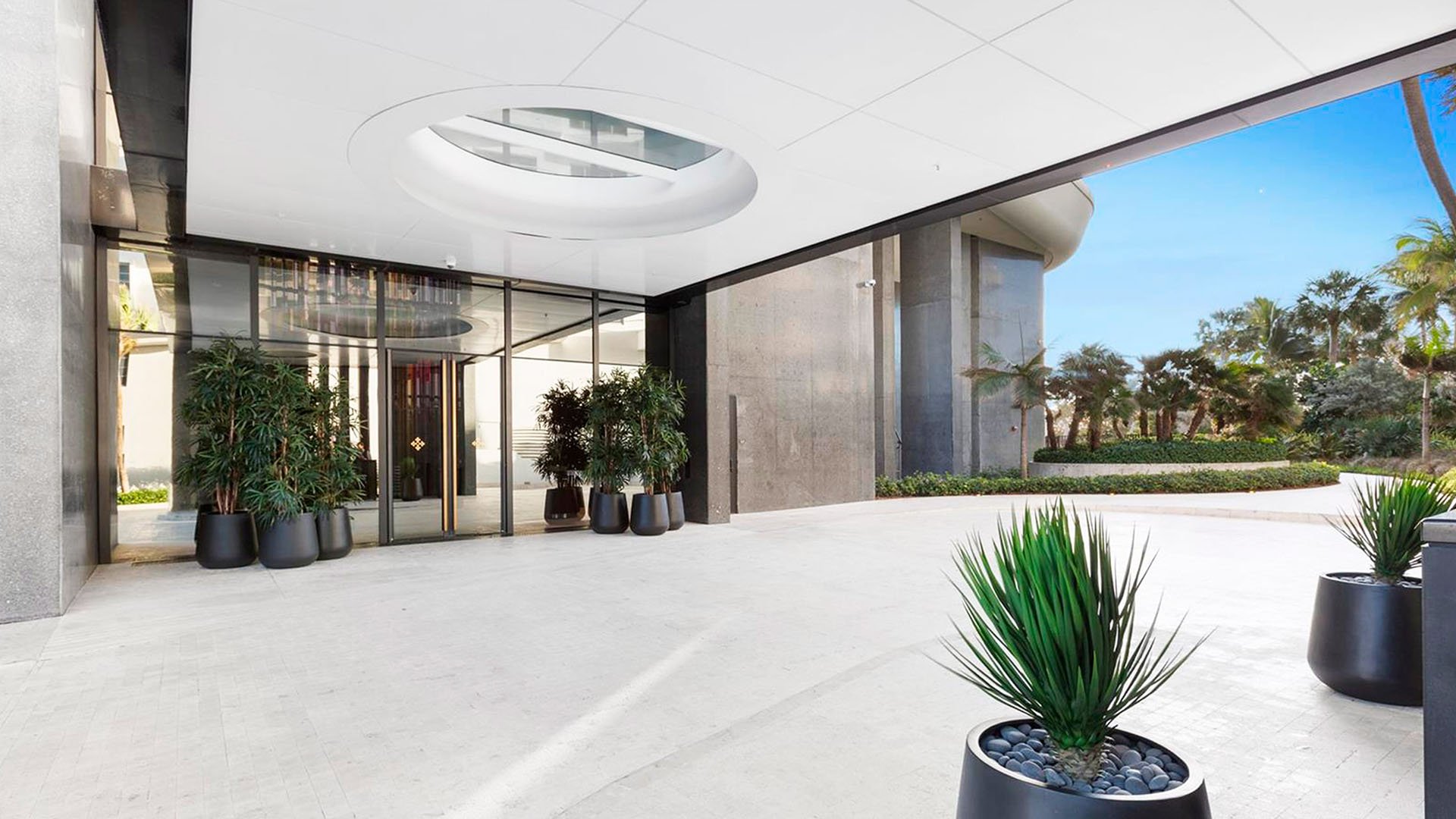
Do not treat curbside or porte-cochère waiting as an established right. The amenity descriptions do not define detailed staging rules for either property. For a household with frequent airport transfers, arrange a management walkthrough of the intended sequence: driver arrival, authorization, vehicle retrieval, passenger loading, and departure.
The strongest purchase decision combines documented parking rights with a workable arrival routine. Before closing, resolve both with the people responsible for the residence’s legal documents and daily operations.
Explore Miami Beach residences with MILLION to keep residence-specific due diligence at the center of your search.
If branded residences are on your mind — as a home or as an allocation — we would be glad to share what we are seeing, privately.
Begin a quiet conversationContinuum advertises 24-hour valet service. Buyers should separately confirm retrieval procedures, guest permissions, and residence-specific parking rights.
The North Tower description identifies assigned parking and capacity for two cars per unit. That does not establish deeded ownership of two spaces for a particular residence.
The listing for 100 South Pointe Drive, Unit 3702 describes a two-car garage, assigned parking, guest parking, and valet parking. Those are listing-specific descriptions, not a building-wide guarantee.
Faena House advertises secure private underground parking with valet service. The description does not establish a residence's space count or entitlement type.
Request the unit's declaration, purchase contract, title commitment, and parking schedule. Have counsel reconcile entitlement type, space count, and transfer restrictions.
No. The description does not specify the system's access functions or establish how physical vehicle keys are retained, secured, or transferred.
That permission is not established for either building by the amenity descriptions. Ask residential management for the current written key-custody and self-parking rules.
Confirm entry authorization, vehicle-retrieval permission, credential requirements, and after-hours procedures. Obtain the process for revoking access when household staff changes.
Neither waiting location should be assumed to be an established right. Confirm the permitted staging location, loading duration, and congestion alternatives with management.
Not without confirmation from Faena House residential management. Residential timing, access, and staging procedures should be verified separately.