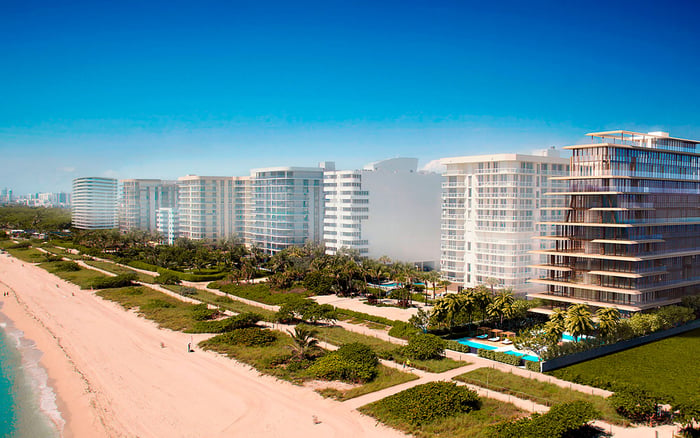
A buyer-oriented look at how Grove at Grand Bay and Arte Surfside frame South Florida’s next luxury conversation: design ambition, neighborhood identity, and preservation value.
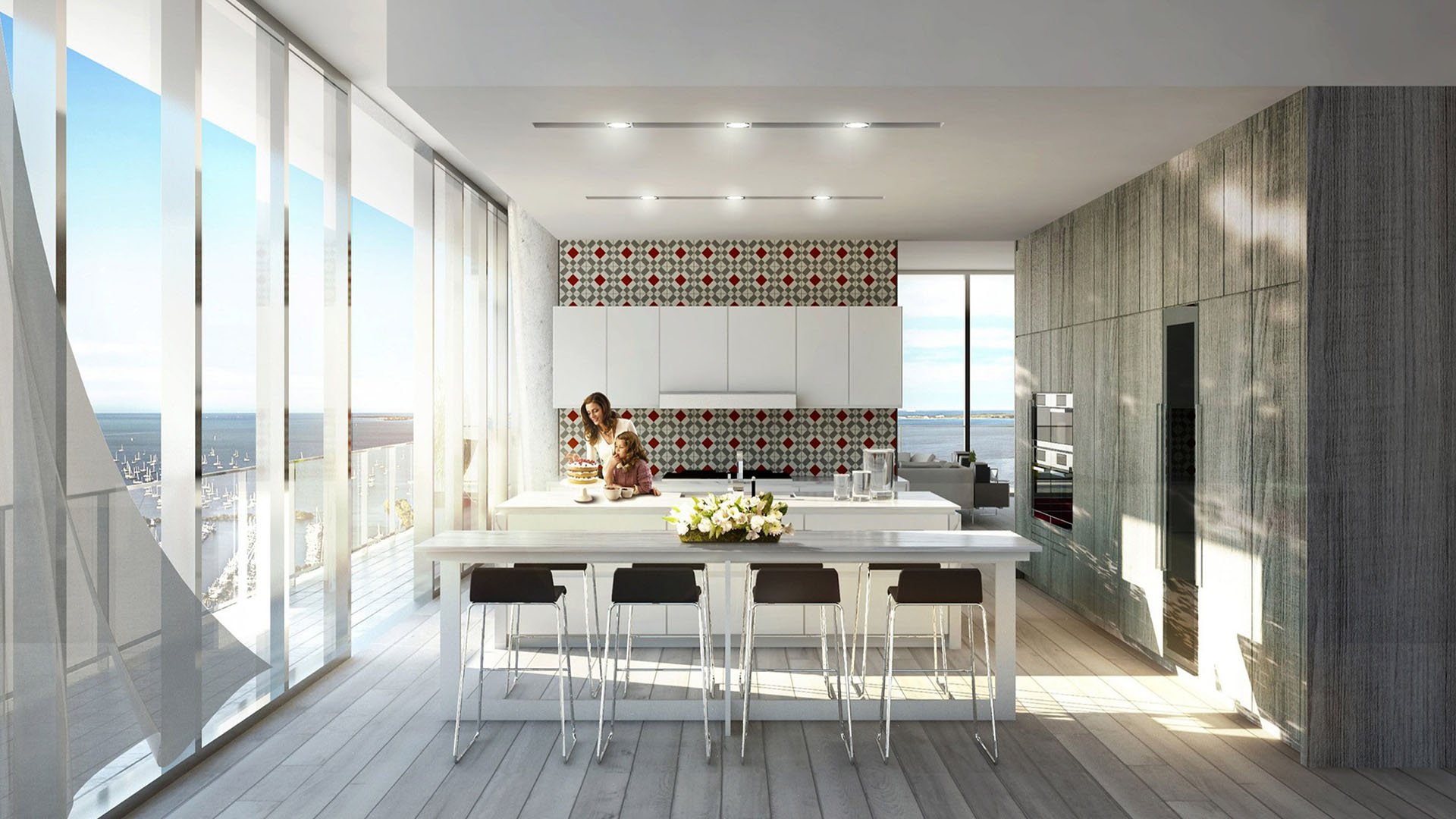
In South Florida’s most scrutinized residential enclaves, luxury is no longer measured only by finish level, amenity depth, or water exposure. For sophisticated buyers, the more durable question is cultural: does a building sharpen the identity of its neighborhood, or does it simply occupy valuable land?
That question sits at the center of Coconut Grove’s conversation around Grove at Grand Bay and Surfside’s conversation around Arte Surfside. Each project represents ultra-prime residential ambition expressed through architecture. Each also raises a more nuanced issue for buyers who understand that preservation is not limited to landmark facades. In the most desirable addresses, preservation can mean tree canopy, scale, streetscape, privacy, material character, and the emotional continuity of place.
Grove at Grand Bay and Arte Surfside are not identical buildings, nor do they belong to identical neighborhoods. Their relevance comes from the way both have become shorthand for a South Florida condition: high-design development seeking legitimacy through context. The most important residences now make architecture part of the value proposition, not merely a container for expensive square footage.
Grove at Grand Bay is one of Coconut Grove’s clearest examples of the tension between architectural ambition and preservation-minded neighborhood identity. Its twisting towers are a contemporary marker of the Grove’s recent luxury-development era, visible not only as residences but as a statement about how the neighborhood is evolving.
For buyers, the cultural importance of Grove at Grand Bay does not rest solely on pricing or amenities. Its significance lies in its role as a high-profile architectural intervention in a historically lower-scale neighborhood. Coconut Grove has long been valued for a feeling that is difficult to replicate: lushness, intimacy, informality, and a sense of retreat from the more vertical parts of Miami. A tower that announces itself so clearly inevitably enters the debate over what the Grove can absorb without losing its character.
The preservation conversation here is broader than individual historic buildings. It extends to the experience of arrival, the perceived height of the streetscape, the relationship between private luxury and the public realm, and the role of mature greenery in defining the neighborhood’s emotional temperature. In that sense, Grove at Grand Bay functions as a test case. It asks whether an ultra-modern residential form can coexist with Coconut Grove’s valued cultural and environmental identity.
For a buyer, the answer is not purely ideological. It is practical. Properties that feel integrated into a beloved neighborhood often carry a different kind of resilience. Their value is linked not only to what is behind the door, but to the broader setting that gives the address meaning.
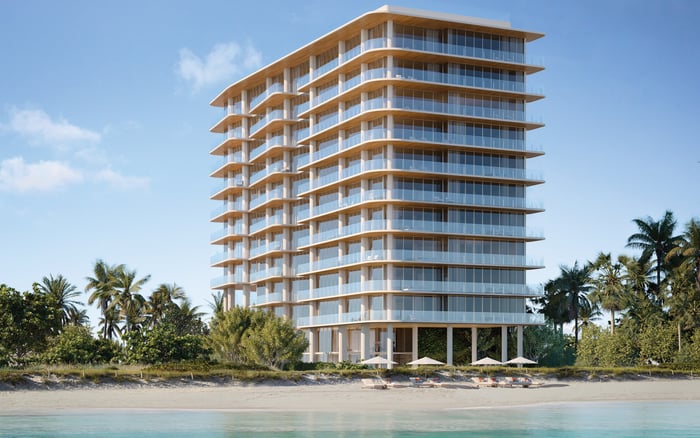
Arte Surfside offers a different but related case. In Surfside, the question is less about the Grove’s canopy and village-like scale, and more about how a quieter coastal municipality handles the arrival of highly designed oceanfront luxury. Arte Surfside is presented as sculpted and terracotta-clad, with an architectural language that relates to Mediterranean and modernist coastal traditions.
That material and formal vocabulary matters. Ultra-prime condominiums increasingly seek cultural legitimacy by referencing the place around them. In Surfside, a building cannot rely only on ocean views to feel meaningful. Oceanfront exposure may establish scarcity, but architecture determines whether that scarcity becomes graceful, contextual, and enduring.
Arte Surfside is important because it illustrates how design can bridge aspiration and local identity. Its terracotta expression suggests warmth, craft, and a connection to coastal precedent rather than a purely glass-and-steel vocabulary. For some buyers, that makes the building more than a residence. It becomes a statement that refined luxury can be quiet, tactile, and locally aware.
At the same time, the cultural impact remains open to interpretation. A new ultra-prime project can reinforce the character of a small coastal municipality if it respects proportion, material presence, and residential calm. It can dilute that character if it reads as an imported object detached from its setting. The strongest buyer analysis holds both possibilities in view.
The most sophisticated preservation debate in South Florida has moved beyond a simple opposition between old and new. A new building can contribute to place if it understands what the place already means. An older condition can be weakened if it is protected only superficially while the surrounding scale, landscape, and rhythm are erased.
This is why Grove at Grand Bay remains culturally instructive. Its presence in Coconut Grove highlights the pressure created by global capital, rising land values, and demand for trophy residences. Those forces are not abstract. They shape what gets built, what gets replaced, and how neighborhoods are perceived by future buyers.
Arte Surfside adds another dimension. It shows that even in an oceanfront setting, where land scarcity can dominate the conversation, cultural fit still matters. A buyer choosing Surfside is often choosing restraint as much as prestige. The community’s quieter residential character is part of the asset. High design must therefore be measured against the very calm that makes the location desirable.
For the luxury market, this reframes preservation as a form of risk management. Buildings that ignore neighborhood identity may achieve immediate attention, but attention is not the same as long-term desirability. Buildings that engage with place have a stronger chance of becoming reference points rather than passing statements.
The investment logic is subtle but powerful. In ultra-prime residential markets, scarcity is often assumed to come from location alone. Yet in Coconut Grove and Surfside, scarcity also comes from the difficulty of producing new residences that feel acceptable, memorable, and contextually intelligent.
Grove at Grand Bay demonstrates the premium associated with architectural distinctiveness in a neighborhood where new verticality is closely watched. Its twisting form gives it recognition, but that recognition is meaningful because it exists within a neighborhood that many residents want to protect. The tension itself becomes part of the narrative.
Arte Surfside demonstrates a parallel principle on the coast. Its sculpted, terracotta-clad identity gives buyers a design language to attach to, while its Surfside setting supplies the residential quiet that differentiates it from larger and more overtly commercial beachfront environments. The cultural question is whether the building strengthens that quiet identity or competes with it.
For discerning buyers, these are not academic concerns. Cultural fit can influence how a residence is perceived by neighbors, how it is discussed in the market, and whether it develops the intangible prestige that separates a notable building from a merely expensive one. In the best cases, architecture becomes part of a neighborhood’s contemporary memory.
A buyer evaluating design-led luxury in Coconut Grove should look beyond the residence itself. The more important test is whether the building’s scale, arrival sequence, landscape relationship, and visual presence support the Grove’s sense of place. Grove at Grand Bay is compelling because it forces that analysis into the open.
In Surfside, buyers should ask a different version of the same question. Does the building’s material character and architectural identity feel connected to coastal restraint, or does it overwhelm the municipality’s quieter personality? Arte Surfside is valuable to study because it shows how ultra-luxury development can use materials and form to seek a deeper relationship with local identity.
The larger lesson is that South Florida’s best residential assets are increasingly judged by cultural intelligence. Trophy residences still depend on views, privacy, service, and design. But the most durable addresses also understand where they are. They make the neighborhood more legible, not less.
Why is Grove at Grand Bay culturally significant in Coconut Grove? It is significant because its twisting towers represent a high-profile architectural intervention in a historically lower-scale neighborhood.
What preservation issue does Grove at Grand Bay highlight? It highlights that preservation in Coconut Grove includes scale, canopy, streetscape, and sense of place, not only individual historic structures.
Why is Arte Surfside part of the same conversation? Arte Surfside shows how ultra-luxury coastal development uses architecture, materials, and local references to seek cultural legitimacy.
How does Surfside differ from Coconut Grove in this discussion? Surfside’s issue centers on maintaining a quieter coastal identity, while Coconut Grove’s debate emphasizes neighborhood scale and environmental character.
Does high-design architecture always conflict with preservation? No. The conflict depends on whether a building engages its setting thoughtfully or treats the neighborhood as a backdrop.
Why do materials matter at Arte Surfside? Its sculpted terracotta expression helps connect the project to Mediterranean and modernist coastal traditions.
What should buyers study beyond amenities? Buyers should study how a building meets the street, responds to landscape, and contributes to the identity of its neighborhood.
Can cultural fit affect resale perception? Yes. Residences that feel contextually intelligent can gain a more durable prestige than projects defined only by novelty.
Is oceanfront luxury automatically culturally strong? No. Oceanfront scarcity matters, but architecture must still reinforce the character of the place around it.
What is the shared lesson of these two projects? Together, they show that South Florida luxury increasingly depends on architectural distinction joined with local context.
If you'd like a private walkthrough and a curated shortlist, connect with MILLION.
If branded residences are on your mind — as a home or as an allocation — we would be glad to share what we are seeing, privately.
Begin a quiet conversation