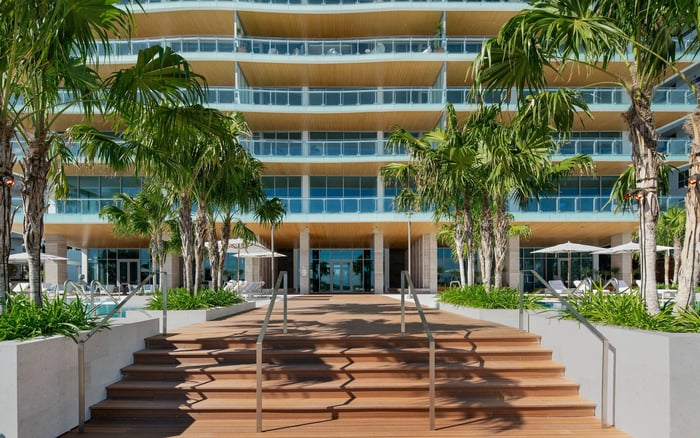
Beach proximity and dependable access are different considerations. Before closing in Miami Beach, distinguish property rights from temporary operating restrictions, review maintenance notices, and confirm how storm and event announcements reach residents.

For a Miami Beach buyer, the shoreline can matter as much as the floor plan. A morning swim, an evening walk, or a waterfront arrival may define a residence's appeal. Before closing, however, distinguish the right to reach the water from the ability to use a particular route on a given day. Storm restrictions, maintenance work, and special events each warrant review.
The objective is not a promise of uninterrupted access. It is a clear understanding of what the purchase includes, who controls each part of the route, and how interruptions are communicated. A residence under consideration at 57 Ocean Miami Beach calls for the same document-led approach: establish the access arrangement rather than infer it from the setting.
A useful closing file separates three subjects: legal access rights, property-level operations, and applicable public restrictions. An answer in one category does not resolve the others.
Ask the seller and association to identify the route you expect to use, from the residential entrance to the intended beach or waterfront destination. Have counsel review the supporting documents, including any applicable easements, condominium provisions, or access agreements. The central question is whether your intended use matches the documented arrangement.
For a purchase at Faena House Miami Beach, as elsewhere, focus the inquiry on the specific residence and its governing documents. Ask which portions of the route the association controls, whether another party controls any segment, and what operating conditions apply. These are verification questions, not findings about the property.
Waterfront access also demands precise vocabulary. A route to the sand does not answer questions about a dock, marina, or bayfront walkway. Review each intended use separately, and ask counsel to distinguish an ownership right from permission to use an area or a service arrangement.
Special-event permit holders in Miami Beach may not use public space the City has closed because of inclement weather or another reason. Closure notification goes to the permit holder's designated contact, and on-site signage may be posted when possible. That procedure concerns the event permit holder; buyers should separately confirm how their building communicates interruptions to residents.
Hurricane-season special events must have an emergency evacuation plan that takes effect within eight hours of a hurricane warning. Evacuation must be completed within 24 hours, including removal of equipment, staff, staging, and vehicles from the site. These are event requirements-not a residential evacuation timetable or an assurance that beach access will resume afterward.
Surfing areas have a distinct safety framework. The beach patrol captain, or an officer acting under the captain's authority, may close them when weather threatens users' health, safety, or welfare. Separately, the 2016 beachfront-management framework allows temporary suspension of operations or cancellation of an event during extreme weather, including lightning storms.
For closing purposes, establish exactly what each notice covers. A surfing-area closure, an event suspension, and a restriction affecting a pedestrian entrance are not interchangeable. None of these event or surfing provisions alone establishes a blanket prohibition on pedestrian beach access.
Historical restrictions show why an address alone cannot establish everyday access conditions. On specified dates during spring break 2025, public beaches between 5th and 15th Streets, or portions of that stretch, were subject to 6 p.m. closures. Ocean Drive beach entrances were limited to 5th, 10th, and 12th Streets, with security checkpoints and entrance closures at 6 p.m.
Those were historical measures, not permanent rules or current alerts. A buyer considering Continuum on South Beach should check announcements applicable to the intended route and dates rather than apply those historical boundaries to the property.
The high-impact-event definition includes beach-property events expected to attract more than 25,000 people, or events during a designated major-event period. That classification is not itself a universal closure notice. Weather, emergency conditions, and event impacts can also be grounds for denying, revoking, suspending, or canceling special-event permissions. The operative question remains: which restriction applies, where, and when?
The special-events fee schedule includes an “EAST - Vehicle Access Pass (Beach Access Pass)” category. Despite the abbreviated name, it concerns managed beach vehicle access. It is not proof of a resident's pedestrian access rights.
Vehicles accessing the beach for special events must also be escorted on and off by City police, off-duty police, or Ocean Rescue. If a seller or representative refers to a beach pass, request the underlying document and clarify its purpose. Vehicle permission does not resolve a question about walking to the shoreline.
Maintenance calls for a property-specific inquiry, not an assumption based on municipal event rules. Ask the association for current notices and planned work affecting your intended route. Request details of the affected area, anticipated duration, any stated reopening conditions, and available alternative routes. Treat a projected completion date as something to confirm, not an unconditional assurance.
When evaluating The Perigon Miami Beach, make the request specific to the access arrangement being offered and the anticipated occupancy period. This is a due-diligence recommendation, not a statement that the project has an interruption or scheduled work.
If an alternative is proposed, ask whether it meets the household's needs. Resolve questions about walking distance, steps, mobility requirements, and guest arrangements before relying on it. Keep written responses alongside the governing access documents so practical expectations and legal rights can be reviewed together.
As closing approaches, revisit the access file with the association and counsel. Confirm the intended route, review the latest maintenance communications, and check applicable City closure announcements. Identify a building contact for operational questions and confirm how residents receive updates when conditions change.
If access is material to the purchase, bring unresolved issues to counsel before contractual deadlines. Ask whether further documentation or contractual clarification is appropriate. Do not assume a temporary interruption automatically creates a cancellation right, or that a verbal assurance resolves a document question.
The strongest closing position is clarity: the buyer understands the rights being acquired, the conditions that can interrupt use, and the process for obtaining timely updates. That discipline protects the lifestyle decision without confusing a desirable waterfront setting with guaranteed availability.
For a considered approach to Miami Beach ownership, explore MILLION.
If branded residences are on your mind — as a home or as an allocation — we would be glad to share what we are seeing, privately.
Begin a quiet conversationVerify the intended route, the documents supporting its use, and any applicable property-level or public restrictions. Keep legal rights separate from day-to-day operating conditions.
No blanket pedestrian prohibition follows from those provisions alone. Special-event rules address permit holders' use of closed public space, so the scope of the actual closure notice matters.
The City notifies the permit holder's designated contact and may post on-site signage when possible. Buyers should separately confirm how their building notifies residents.
The required emergency evacuation plan must take effect within eight hours of a hurricane warning, with evacuation completed within 24 hours. Those requirements concern the event site, not a residential evacuation timetable.
The beach patrol captain, or an officer acting under the captain's authority, may close surfing areas when weather threatens users' health, safety, or welfare.
No. The described 6 p.m. closures and entrance checkpoints applied on specified dates in 2025 and should not be treated as current alerts or permanent rules.
The EAST Vehicle Access Pass category concerns managed beach vehicle access. It does not establish a resident's right to walk to the beach.
Request current notices, planned work affecting the intended route, anticipated timing, reopening conditions, and any available alternative route. Confirm projected dates before relying on them.
Beach access does not establish those separate rights. Ask counsel to review the documents governing each intended waterfront use.
Yes, particularly when access is material to the purchase. Ask counsel before contractual deadlines whether further documentation or contractual clarification is appropriate.