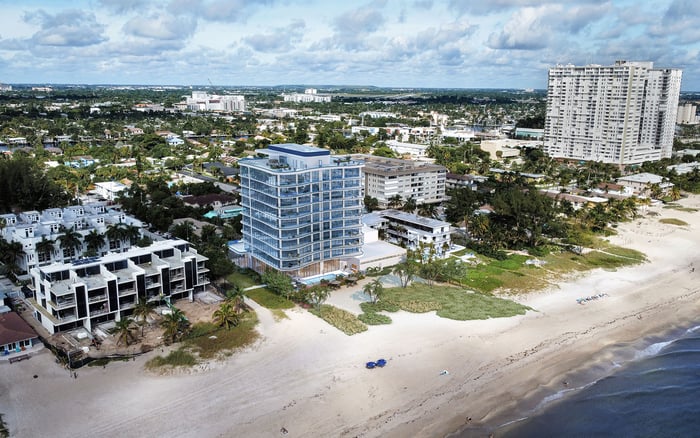
A Pompano Beach residence should be chosen and titled as part of one coordinated Florida estate-planning strategy, with homestead eligibility, trust language, succession terms, and closing documents reviewed together.

For a Greenwich household contemplating Pompano Beach, the property decision is more than a change of latitude. It is where residence, ownership, tax treatment, asset protection, and succession planning converge. Even the most elegant purchase can become administratively awkward if the deed is prepared before Florida counsel reviews the trust, or if the estate plan directs the home in a way that conflicts with Florida homestead restrictions.
That coordination matters whether the search centers on an expansive waterfront residence or a lock-and-leave condominium. Buyers comparing Armani Casa Residences Pompano Beach with other oceanfront options should weigh the home’s intended use alongside its architecture, privacy, services, and carrying costs. If the residence is expected to become the permanent home, its ownership structure warrants attention before closing.
The deed, trust, homestead application, and succession plan should tell one consistent story.
Florida homestead eligibility generally depends on ownership and use of the property as the owner’s or a dependent’s permanent residence. A buyer retaining substantial ties to Connecticut should therefore distinguish clearly between a permanent Florida residence and a seasonal property. The legal and tax analysis should reflect actual intent and occupancy, not simply the preferred result.
An interstate move should also prompt the abandonment of any homestead or primary-residence tax benefit claimed in the former state. Doing so helps create a coherent record of domicile and avoids incompatible positions across jurisdictions. A second-home arrangement may be entirely suitable, but it should not be presented as a Florida homestead unless the governing requirements are met.
For qualifying owners, Florida’s general homestead exemption can reduce taxable value by as much as $50,000. In Pompano Beach, the standard structure includes up to $25,000 of assessed value, plus another exemption of up to $25,000 on value above $75,000 for levies other than school-district levies. Qualifying residents age 65 or older who meet applicable household-income limits may also be eligible for an additional local exemption of up to $50,000.
Title should not be treated as a clerical selection made on the eve of closing. The preferred owner may be an individual, spouses, or a trustee, but each approach must be reconciled with the buyer’s family circumstances, estate documents, and intended homestead position. This analysis is best completed before the purchase deed is prepared.
The distinction is particularly important in a condominium acquisition such as Ocean 580 Pompano Beach. The residence may be operationally simple, yet the ownership decision can still affect the homestead application and transfer at death. The closing attorney or title agent should work from the same approved structure as estate counsel and the tax adviser.
A home held in trust can qualify for the homestead tax exemption when the occupant has legal or beneficial title and a present right to use and occupy the property. A properly drafted revocable living trust can often preserve this treatment because the settlor retains beneficial ownership and occupies the residence permanently. Relevant provisions commonly preserve the power to amend or revoke the trust and the right to occupy the home.
The deed must also identify the trustee and property correctly and include language designed to preserve homestead rights. Florida counties may require particular language in both the trust agreement and the deed. A transfer into a properly structured revocable trust need not eliminate the homestead exemption or applicable Save Our Homes assessment treatment, but assumptions should never substitute for document review.
Florida homestead is not a single, unified benefit. Buyers should analyze at least three distinct questions: property-tax exemption, constitutional creditor protection, and restrictions on inheritance or transfer at death. Satisfying one does not automatically resolve the others.
A revocable trust may preserve constitutional creditor protection when the settlor retains the relevant rights, but treatment can remain uncertain in bankruptcy. An irrevocable trust generally presents greater risk to that protection. An LLC or another entity can likewise create consequences that differ from individual or qualifying trust ownership. These structures should not be used for a primary residence without Florida-specific analysis.
This distinction matters for buyers considering branded residences such as The Ritz-Carlton Residences® Pompano Beach. Prestige, hospitality, and ease of ownership do not alter the need to test the proposed title separately for tax, creditor, and inheritance purposes.
Existing Connecticut wills and trusts should be reviewed by Florida counsel rather than carried south unchanged. The review should address recognition in Florida, successor-trustee provisions, homestead treatment, and distribution terms. It should also extend beyond the residence to powers of attorney, health-care documents, and beneficiary designations.
Transfer-at-death restrictions demand particular care when an owner has a spouse or minor child. Trust beneficiaries and distribution provisions must be compatible with Florida homestead rules. A direction that appears clear in an existing trust may not produce the intended result if it conflicts with those restrictions.
For a buyer considering W Pompano Beach Hotel & Residences or another Broward residence, this review should occur while the purchase remains structurally flexible. Estate counsel can then coordinate the trust terms with the deed rather than repair inconsistencies after closing.
The practical sequence begins with confirming whether the Pompano Beach home will be the permanent residence. Florida estate counsel should then review the household’s existing plan and recommend a title structure. The closing professional can prepare the deed to match that structure, while the tax adviser and relevant property appraiser clarify exemption procedures and eligibility.
After the move, the owner should file for available exemptions and complete the broader transition of the estate plan to Florida law. Buyers moving from Greenwich cannot port a Connecticut assessment benefit into Florida. Portability concerns the transfer of part of the Save Our Homes assessment difference when replacing one Florida homestead with another, subject to applicable requirements.
The objective is not complexity for its own sake. It is a residence whose legal architecture is as considered as its physical design: permanent-residence intent supported by conduct, trust provisions that preserve the necessary rights, a deed that reflects those provisions, and testamentary documents that respect Florida’s homestead limitations.
For discreet guidance on identifying a residence that fits this coordinated plan, consult MILLION.
If branded residences are on your mind — as a home or as an allocation — we would be glad to share what we are seeing, privately.
Begin a quiet conversationIdeally, the title structure should be selected before closing so the deed, trust, homestead application, and succession plan align.
Yes, when the occupant has qualifying legal or beneficial title and a present right to use and occupy the home as a permanent residence.
No. Property-tax treatment, creditor protection, and inheritance restrictions are separate homestead questions.
They should be reviewed by Florida counsel for recognition, trustee provisions, homestead treatment, and distribution terms. The appropriate revisions depend on the documents and family circumstances.
For a qualifying residence, the general exemption can reduce taxable value by as much as $50,000, subject to the applicable levy structure.
Pompano Beach authorizes an additional exemption of up to $50,000 for qualifying residents age 65 or older who satisfy household-income limits.
An interstate move should include abandoning any homestead or primary-residence tax benefit claimed in the former state.
No. Save Our Homes portability concerns replacement of one Florida homestead with another, subject to applicable requirements.
Florida homestead restrictions can affect transfers at death when an owner has a spouse or minor child, so trust provisions must be compatible.
The buyer should coordinate Florida estate counsel, the closing attorney or title agent, a tax adviser, and the relevant property appraiser.