An Edgewater penthouse view should be underwritten as a valuable but potentially changeable asset. Before closing, buyers should map every sightline-sensitive parcel, compare present zoning with future land use, investigate ownership assemblages, review approvals and permits, and stress-test the portion of the purchase price attributed to water, skyline, privacy, and daylight.

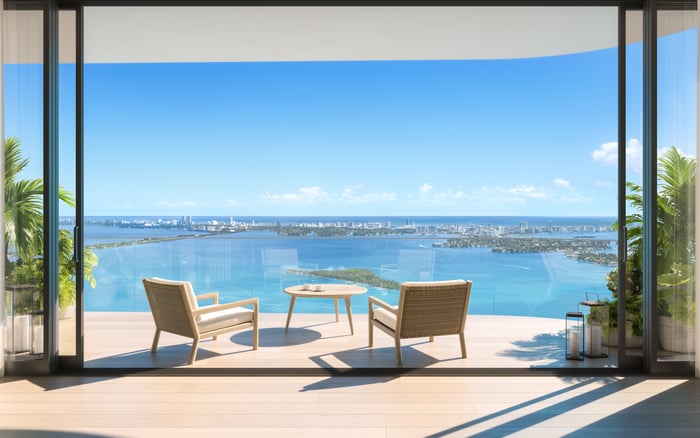
An Edgewater penthouse can make an immediate impression through its water outlook, skyline exposure, privacy, daylight, and sense of openness. Those qualities may influence what a buyer is willing to pay, but the view available today should not automatically be treated as permanent.
Before closing, the central question is how the residence’s most valuable sightlines could be affected by nearby land. The review should consider existing conditions as well as zoning, future land use, ownership, parcel configuration, development applications, permits, easements, and the possibility that neighboring lots could be combined.
Buyers comparing Aria Reserve Miami, EDITION Edgewater, or an Edgewater resale should apply the analysis to the specific residence under contract. Building-wide descriptions cannot replace a unit-level review of orientation, elevation, rooms, terraces, and view corridors.
A view premium is easier to evaluate when the buyer understands what could change around it.
Begin inside the residence and identify the outlook from each important room and terrace. Separate the direct water view from lateral water corridors, skyline exposure, sunrise orientation, privacy, and daylight. A future structure could leave one element intact while materially changing another.
Create a dated photographic record from consistent positions throughout the home. Mark the portions of the outlook that carry the greatest personal or financial importance, including views visible while seated, from primary living areas, and from bedrooms. This establishes a practical baseline for the diligence process.
Translate those sightlines onto a parcel map. The inquiry should not stop at the property sharing a boundary with the condominium. Lots farther away or outside the central view can still matter when they sit within a lateral corridor or affect perceived openness.
Higher elevation may change the obstruction analysis, but it does not remove the need for one. Buyers considering The Cove Residences Edgewater should compare the residence’s position with the potential building envelope of each relevant site rather than rely on a general assumption about high-floor views.
For every sightline-sensitive property, ask a qualified land-use professional and counsel to confirm the current zoning and explain the rules that could shape redevelopment. The review may include permitted uses, height, density, setbacks, bonuses, overlays, and any site-specific limitations or approvals.
Future land use should be examined separately from current zoning. Buyers should ask whether the two layers point toward the same development intensity, whether a change has been requested, and whether any pending process could affect the analysis. Conclusions should be tied to the exact parcel and verified near closing.
Do not infer development capacity from the building currently occupying a site. A low-rise structure, parking area, or narrow lot describes present conditions, not necessarily the full range of future possibilities. The purpose of the review is to distinguish what exists from what may be legally or practically pursued.
A parcel that appears too small for a consequential project may look different when considered with neighboring land. Ownership research should therefore identify the folio and owner for each relevant property, then compare contiguous holdings, related entities, recent transfers, and other signs that multiple sites could be evaluated together.
Ask the planning team to consider both stand-alone parcels and plausible combinations. This is especially important where the valued view passes across several lots rather than a single development site. The goal is not to predict a project, but to understand a reasonable range of physical outcomes before assigning durability to the view.
Villa Miami may provide another Edgewater reference during a residence search, yet obstruction exposure remains specific to the unit, orientation, elevation, and surrounding parcels under review.
Zoning analysis addresses regulatory potential, while applications, approvals, and permit records can help determine whether a particular proposal is moving through a formal process. Ask the diligence team to search each relevant parcel and record the date of every review because status can change between contract and closing.
Counsel should reconcile the title commitment and survey with parcel ownership, zoning, future land use, easements, approvals, and permit activity affecting the identified sightlines. Buyers should also ask whether any recorded instrument protects light, air, access, or a defined visual corridor.
Marketing descriptions such as panoramic or unobstructed should be evaluated as descriptions of the current experience unless counsel confirms an enforceable recorded right. If the durability of the outlook is central to the purchase decision, the buyer should request a clear explanation of what is protected and what remains exposed to change.
Separate the home’s underlying value from the amount attributed to water, skyline, privacy, daylight, and openness. This does not require pretending that each feature has a perfectly isolated price. It does require recognizing that part of the purchase decision may depend on conditions outside the condominium boundaries.
Model several outcomes, including the present outlook, a partial obstruction, and a substantial obstruction. Consider how each outcome could affect enjoyment, privacy, natural light, perceived spaciousness, and eventual resale positioning. Temporary effects associated with nearby construction may also be relevant to the buyer’s intended ownership period.
The pre-closing file should include dated photographs, mapped sightlines, a parcel and ownership schedule, zoning and land-use interpretations, application and permit checks, title and survey findings, and written valuation scenarios. These materials cannot guarantee that the surroundings will remain unchanged, but they can support a more informed decision about the price and risk.
Before funds are released, the buyer should know which views carry the premium, which parcels influence those views, what the current rules allow, whether pending matters could change the analysis, whether ownership patterns warrant an assemblage review, and how different obstruction outcomes affect the purchase decision.
Any unresolved point should be directed to the appropriate attorney, land-use professional, surveyor, title specialist, or valuation adviser. The final conclusion should reflect the specific residence and current diligence rather than a broad assumption about Edgewater penthouses.
For discreet guidance on selecting and evaluating South Florida's most exceptional residences, connect with MILLION.
If branded residences are on your mind — as a home or as an allocation — we would be glad to share what we are seeing, privately.
Begin a quiet conversationMore distant or peripheral parcels may sit within valued water, skyline, privacy, or daylight corridors. Multiple neighboring lots may also need to be evaluated together.
No. Existing construction shows present conditions, not necessarily the full development potential of the property.
They are separate planning layers that may affect how a parcel is evaluated. A qualified professional should confirm both for every sightline-sensitive property.
Direct water views, lateral corridors, skyline exposure, privacy, daylight, and openness should be considered individually. A change may affect one element while leaving another intact.
No. The residence’s elevation should be compared with the potential building envelope of each relevant site.
Contiguous holdings, related ownership entities, recent transfers, and grouped parcels may justify further investigation. These patterns do not by themselves confirm that development will occur.
No. Marketing language should not replace current zoning verification, recorded-document review, or professional land-use analysis.
The buyer can separate the home’s underlying value from the amount attributed to water, skyline, privacy, daylight, and openness. The valuation should then be tested against different obstruction outcomes.
Counsel should review the title commitment and survey alongside ownership, zoning, future land use, easements, approvals, and permit activity affecting relevant parcels.
No. Any enforceable protection for light, air, access, or a visual corridor should be confirmed through recorded documents and legal review.