As Una Residences moves into ownership, buyers should distinguish architectural distinction from financial preparedness. Adopted budgets, reserve planning, turnover status and documented maintenance responsibilities deserve the same attention as the waterfront residence itself.

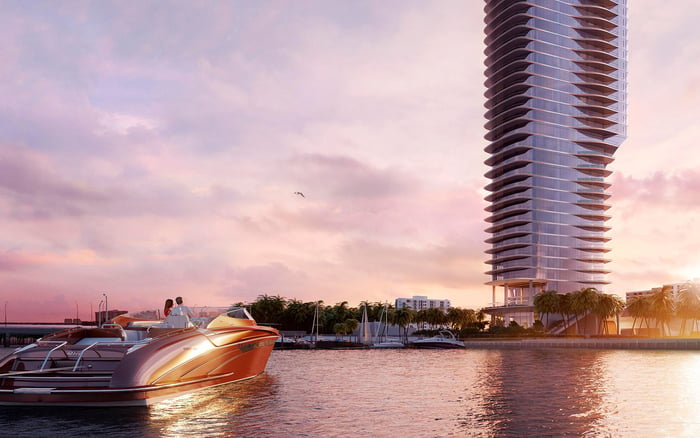
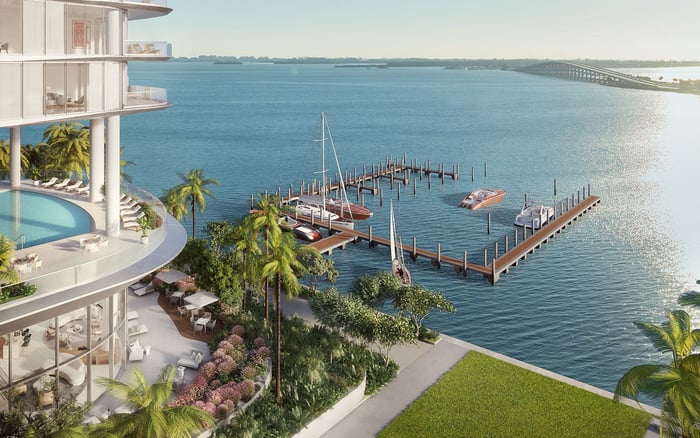
At Una Residences Brickell, the appeal begins with a waterfront address and distinctive architecture. The 47-story condominium at 175 SE 25th Road in South Brickell pairs architecture by Adrian Smith + Gordon Gill with floor-to-ceiling glass and expansive terraces. Its marketed amenities include three pools and private boat slips. The development partners are OKO Group, led by Vlad Doronin, and Cain International, led by Jonathan Goldstein.
Those attributes establish luxury positioning-not the association's capitalization, the clarity of its decision-making or the predictability of its carrying costs. A beautifully finished residence and a financially prepared condominium are separate propositions. Each requires its own examination.
For buyers approaching closing, that distinction should sharpen the review, not diminish the attraction. Governance and reserve funding are due-diligence questions here, not findings of failure. There is no established basis to characterize Una as having a reserve shortfall or a confirmed special assessment.
Una received a Temporary Certificate of Occupancy in February 2026. By March, closings had started and the first residents were arriving. These are meaningful delivery milestones, but they do not confirm issuance of a permanent certificate or establish that every construction and occupancy matter has been resolved.
Before closing, ask counsel to verify the current occupancy documentation, its conditions and any remaining steps relevant to the residence and common areas. Keep the inquiry specific: what is approved, what remains outstanding, who is responsible and how will completion be documented? A temporary approval should be understood on its actual terms, neither as a blanket assurance nor as an automatic warning.
Apply the same discipline to the ownership package. Request the current adopted operating budget, line-item reserve contributions and written clarification of developer obligations or guarantees. Distinguish documents governing current operations from preliminary sales assumptions. The operative question is what will govern ownership after the keys change hands.
An opening monthly assessment is a starting point, not a complete ownership forecast. Low initial dues do not establish low long-term costs. The more useful question is whether the adopted budget connects recurring expenses and reserve contributions to documented maintenance obligations.
Read operating expenses and reserves separately. Ask how insurance costs are reflected, what maintenance assumptions support the budget and which costs depend on developer commitments. Where an obligation or guarantee exists, establish its scope and duration rather than assuming it will continue indefinitely. When the budget and its explanation do not align, request clarification in writing.
If the search also includes The Residences at 1428 Brickell, compare the evidence behind ownership costs, not headline dues alone. This is a comparison method, not a conclusion about either association's finances. An attractive monthly figure means little without a clear understanding of what it includes and what must be funded separately.
Florida's post-Surfside framework requires Structural Integrity Reserve Studies, commonly called SIRS, for covered condominium buildings of three or more stories. Reserve planning therefore belongs in the conversation about luxury towers, not just older or lower-priced condominiums.
Structural-reserve planning addresses major systems such as roofs, load-bearing elements, waterproofing, plumbing and electrical systems. Decorative finishes are no proxy for the condition, remaining life or funding requirements of those components. SIRS-required structural reserves and nonstructural reserves are also distinct. Restrictions on waiving structural contributions should not be generalized to every reserve category.
For Una, request any available SIRS or engineering reserve study. If no study is available for review, seek written clarification of applicability, status and the expected timeline. Counsel should confirm current requirements, exceptions and permissible funding options for this newly delivered building. Do not import a deadline or funding conclusion from another property's circumstances.
The financial consequence is straightforward: associations catching up on historically underfunded structural reserves can face higher recurring dues or special assessments. That general risk is not evidence that Una has such a shortfall. The buyer's task is to connect documented obligations with an identifiable funding plan.
Developer-to-owner turnover is another question to resolve through documents, not impressions. Establish the present turnover status, the extent of owner representation on the board and any outstanding developer obligations or guarantees. The arrival of residents does not, by itself, establish who controls association decisions.
Review available board minutes and meeting notices for discussions of maintenance planning, insurance costs and assessments. These records can help buyers understand how financial issues are being addressed. Ask management to clarify unresolved items and identify who has authority to approve the next steps.
A buyer considering St. Regis® Residences Brickell alongside Una should bring the same governance questions to each purchase review, without assuming identical delivery stages or board arrangements. The relevant standard is not whether two buildings share a luxury category, but whether each ownership proposition can be understood on its own terms.
Una's terraces, pools and private boat slips help define its waterfront appeal. They also make the allocation of maintenance responsibilities an important part of the purchase review. Ask which obligations belong to the association, which belong to individual owners and whether particular amenities carry separate responsibilities or charges.
Façades, balconies, docks and seawalls warrant specific questions about ownership, maintenance planning and funding. These are matters to investigate, not documented defects at Una. Nor should they automatically be classified as mandatory SIRS components.
The practical objective is a clear connection between each amenity and the party responsible for maintaining it. Buyers should understand how routine upkeep is addressed, how future capital work is contemplated and where those responsibilities are recorded. The visual appeal of the waterfront cannot answer those questions.
The strongest closing decision brings three elements together: a residence that satisfies the buyer, an intelligible operating budget and a documented approach to future obligations. None substitutes for the others. An unresolved question is not automatically a defect; it is a reason to obtain a precise answer rather than rely on an assumption.
Una's architecture and waterfront setting can be fully appreciated while its ownership structure receives rigorous review. Transparent governance and credible reserve planning help buyers evaluate the enduring ownership experience beyond the initial presentation. For a trophy residence, that is not excessive caution. It is part of assessing quality.
For a considered perspective on South Florida luxury ownership, explore MILLION.
If branded residences are on your mind — as a home or as an allocation — we would be glad to share what we are seeing, privately.
Begin a quiet conversationUna Residences is a 47-story waterfront condominium at 175 SE 25th Road in South Brickell, Miami.
The development partners are OKO Group, led by Vlad Doronin, and Cain International, led by Jonathan Goldstein.
Una received a Temporary Certificate of Occupancy in February 2026. That milestone does not establish permanent certificate issuance or resolve every occupancy-related question.
By March 2026, closings had started and the first residents were arriving. Buyers should confirm the current documentation relevant to their own closing.
Request the current adopted operating budget and line-item reserve contributions. Review their assumptions alongside maintenance obligations, insurance costs and any developer commitments.
No. Initial dues should be evaluated against documented reserve assumptions and maintenance obligations, rather than treated as a complete ownership forecast.
Request any available SIRS or engineering reserve study, or written clarification of applicability, status and the expected timeline. Counsel should confirm current requirements and funding options for the building.
No reserve shortfall or confirmed special assessment is established here. General reserve-funding risks should not be treated as evidence of a Una-specific deficiency.
Establish developer-to-owner turnover status, owner representation on the board and outstanding developer obligations or guarantees. Review available minutes and meeting notices for maintenance, insurance and assessment discussions.
No. Façades, balconies, docks and seawalls warrant investigation into maintenance and funding responsibilities, but should not automatically be classified as mandatory SIRS components.