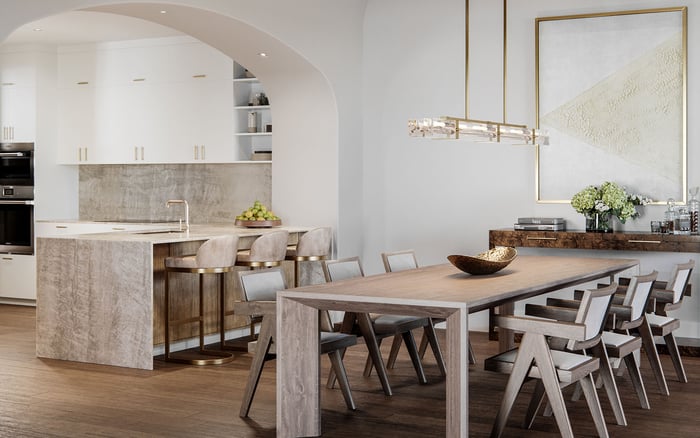
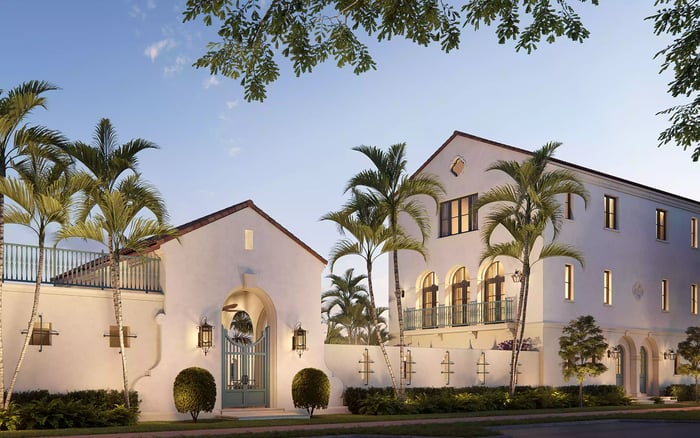
The Village at Coral Gables offers a resident-focused amenity program, but advertised facilities do not establish peak-season availability. Before closing, buyers should distinguish the setting from the rules governing reservations, guests, private events, and operational readiness.
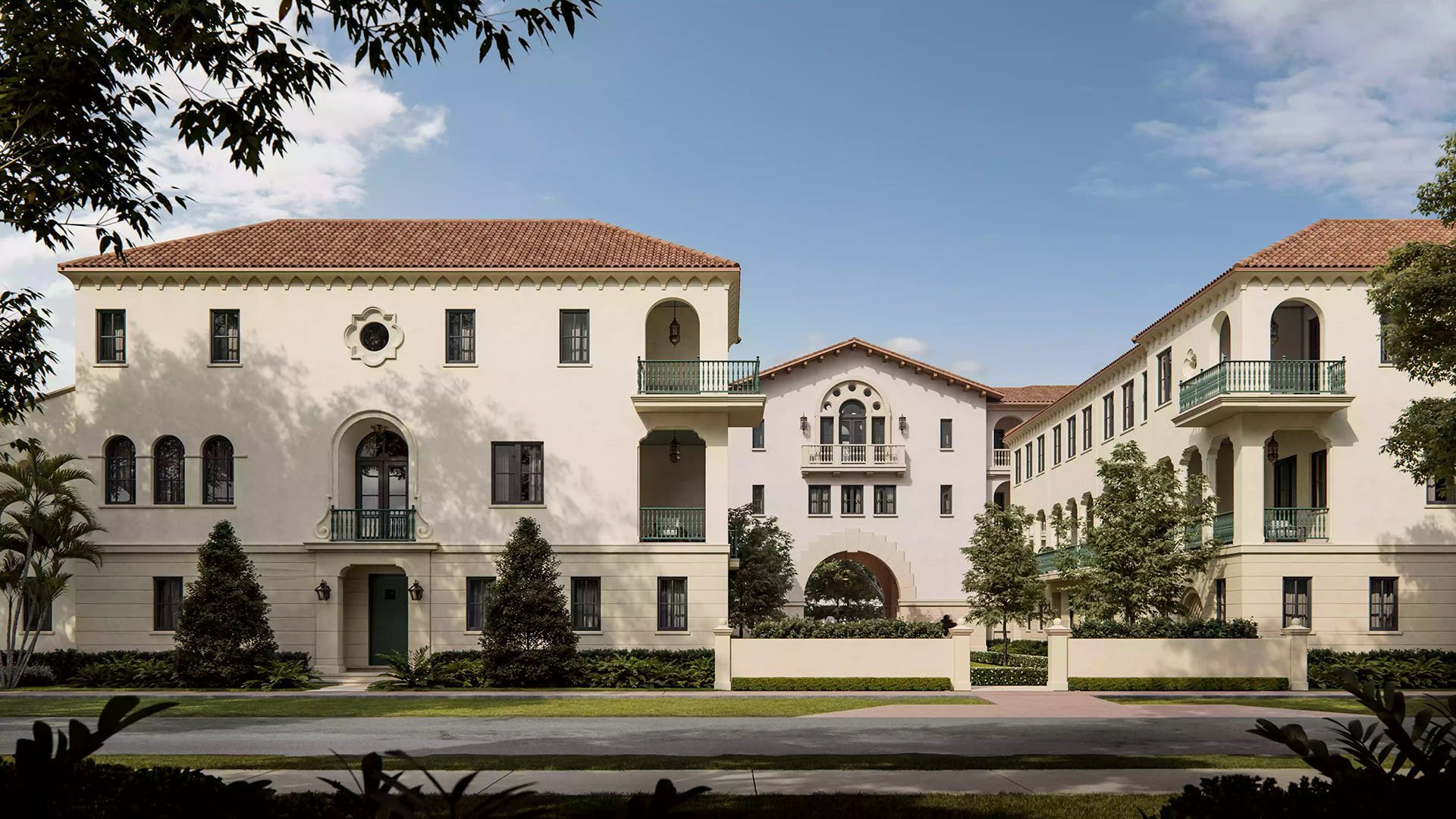
At The Village at Coral Gables, the appeal begins with an intimate residential setting: 48 residences developed by MG Developer at 535 Santander Avenue in Coral Gables. Landscaped gardens inspired by the alcoves of Plaza de España frame a pool courtyard and shared amenities. The invitation is to a quieter, more composed way of living.
For a buyer preparing to close, however, the decisive distinction is between an amenity’s presence and its availability. A beautifully conceived lounge may not be available for a particular gathering. An advertised pool does not establish whether guests can accompany a resident on a holiday weekend.
The project’s resort-style, private-retreat language describes an experience, not a reservation entitlement. Peak-season access is therefore a question for document review. That language alone establishes no specific booking window, owner-priority period, guest allowance, or holiday restriction.
The advertised program includes a deluxe residential lounge, a fitness center described as having state-of-the-art equipment, and a pool with a sun-bed relaxation area. Other amenity descriptions include a business center, clubhouse, and pool house, along with garden courts, glorieta fountains, and walkways.
The program described in December 2024 also included a wellness clubhouse, plunge pool, library, conference room, and high-speed Wi-Fi. Earlier plans, described in July 2023, contemplated a 4,000-square-foot clubhouse. That planned area does not confirm a completed facility or its usable capacity.
These descriptions establish the lifestyle proposition-not whether each space requires a reservation, accommodates simultaneous uses, or permits exclusive events. Buyers should reconcile the various amenity descriptions with the facilities being delivered and the current rules for each. In particular, different clubhouse descriptions should not be treated as proof of separate facilities unless that distinction is confirmed.
A 48-residence community offers a clear sense of scale, but residence count alone cannot establish how easily a household will secure its preferred time. The relevant questions concern facility capacity, reservation duration, and whether one household can hold several reservations simultaneously.
First, ask whether bookings are required. If they are, establish when the calendar opens, whether advance reservations differ from same-day requests, and how competing requests are resolved. Then ask whether the rules change during holidays or other high-demand periods. These are diligence questions, not confirmed policies at The Village.
A buyer also considering Ponce Park Coral Gables should apply the same test independently: compare documented access, not simply the length of the amenity menu. One community’s procedures should never be assumed to apply to another.
For the pool, clarify whether ordinary resident use is walk-in or reservation-based and whether sun beds have a separate allocation process. Ask about capacity, operating hours, guest accompaniment, and any circumstances in which access may be suspended. An advertised sun-bed relaxation area establishes none of those details.
The lounge and conference room call for a different conversation. Determine whether a booking reserves an entire room or merely permits use alongside others. If private events are allowed, request the terms for event duration, setup, cleanup, deposits, charges, and cancellation. Also ask whether an event can close adjacent shared spaces to other residents.
Finally, distinguish visitor arrival from visitor eligibility. On-street visitor parking is an advertised community feature, but parking does not confer amenity privileges. A visiting friend’s ability to park nearby is separate from permission to use the pool, gym, or lounge.
For a household planning short visits, an amenity that requires substantial advance planning may serve a different purpose from one available spontaneously. That is not necessarily a drawback. The question is whether the operating arrangements match the intended pattern of ownership.
Test the documents against a realistic visit: arrival before a holiday weekend, a morning workout, an afternoon with guests, and a small evening gathering. Ask which activities require approval, which depend on capacity, and which cannot be confirmed before arrival. This exercise translates abstract rules into a practical picture of ownership without assuming that any particular restriction exists.
Resident-focused marketing also leaves eligibility questions unresolved. Obtain written clarification of owners’ and tenants’ respective rights, how visiting family members are classified, and whether any outside membership arrangements exist. The phrase private retreat establishes neither an owner preference nor an absolute ban on outside memberships.
The delivery projection described in July 2023 pointed to 2025 or 2026. That historical forecast does not confirm an actual closing date, occupancy authorization, or amenity opening. Likewise, the 60% sold milestone dated December 2, 2024, does not establish current availability or operational readiness.
Before closing, request a facility-by-facility status statement. Identify what is operational, what remains scheduled, and who is responsible for communicating changes. Ask whether any interim arrangements apply, and have your advisers review how the applicable transaction documents address amenity timing.
Keep three matters distinct: the ability to close on the residence, the authorization to occupy it, and the ability to use each shared facility. A general delivery statement is no substitute for separate answers. Where access is central to the purchase decision, have your advisers clarify the significance of any written commitments.
The same discipline applies to a comparison with Cora Merrick Park: request that project’s own documentation rather than infer shared rules from a Coral Gables address. The objective is not to find the fewest restrictions, but the arrangements that best suit the household.
For The Village, assemble the applicable governing documents, current amenity rules, reservation procedures, fee schedules if any, and written operational updates. Ask who administers reservations, who can change the rules, and how residents receive notice. Do not presume a particular association structure or decision-making authority without reviewing the applicable documents.
The most useful measure of luxury here is practical: can the household enjoy the spaces it values, with the people it expects to host, at the times it intends to visit? A precise answer is worth more at closing than a broad assurance of exclusivity.
For a considered approach to South Florida luxury ownership, connect with MILLION.
If branded residences are on your mind — as a home or as an allocation — we would be glad to share what we are seeing, privately.
Begin a quiet conversationThe Village at Coral Gables is a 48-residence community developed by MG Developer at 535 Santander Avenue in Coral Gables.
The advertised program includes a residential lounge, fitness center, and pool with a sun-bed relaxation area. Additional descriptions include clubhouse, business, library, and conference facilities.
The advertised amenity program does not establish guaranteed reservations or owner-priority periods. Buyers should confirm any such rights in the applicable documents and current rules.
No specific advance booking window is established here. Ask whether reservations are required and when eligible residents may begin booking.
Guest eligibility must be confirmed separately for each facility. Advertised on-street visitor parking does not establish amenity access rights.
No. That description does not establish an absolute prohibition on outside memberships or define owners’ and tenants’ respective rights.
The 4,000-square-foot figure describes plans from July 2023, not confirmation of a completed facility. Verify the delivered space and its current operational status.
No. The 2025 or 2026 projection described in July 2023 does not establish actual closing dates, occupancy authorization, or individual amenity openings.
Ask whether exclusive bookings are permitted, what charges or cancellation terms apply, and whether events restrict other residents’ access. These are questions to verify, not confirmed project policies.
Request applicable governing documents, current amenity rules, reservation procedures, any fee schedules, and facility-by-facility operational updates. Have advisers review how access and opening commitments are addressed.