Public materials do not establish whole-residence backup power at this waterfront condominium. Before closing, buyers should obtain binding details on supported residential circuits, common-area loads, system runtime, testing and the developer's modification rights.
At The Ritz-Carlton Residences® West Palm Beach, emergency power deserves the same careful review as design, service and waterfront living. For buyers considering a primary home or seasonal residence, the practical question is straightforward: what remains operational when utility power is interrupted?
The available project description does not clearly establish whole-residence backup power or identify the residential circuits, appliances and HVAC loads intended to receive generator service. “Emergency power” can refer to life-safety systems, selected shared infrastructure, limited circuits within residences or broader coverage. Buyers should not treat those outcomes as interchangeable.
Emergency power is meaningful only when the supported loads are identified in writing.
A general reference to emergency generation would not, by itself, confirm whether backup power serves only life-safety and shared building systems, selected circuits within each residence or an entire home. An amenity description also does not identify which facilities, if any, would remain powered during an outage.
That absence of detail should not be interpreted as proof that residential backup power is unavailable. It also should not be read as a promise that air conditioning, refrigeration, lighting or receptacles will operate. Coverage needs to be confirmed through the documents and technical schedules governing the completed building.
Buyers surveying West Palm Beach residences may also be considering Forté on Flagler West Palm Beach. Emergency-power provisions remain project-specific, so statements associated with another property cannot establish the generator design or covered loads at The Ritz-Carlton Residences® West Palm Beach.
Within a private residence, the central diligence item is a circuit-level explanation. Buyers can ask whether emergency power is intended to support any portion of the HVAC system, refrigerators, lighting, convenience receptacles, cooking appliances, laundry equipment or water heating. A panel schedule identifying the loads connected to the emergency system is more useful than a broad statement that backup power is available.
HVAC warrants separate attention. The buyer should determine whether any cooling equipment is supported, whether coverage is limited to selected zones and whether the relevant indoor and outdoor components can operate together. Refrigeration, powered outlets and lighting should each be addressed directly. Transfer-switch operation also matters, including whether activation is automatic and which residential panel or subpanel receives power.
Capacity and duration are distinct issues. Buyers should request the generator load schedule, emergency electrical drawings, fuel assumptions and runtime assumptions rather than infer endurance from the existence of a generator. The testing protocol is also relevant, including how the system is expected to be exercised and how residents would receive notice of maintenance or impaired operation.
Common-area backup should be evaluated by function rather than through a broad assurance that a building has a generator. A written list should address elevators, fire and life-safety systems, security, access control, domestic-water pumps, drainage pumps, communications, garage systems and critical mechanical equipment.
Elevator coverage requires particular precision. Relevant questions include how many elevators can operate, whether service is continuous or sequenced, and whether residential floors and the garage remain accessible. Water pressure, drainage and controlled entry may also affect practical occupancy during an interruption.
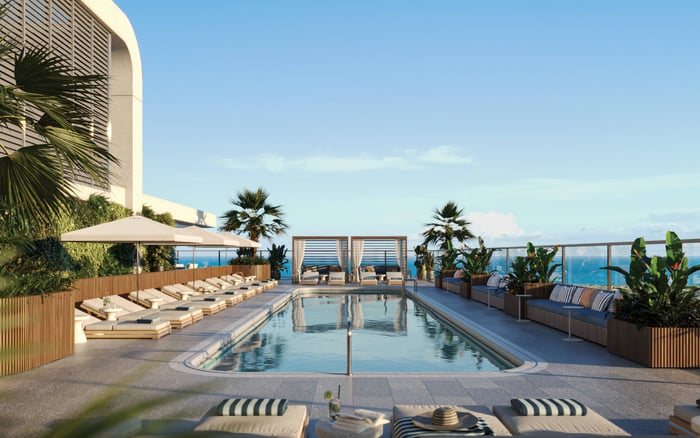
Amenity continuity is a separate issue. Emergency generation supporting life safety does not automatically mean that a pool deck, spa or fitness facility will remain fully usable. A buyer comparing Shorecrest Flagler Drive West Palm Beach should apply the same document-based review to each property rather than treating an amenity list as an operational guarantee.
The final prospectus, purchase agreement and condominium documents should anchor the analysis. Before closing, counsel should identify provisions addressing the emergency electrical system, common elements, maintenance responsibility, operating costs and any right to modify planned systems before completion.
Any material representation should appear in a binding document. If a sales discussion suggests that selected in-unit circuits or particular common areas will receive backup power, the buyer should ask where that commitment appears in the purchase agreement, prospectus, declaration, exhibits or incorporated specifications. The review should also identify substitution, redesign or modification provisions that could affect the planned configuration.
This document discipline belongs alongside other pre-closing questions. Purchasers should review contractual timing, notice procedures and extension provisions in their own agreements rather than rely on general expectations. The objective is to distinguish a current design intention from a binding delivery obligation.
A concise written request can bring the issue into focus. Buyers can ask for the final generator load schedule, emergency electrical drawings, fuel type and storage assumptions, estimated runtime assumptions, transfer-switch design, testing protocol, and a complete list of supported residential and common-area loads. Those materials should then be reconciled with the controlling condominium documents and applicable modification provisions.
Buyers considering Mandarin Oriental Residences, West Palm Beach or another South Florida property can use the same framework, but each building must be assessed through its own documentation. The goal is to understand what has been promised, what remains subject to change and what the condominium association will be responsible for maintaining.
For discreet guidance on South Florida luxury ownership and pre-closing diligence, connect with MILLION.
If branded residences are on your mind — as a home or as an allocation — we would be glad to share what we are seeing, privately.
Begin a quiet conversationNo clear promise of whole-residence backup power appears in the available project description. Buyers should verify coverage in the final prospectus and condominium documents.
The available description does not identify exact residential circuits, appliances or HVAC loads. Buyers should request a written circuit or panel schedule.
That is not established in the available description. Buyers should request written confirmation of supported HVAC components and zones.
The available description does not specify which amenities would remain powered. Amenity continuity should be confirmed in writing.
Buyers should ask about elevators, life-safety systems, security, access control, water and drainage pumps, communications, garage systems and critical mechanical equipment.
It identifies the systems and circuits intended to receive emergency power. That is more precise than a general statement about backup generation.
No. Branding alone does not establish generator capacity, runtime or the loads covered at a particular condominium.
The final prospectus, purchase agreement and condominium documents should govern, including incorporated specifications and modification provisions.
Buyers should request written fuel, storage and runtime assumptions. The ability to support a load does not by itself establish how long it can operate.
Request emergency electrical drawings, the load schedule, fuel and runtime assumptions, transfer-switch details, testing protocols and a written list of supported loads.