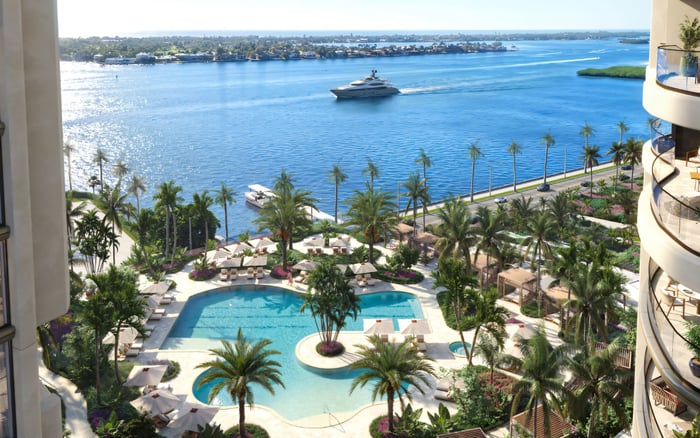
A family office should separate recurring ownership costs, acquisition cash and contingent capital before committing to a Palm Beach condominium. Building budgets, insurance boundaries, post-transfer taxes and reserve obligations deserve more weight than headline monthly dues.
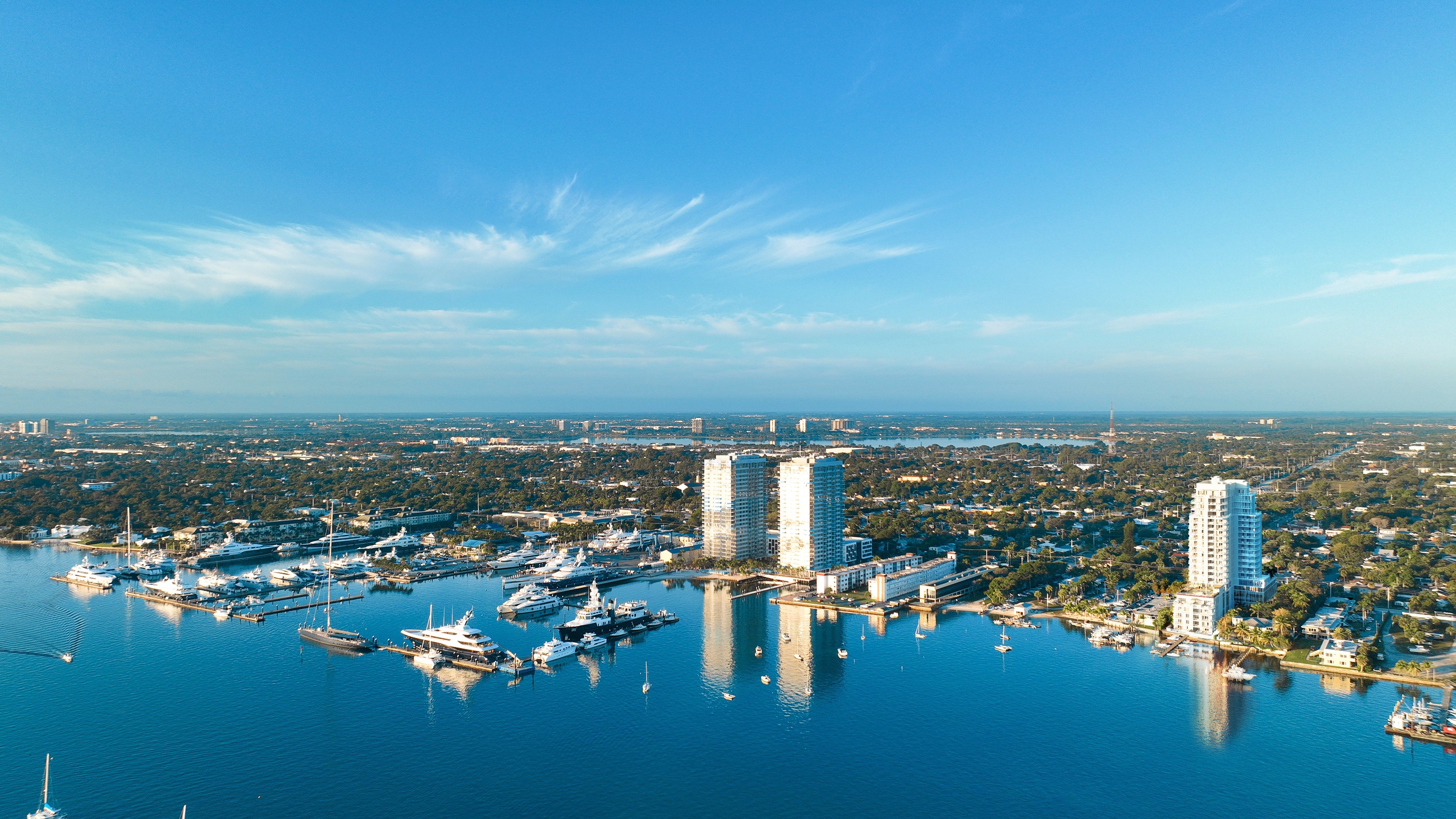
For a family office considering Palm Beach Residences, the central question is not simply what ownership costs each month. It is how much capital must remain available at signing, at closing and throughout ownership. A residence can be comfortably affordable yet poorly modeled when those obligations are collapsed into a single annual figure.
The framework below addresses Palm Beach-area condominium ownership; it does not establish fees or contractual terms for this development. Every project-specific input should come from the governing documents, purchase agreement, association budget and applicable quotations.
Build three schedules: recurring annual carry, one-time acquisition outlays and contingent capital calls. Keep interior fit-out visible as a separate owner capital item. This structure distinguishes the cost of maintaining the residence from the liquidity required to acquire and protect it.
Condominium ownership combines title to the unit with an undivided interest in common elements. The association generally maintains shared building systems, exterior structures and applicable waterfront infrastructure. Dues purchase more than convenience: they fund defined operating responsibilities.
Start with the building’s own budget and the allocation applicable to the unit. Identify staffing, amenities, maintenance and master insurance, then establish whether reserve contributions are included or billed separately. Annualizing a monthly quote is only the first step.
A Palm Beach listing-market benchmark is not an underwriting assumption for an individual luxury residence. It should not be carried across the Intracoastal as an estimate for a West Palm Beach building.
When evaluating Forté on Flagler West Palm Beach, review the documented service scope and how its costs are allocated among residences. The point is operating scope, not fee comparison: both service intensity and the number of residences supporting it matter.
The recurring schedule should contain annual association dues, reserve charges outside those dues, property taxes, unit-level insurance and an allowance for owner-responsible upkeep. Add separately contracted household services and utilities where applicable, after checking what the association already provides. If the purchase is financed, show scheduled debt payments separately so operating carry remains comparable with an all-cash purchase.
Use the expected post-transfer property-tax assessment, not the seller’s current bill. Long-held, capped assessments can make an existing tax payment a poor guide to the buyer’s future obligation. Broad county averages are no substitute for a property-specific estimate.
Apply the same discipline when comparing Alba West Palm Beach with a Palm Beach alternative: reconcile each budget’s inclusions before comparing totals. A lower stated fee does not necessarily mean a lower ownership cost if insurance, reserves or services sit elsewhere.
Label every input as contractual, budgeted, quoted or an internal allowance. This makes uncertainty visible without presenting a planning assumption as a confirmed charge.
Association dues commonly include master insurance, but that does not establish comprehensive protection for the owner. Budget separately for HO-6 insurance covering applicable interior finishes, contents, liability and loss-assessment exposure, subject to the policy’s terms.
Flood protection requires a separate check, especially for waterfront or low-lying properties. Do not assume it is included in dues or resolved by the existence of a master policy. Have the insurance adviser reconcile the association’s coverage with the proposed unit policy and any applicable flood requirements.
The model should show incremental owner premiums without duplicating master-insurance expense already funded through dues. It should also distinguish insured exposure from cash the family office elects to hold against deductibles or uncovered losses. Coverage and liquidity answer different questions.
Have counsel confirm the building’s applicable structural-reserve obligations, including any Structural Integrity Reserve Study, or SIRS, requirements. Do not apply a universal deadline or funding schedule.
Review the reserve study alongside the current budget and planned capital work. Concrete restoration, elevators, waterproofing and seawalls can still create special-assessment exposure despite stronger reserve requirements.
Distinguish three entries: scheduled reserve contributions, known assessments and an internal contingency for future capital calls. The first two are identifiable obligations; the third is liquidity planning, not an association invoice. Avoid adding a generic reserve allowance to annual expenses when the same contribution is already embedded in dues.
The contingency should reflect the building’s condition and capital program, not an arbitrary percentage presented as a market standard.
Closing expenses belong in the acquisition budget, not in stabilized annual carry. Obtain an itemized buyer closing estimate before commitment rather than rely on a broad percentage of the purchase price.
Have the closing adviser identify applicable deed documentary stamp taxes, title-insurance costs and closing-agent charges. Check the purchase contract’s allocation rather than assume it follows Palm Beach County custom.
For a financed purchase, request an itemized calculation of applicable mortgage documentary stamp and intangible taxes. Include applicable lender fees separately.
Recording, association application or approval, and estoppel charges also warrant explicit line items. Reconcile tax and dues prorations with the annual schedule so cash paid at closing is not counted again as an additional year’s expense.
For new construction, map deposit timing independently from closing expenses and recurring carry. Identify any developer-required working-capital contribution or upfront association charge in the contract rather than assume it is included in the advertised monthly amount.
Maintain a separate post-closing interior budget. Repairs, finishes and improvements within the unit are not automatically the association’s responsibility. The residence’s delivery condition and the family’s intended interiors should inform a distinct fit-out allowance.
Show both first-year cash requirements and a stabilized full-year ownership schedule. This prevents a partial first year from understating ongoing carry while keeping deposits and interior capital out of recurring expenses.
Before signing, reconcile the contract, association budget, reserve documents, insurance quotations, tax estimate and closing-cost allocation. Where an amount remains provisional, record the assumption and the adviser responsible for confirming it.
Present a base case alongside a higher-carry scenario and a capital-call scenario, using building-specific information rather than invented escalation rates. The approval decision should state both expected annual spending and the liquidity retained beyond it. For a family office, that distinction preserves the pleasure of ownership without obscuring its obligations.
For a discreet conversation about Palm Beach-area residences and ownership priorities, connect with MILLION.
If branded residences are on your mind — as a home or as an allocation — we would be glad to share what we are seeing, privately.
Begin a quiet conversationNo. It provides a Palm Beach-area condominium underwriting framework; project-specific amounts and obligations must come from the applicable budget, contract and governing documents.
Include association dues, separately billed reserves, expected property taxes, owner insurance and owner-responsible upkeep. Show applicable household expenses and debt payments separately, checking for costs already included in dues.
No. A listing-market benchmark does not capture a particular building’s service levels, maintenance responsibilities or unit allocation.
Model taxes using the expected post-transfer assessment. The seller’s bill may reflect a long-held, capped assessment that does not represent the buyer’s future obligation.
No. Budget separately for applicable unit interiors, contents, liability and loss-assessment coverage, and have an insurance adviser reconcile the policies.
Do not assume it is included. Flood requirements and coverage should be checked separately, particularly for waterfront or low-lying properties.
No. Major work such as concrete restoration, elevators, waterproofing or seawalls can still create assessment exposure, so retain a separate capital-call contingency.
Have the closing adviser identify the applicable charges and confirm the purchase contract’s allocation. Do not assume the agreement follows Palm Beach County custom.
Ask the closing adviser to calculate applicable mortgage documentary stamp and intangible taxes. Budget lender fees separately.
Track deposit timing, closing costs, first-year operating needs and any developer-required working-capital or upfront association charges. Keep interior fit-out separate from recurring carry.