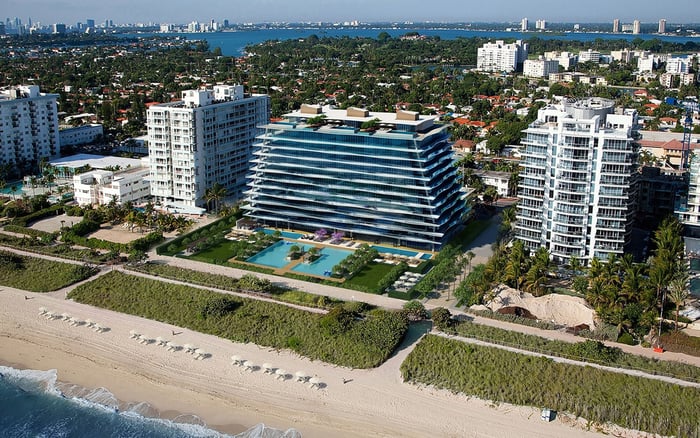
At Fendi Château Residences, impact glass should be assessed as a documented assembly, not simply a premium feature. Buyers need product approvals, installation records, warranty terms, transfer details, and a clear understanding of whether the owner or condominium association controls a future claim.

At Fendi Château Residences Surfside, the glass envelope is central to both the architecture and the ownership experience. Descriptions of floor-to-ceiling impact windows and doors, glass balconies, or “complete impact glass” can convey an important property feature. They do not, however, identify the manufacturer, model, approval number, installation configuration, warranty period, transfer rights, or exclusions.
For a buyer, the distinction is consequential. The property is in Surfside, within Miami-Dade County and Florida’s High-Velocity Hurricane Zone. Applicable windows and doors therefore require HVHZ-compliant approval. Yet certification and warranty are not interchangeable. Approval addresses whether a defined product assembly passed prescribed testing; a warranty establishes contractual coverage for specific defects, components, owners, and periods.
Treat glazing records with the same care as title, insurance, and condominium documents. For an oceanfront or waterfront property, that discipline can materially clarify a later storm, leak, corrosion, or seal-failure claim.
A Miami-Dade Notice of Acceptance, commonly called an NOA, indicates that a particular product configuration passed prescribed testing that may include large-missile impact, cyclic pressure, and water penetration. A Florida Product Approval may also be relevant, depending on the product and its intended use.
Neither approval is a blanket endorsement of every window sold under a manufacturer’s name. The approved opening size, design pressure, glass composition, anchorage, fasteners, substrate, mullions, and installation method all matter. If the installed assembly departs from the approved configuration, an NOA number alone may not resolve a claim.
At closing, request the manufacturer, product line, model, NOA or Florida Product Approval number, design-pressure rating, and approved installation instructions for every opening type. The corresponding product schedule, permits, approved plans, and final inspection records should align with those details. The same discipline applies when evaluating nearby Surfside properties such as Arte Surfside or The Surf Club Four Seasons Surfside, although each building has its own documents and responsibilities.
There is no universal impact-window warranty. Coverage can vary by manufacturer, product line, component, property type, and owner status. Glass seals, structural frames, hardware, finishes, and moving parts may each carry different periods and exclusions. A broad “lifetime” description should never be assumed to cover the complete assembly.
The project-specific certificate is decisive. Warranty terms may distinguish among an original homeowner, a later purchaser, a multifamily installation, and a commercial application. Transferability may require registration, proof of purchase, installation records, or notice within a stated deadline. A resale buyer should confirm these conditions before closing-not after a defect appears.
Separate the manufacturer’s product warranty from installation workmanship, developer obligations, and association responsibilities. Each may carry a different notice procedure, deadline, remedy, and evidentiary requirement. Service coverage can also be much shorter than product coverage, making an early post-closing inspection especially valuable.
Before directing a demand, review the condominium declaration and related governing documents. Exterior windows and doors may be classified as unit property, common elements, or limited common elements. That classification can influence who maintains the assembly, who authorizes work, and whether the owner or association presents a claim.
The purchase agreement, formal warranty materials, association rules, permits, and applicable Florida law also shape responsibility. Promotional language is not a substitute and does not constitute a representation or warranty. Rely instead on executed and governing documents.
Buyers comparing Eighty Seven Park Surfside should conduct the same inquiry independently. Similar coastal settings or architectural expressions do not establish identical products, approvals, warranties, or condominium allocations.
A complete glazing file should include product schedules, approval documents, approved installation instructions, permits, final inspections, warranty certificates, invoices where available, maintenance requirements, and transfer confirmations. Keep these records with the declaration provisions governing windows and doors.
Soon after closing, inspect for leaks, fogging between panes, damaged seals, misalignment, corrosion, finish deterioration, and hardware problems. Document conditions with dated photographs and written correspondence. If water intrusion occurs, do not assume the glass itself failed. Sealant, flashing, anchorage, perimeter conditions, maintenance, or building movement may be involved.
Future claims are strongest when they identify the source of failure and preserve the chronology. Retain inspection reports, maintenance logs, communications, repair proposals, storm dates, and failed components where practical. Provide written notice through every potentially applicable claim path while observing the governing documents and deadlines. For a luxury residence, meticulous records are not administrative excess. They are part of protecting the asset.
Does “complete impact glass” identify the installed window system? No. It describes a represented feature but does not establish the manufacturer, model, approval number, configuration, or warranty terms.
What does a Miami-Dade NOA mean? It means a specified product configuration passed prescribed testing for its approved use, which may include impact, cyclic-pressure, and water-penetration tests.
Is an NOA enough to prove the installation complies? No. Opening size, anchorage, fasteners, substrate, mullions, design pressure, and other installed conditions must align with the approved assembly.
Which window records should a buyer obtain at closing? Request product identifications, approval numbers, design pressures, installation instructions, product schedules, permits, final inspections, and warranty certificates.
Does a lifetime warranty cover every component? Not necessarily. Glass seals, frames, hardware, finishes, and moving parts can have different coverage periods and exclusions.
Will the warranty transfer to a new owner? Transfer depends on the actual certificate and may require registration, proof of purchase, installation records, or timely notice.
Who handles a window claim in the condominium? The declaration should indicate whether the opening is unit property, a common element, or a limited common element, which helps determine the claim path.
Is every leak an impact-glass defect? No. Water may enter because of sealant, flashing, anchorage, perimeter conditions, maintenance, or building movement.
When should a post-closing window inspection occur? It should occur early enough to document visible conditions and preserve potential rights before shorter workmanship or service periods expire.
What evidence should be preserved after a failure? Keep dated photographs, maintenance records, correspondence, inspection findings, storm information, claim notices, and failed components where practical.
For a tailored shortlist and next-step guidance, connect with MILLION.
If branded residences are on your mind — as a home or as an allocation — we would be glad to share what we are seeing, privately.
Begin a quiet conversation