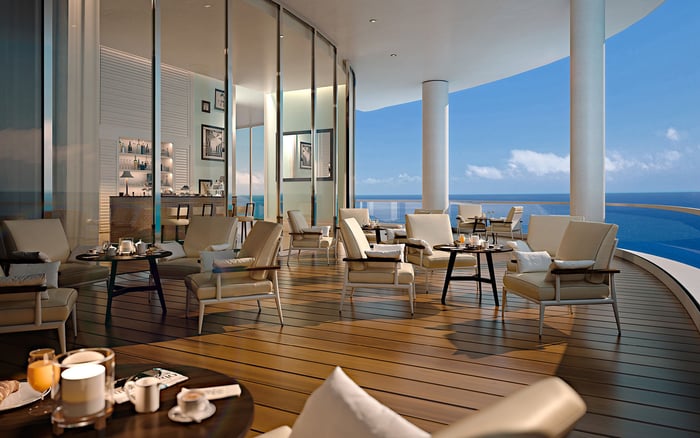
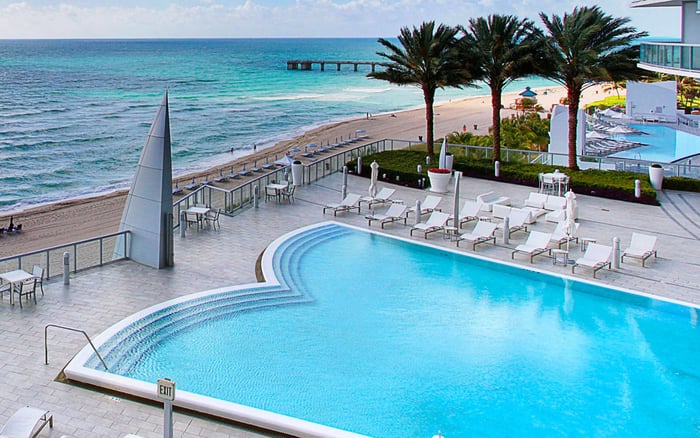
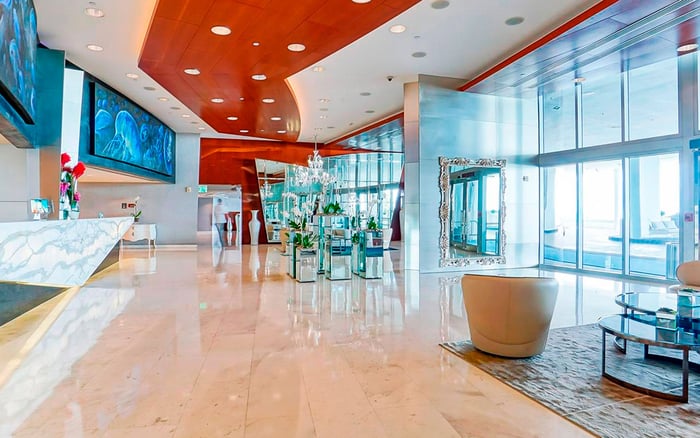
Turnberry Ocean Club offers a compelling dual-water view proposition, but a buyer should separate today’s visual quality from its durability. Parcel-level zoning, entitlements, permits and recorded protections are essential when deciding how much of the purchase price belongs to the view.
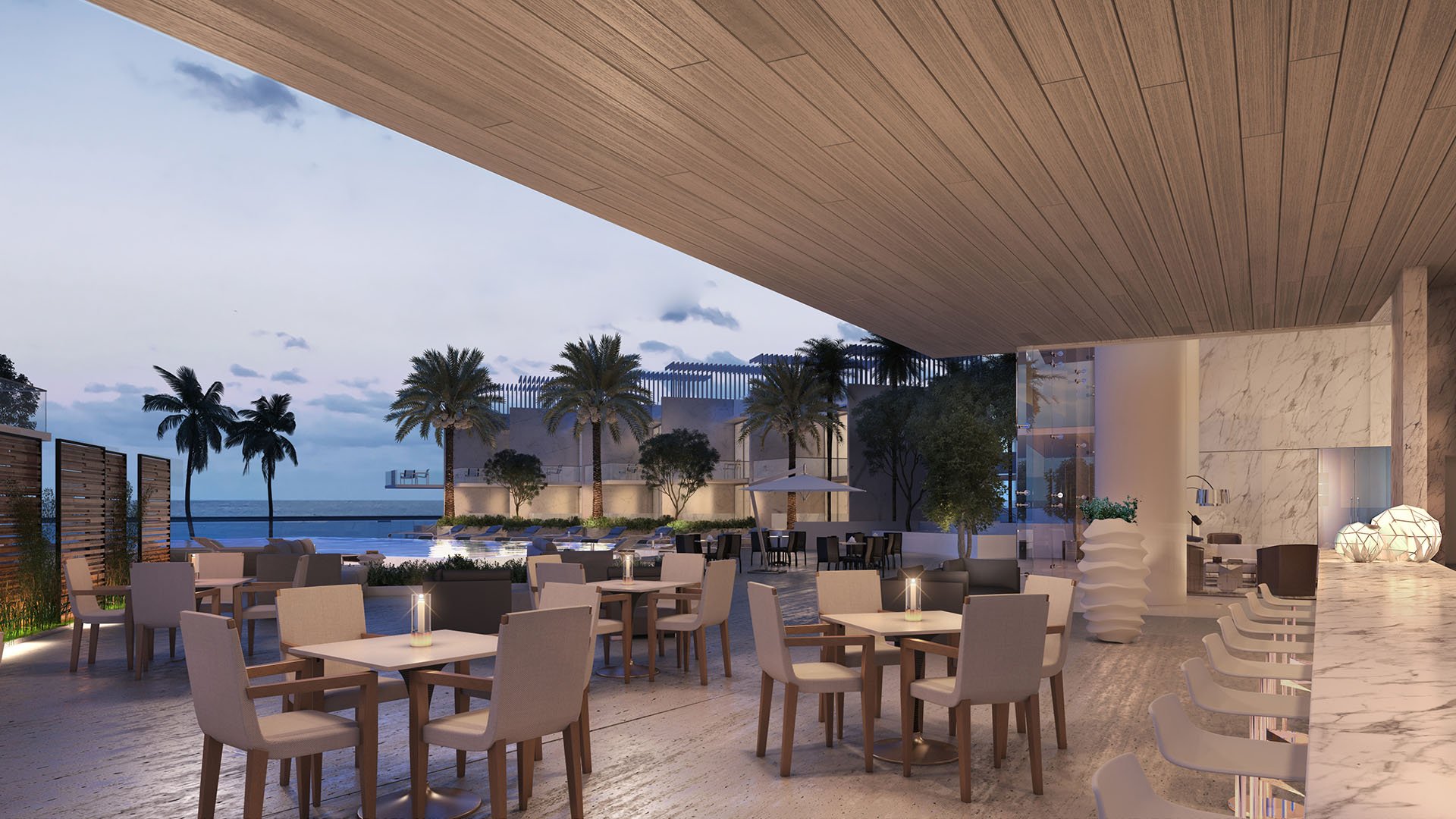
At Turnberry Ocean Club Sunny Isles, water defines the residential experience. The completed oceanfront condominium at 18501 Collins Avenue rises 54 stories and contains 154 residences. Flow-through layouts look east toward the Atlantic and west toward the Intracoastal, while private wraparound balconies extend those perspectives outdoors.
It is an unusually compelling proposition in Sunny Isles Beach, particularly for buyers who value sunrise, sunset and a sense of open sky. Yet a premium view should be evaluated as two distinct assets: the quality visible today and the probability that it will remain materially similar. Descriptions of unobstructed waterfront views may capture the current experience, but they do not establish a permanent legal right to every sightline.
For readers of MILLION’s Buyer's Guides, that distinction is fundamental to disciplined view pricing. It is also why the Oceanfront, Waterview and Flow-Through-units categories demand parcel-level diligence rather than building-level assumptions.
Turnberry Ocean Club’s residences span approximately 2,950 to 10,000 square feet. Six full floors of amenities and a private three-story Sky Club positioned roughly 300 feet above sea level make elevation and openness part of the broader luxury proposition, not merely features of the living room.
The financial stakes are substantial. The building has carried an average asking price of $2,722 per square foot, while a six-bedroom, 11,255-square-foot residence has been offered at $29.75 million. Both are asking-price indicators, not evidence of completed transactions, and availability can change.
A buyer should therefore resist assigning the entire difference between two residences to a generic “view” label. Separate direct ocean exposure, lateral coastline visibility, Intracoastal breadth, balcony experience, floor height and the resilience of each view cone. The result is a more defensible premium.
A building-wide view assessment is too imprecise. Each residence should be studied through its east, northeast and southeast view cones, with close attention to what lies between the principal rooms, terraces and horizon.
Begin inside the actual residence at several times of day. Identify which views are frontal and which depend on looking across an adjacent parcel. Then map every low-rise building, assembled site and underused oceanfront property within those angles. A higher floor may clear an existing structure yet still face future construction of materially greater height.
Comparison visits can sharpen judgment. Residences at Jade Signature Sunny Isles Beach, The Ritz-Carlton Residences® Sunny Isles and Bentley Residences Sunny Isles can help buyers distinguish the value they place on orientation, elevation and the balance between direct and oblique water exposure. The objective is not to declare one building superior, but to calibrate the value of a specific sightline.
Nearby redevelopment presents the clearest warning. An oceanfront condominium tower at 19051 Collins Avenue has been approved with 62 stories and a height of 820 feet. The project would replace the low-rise Miami Beach Club on an approximately two-acre parcel and, if built as approved, would stand taller than the city’s existing buildings.
That approval shows why present-day openness cannot be inferred from a neighbor’s current scale. A low-rise property may provide temporary visual relief rather than lasting protection. For Turnberry buyers, the relevant question is not simply whether a project is next door, but whether its massing intersects the precise view cone of the residence under consideration.
Distance, angle and elevation all matter. A tower outside a direct eastward axis may still alter a northeast coastline panorama, a terrace’s sense of openness or the amount of visible sky. The effect should be modeled, not described in broad terms.
For every parcel within a material sightline, review ownership, zoning, development capacity, active applications, approvals, demolition activity, construction permits and available building plans.
Ask counsel to determine whether any recorded easement, covenant or other legal instrument protects the sightline. Without such protection, marketing language should not be treated as a view easement. Buyers should also have planning or architectural professionals interpret approved envelopes and likely massing, because a permit record alone may not reveal the visual consequence from a particular floor.
This diligence does not eliminate uncertainty. It converts an undefined risk into a more intelligible one-one that can inform price, contract terms and unit selection.
The cleanest framework assigns one value to the residence as enjoyed today and another to the durability of its outlook. Direct Atlantic exposure with fewer vulnerable angles may support a different premium than a lateral panorama dependent on a low-rise neighboring parcel.
Apply that distinction when comparing asking prices, reviewing recent contracts if available and deciding whether a higher-floor alternative justifies its cost. The best purchase is not necessarily the least exposed residence. It is the one whose price accurately reflects both the beauty of the present view and the documented risk to its future.
Are Turnberry Ocean Club’s waterfront views legally guaranteed? Marketing descriptions do not, by themselves, create a permanent view easement. Recorded legal instruments must be reviewed separately.
Why should each unit line be evaluated independently? Orientation, floor height and nearby parcels affect east, northeast and southeast sightlines differently.
Does a high floor eliminate obstruction risk? No. Approved nearby construction may materially exceed the height of an existing low-rise property.
What nearby approval illustrates the redevelopment risk? A 62-story, 820-foot oceanfront tower has been approved at 19051 Collins Avenue to replace a low-rise property.
Which public records should a buyer review? Examine zoning, ownership, applications, approvals, demolition activity, permits and available building plans.
Should an asking-price average be treated as market value? No. Asking metrics are time-sensitive and should not be confused with completed-sale evidence.
How should a buyer divide the view premium? Separate current visual quality from the probability that surrounding redevelopment will alter it.
Do flow-through layouts reduce view risk? They provide exposure toward both the Atlantic and Intracoastal, but each direction still requires independent analysis.
Can a neighboring project affect value without blocking the ocean? Yes. It may alter coastline visibility, open sky, privacy or the perceived breadth of a terrace view.
Who should assist with view-risk diligence? Real estate counsel and qualified planning or architectural professionals can review protections, entitlements and potential massing.
To compare the best-fit options with clarity, connect with MILLION.
If branded residences are on your mind — as a home or as an allocation — we would be glad to share what we are seeing, privately.
Begin a quiet conversation