A temporary certificate can permit a Cora Merrick Park closing and lawful occupancy before every common area or service is complete. Buyers should align the issued approval with their contract, lender, title requirements, insurance coverage, and practical move-in expectations.
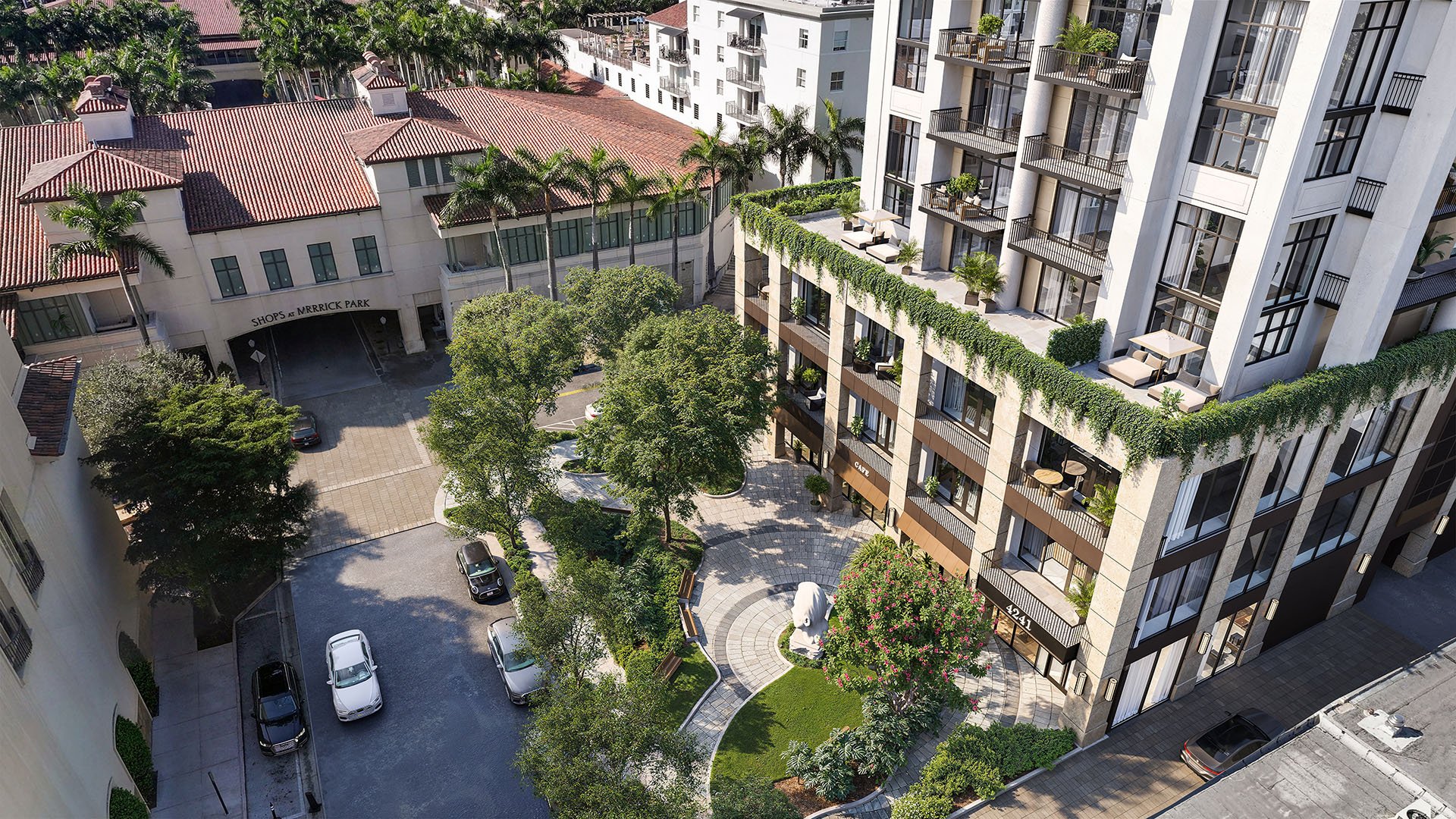
A Temporary Certificate of Occupancy, commonly called a TCO, allows a building-or an approved portion of it-to be occupied before all construction is complete, provided the covered areas are safe for their intended use. For a buyer at Cora Merrick Park, the distinction is consequential: a lawful closing and a polished, fully operational residential experience are not necessarily the same milestone.
A TCO may cover designated floors, residences, entrances, or other sections while unfinished or unapproved areas remain closed. Core utilities and life-safety systems required for the approved portion must be operational. Noncritical work, however, may continue in amenities, common areas, retail spaces, or cosmetic finishes.
A lawful first night in residence does not necessarily mean the entire property is complete.
A final Certificate of Occupancy, or CO, marks a later stage. In Coral Gables, required inspections must be recorded as passed before a formal request for a final CO or Certificate of Completion is submitted. An approved TCO must remain posted at occupied premises operating under that certificate.
South Florida pre-construction contracts commonly permit developers to initiate closings after a TCO rather than wait for the final CO. The controlling language is the buyer's signed agreement, read alongside the condominium documents and the municipal approval actually issued. General market practice cannot supersede those documents.
At closing, the purchaser may take title, fund the balance, begin loan obligations, and assume specified ownership responsibilities even while portions of the property remain under completion. The lobby, pool, fitness center, restaurants, retail spaces, or other common areas could remain unfinished or unavailable. That possibility does not establish the current status of Cora Merrick Park, which must be verified through the project's documents and Coral Gables permit records.
The issue is equally relevant when comparing nearby ownership options such as Ponce Park Coral Gables and The Village at Coral Gables. Buyers should compare not merely projected completion language, but the contractual trigger for closing, the scope of occupancy approval, and the remedies tied to unfinished obligations.
Before accepting a closing date, counsel should review the issued TCO itself. The essential questions are practical: Which floors and uses does it cover? Which spaces does it exclude? What conditions govern occupancy? When does the approval expire? TCOs are time-limited, with the building official setting the period for completing outstanding work or securing further approval.
Buyers should also examine open inspections in Coral Gables permit records. Planning approvals may condition temporary occupancy on performance security or escrow arrangements for unfinished obligations, but no purchaser should assume such a safeguard exists for a particular residence without documentary confirmation.
A disciplined closing file should include written confirmation that the residence and intended access route fall within the approved scope. It should also identify the path to the final CO, the party responsible for satisfying remaining conditions, and any contractual outside date, holdback, or remedy. Whether those protections can be secured depends on the agreement and negotiation.
Occupancy approval does not guarantee unrestricted use of every floor, entrance, elevator, or amenity. Developers may stage move-ins, schedule elevator reservations, or reserve access routes for construction while excluded areas are completed. Early residents may encounter construction traffic, noise, restricted circulation, and intermittent elevator limitations.
A refined move-in plan should therefore be specific, not aspirational. Request a dated schedule showing which entrances, elevators, parking or valet functions, amenity areas, retail spaces, and staffed services will operate on the intended move-in day. Ask whether deliveries require appointments, whether contractors use separate routes, and whether residents will face temporary access windows.
The same scrutiny applies across the broader luxury corridor, including Four Seasons Residences Coconut Grove. A buyer evaluating new construction should distinguish the legal availability of a residence from the operational maturity of the surrounding property.
Insurance is among the most important TCO-era considerations because construction may continue after individual ownership begins. Buyers should coordinate the developer's builder's-risk program, the condominium association's master policy, and the owner's HO-6 policy. The objective is to understand precisely where one layer ends and another begins.
Obtain written clarification on responsibility for damage within the residence, completed common elements, and unfinished common areas. Ask whether construction-related exclusions apply, how deductibles are allocated, and whether personal property, improvements, loss assessment, additional living expense, and liability coverage respond from the closing date or the possession date. The answer depends on the actual policies and ownership documents-not assumptions about a standard condominium closing.
A financed buyer should involve the lender early. The lender may evaluate the purchase contract, title conditions, municipal approval, insurance evidence, and scope of the TCO before authorizing funding. The title company should likewise confirm that it will insure the transaction under the specific temporary approval. Financing, interest accrual, possession, and insurance responsibility can diverge when phased completion precedes final project completion.
Life-safety systems and essential utilities must function in the portion approved for occupancy, but lifestyle services may arrive later. Valet, dining, spa, pool, fitness, security integrations, and other hospitality-oriented offerings may begin after initial closings rather than on the first move-in date.
For an ultra-premium buyer, this is not a minor distinction. Service availability can shape daily routines, staffing plans, guest arrivals, vehicle handling, wellness schedules, and the decision to occupy immediately or wait. Request the opening sequence in writing, including dates where available, operating hours, interim arrangements, and the party responsible for updates.
The strongest approach aligns four records before funds are released: the purchase agreement, the issued TCO, lender and title acceptance, and the insurance structure. Counsel can assess whether the closing trigger has been met and identify the consequences if final approval or material amenities are delayed. An insurance adviser can map potential gaps, while the buyer's representative can verify the physical move-in route and service plan.
Within MILLION's Buyer's Guides, this pre-construction question is best treated as a defining ownership issue, not a technical footnote. A residence may be legally occupiable without being fully move-in ready in the lifestyle sense. At Cora Merrick Park in Coral Gables, precision should govern: verify the actual approval, its covered areas, expiration date, open inspections, and the written timetable for everything that matters after the keys are delivered.
For discreet guidance on South Florida luxury property and contract-stage diligence, connect with MILLION.
If branded residences are on your mind — as a home or as an allocation — we would be glad to share what we are seeing, privately.
Begin a quiet conversationA TCO permits occupancy of a building or approved portion before all construction is complete, provided the covered areas are safe for their intended use.
Yes, some pre-construction contracts permit closing after a TCO. The purchase agreement and the specific municipal approval control.
No. Pools, fitness spaces, dining, retail, and other common areas may remain unfinished or unavailable.
Yes. It may cover specific units, floors, entrances, or sections while excluded areas remain closed.
Counsel should review the covered areas and uses, exclusions, conditions, expiration date, contract trigger, and available remedies.
Yes. Elevator reservations, delivery schedules, access routes, and move-in dates may be managed while construction continues elsewhere.
Acceptance depends on underwriting, the contract, title conditions, insurance evidence, and the scope of the issued approval.
Buyers should coordinate the developer's builder's-risk coverage, the condominium master policy, and their own HO-6 policy.
Core utilities and life-safety systems needed for safe occupancy must operate within the portion covered by the TCO.
The buyer should review the issued certificate and check Coral Gables permit records for approved areas, expiration, and open inspections.