A discreet guide to planning a removable living-room screening at EDITION Edgewater, balancing sightlines, dialogue clarity, lighting, guest logistics and building-specific permissions without committing to a dedicated theater.
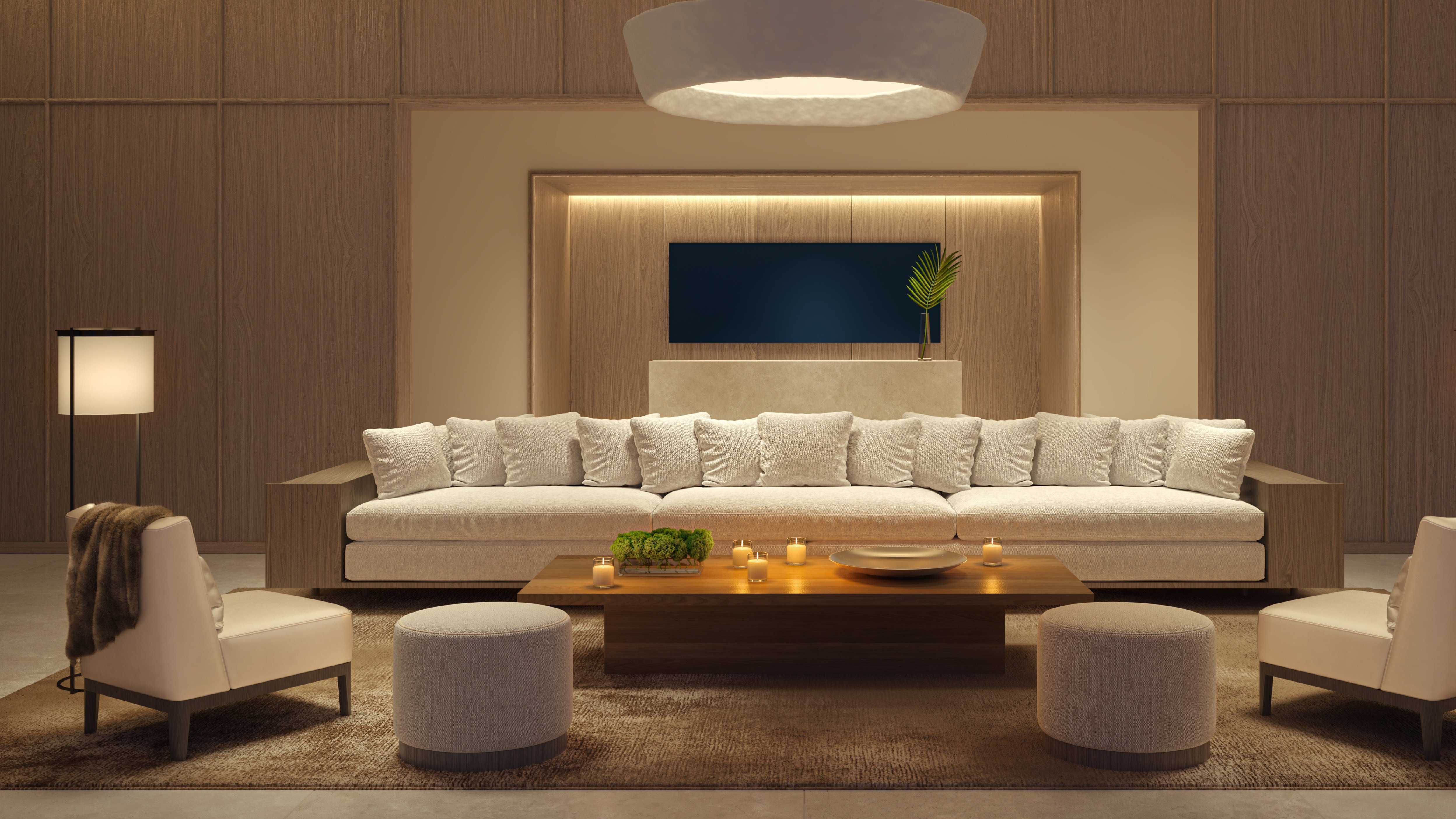
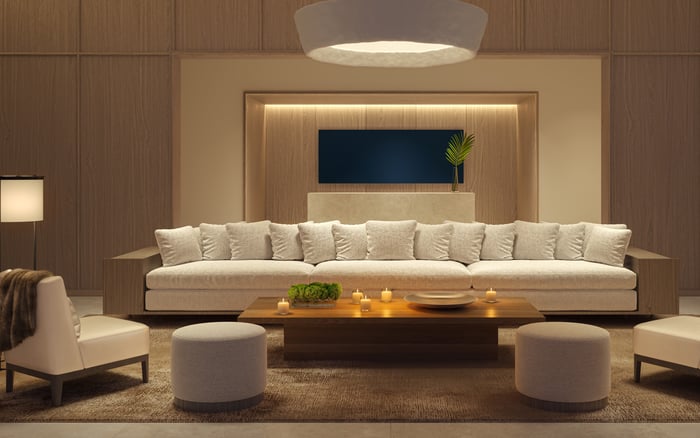
The most elegant private screening does not announce itself as a permanent installation. It begins with a living room made for conversation, then shifts character through a well-considered picture, intelligible dialogue and restrained lighting. When the credits finish, the apartment should return to everyday life without a furniture-moving operation.
For a buyer considering EDITION Edgewater, the brief is straightforward: plan a removable living-room experience rather than assume a dedicated cinema is necessary. This is a design approach, not confirmation of a screening amenity or an approved use. Establish building-specific permissions, guest arrangements and installation requirements before committing to equipment or invitations.
The goal is not to reproduce a commercial auditorium. It is to make a small gathering feel effortless while keeping the home, and its neighbors, comfortable.
Begin with the intended audience and the seats guests will actually occupy. A generous picture offers little value if the outermost guest must watch at an awkward angle or a chair blocks a circulation route.
An approximately 36-degree viewing angle from the farthest seat is a useful reference for screen sizing. Treat it as a planning benchmark, not a mandate to maximize the image. Test the proposed picture area from every intended seat, including those at the edges, before selecting equipment.
For buyers also considering Aria Reserve Miami, the same question belongs on the viewing checklist: can the proposed seating arrangement support both conversation and comfortable viewing? Evaluate the residence itself rather than assume a project name establishes its suitability.
Choose the display around that arrangement. An existing television may be the least disruptive option. Consider a removable projection screen only if its placement, associated equipment and storage work without compromising the room. Plan the route between seating, refreshments and the exit before deciding how many guests to invite.
A screening succeeds when dialogue is easy to follow at a considerate volume. Room dimensions and proportions affect low-frequency buildup, reflections and resonance. The sound-system plan should respond to the particular room, not a generic equipment package.
Start with the interior itself. Rugs, upholstered furnishings and heavy drapes can reduce echoes and reverberation without imposing a theater aesthetic. Strategically placed acoustic panels can also control reflections and improve dialogue clarity. Where appropriate, consider removable treatments, with placement guided by an acoustic professional rather than appearance alone.
None of these measures amounts to soundproofing. Acoustic treatment improves sound within the room; it does not establish isolation from neighboring residences. True isolation can involve a mechanically decoupled room within a room-an intervention fundamentally different from a temporary evening setup.
Test a dialogue passage and a louder sequence before guests arrive. Set the system for intelligibility rather than impact, and resist using extra bass to create a sense of occasion. If the experience depends on substantial volume, reconsider the configuration rather than assume soft furnishings will contain the sound.
Lighting should ease the transition to a screening without making the room difficult to navigate. The central principles are dimmable or indirect illumination, low-level pathway lighting and keeping light off the screen.
Think in stages: enough illumination for arrivals and conversation, a subdued setting for the film, then a gentle return to social lighting afterward. Keep the path to refreshments and the exit clearly visible. Avoid placing a lamp where its light falls directly across the picture.
For someone evaluating Villa Miami alongside other Edgewater options, this becomes a practical viewing exercise: identify which light sources would need adjustment and where temporary equipment would sit. The question is not whether a room looks cinematic in a photograph, but whether it can change modes gracefully.
Store remotes, charging accessories and spare cables together. A discreet setup is as much about eliminating small interruptions as concealing technology.
A residential address is not blanket permission to stage an event. Before setting a guest count, ask management which occupancy, visitor, noise and vendor provisions apply to the gathering. Confirm whether any proposed installation or delivery requires approval.
Quiet hours and event restrictions are property-specific. Do not borrow a time window from another Edgewater residence or assume a modest guest list removes the obligation to avoid disturbance. Nor should a lobby, corridor or shared lounge become overflow reception space without explicit permission.
The same due diligence applies when considering The Cove Residences Edgewater: ask how the proposed evening would work under that property's own rules, without importing expectations from another building.
Give guests clear arrival instructions and keep hospitality within the space you are authorized to use. If vendors are involved, settle access, equipment removal and any applicable approval requirements in advance. Discretion means preventing a private invitation from becoming a shared-building inconvenience.
If the concept expands beyond an intimate gathering, ask management whether additional review is needed and check with the relevant Miami city office about any municipal requirements. Do not assume that permission from the building answers every question about a larger event.
Resolve those questions before expanding the guest list or booking vendors. This guide does not establish a permitting requirement or exemption for a particular gathering.
The final rehearsal should include putting everything away. Decide where a removable screen, speakers and accessories will be stored, and confirm that restoring the room does not depend on leaving equipment in shared areas.
Before the evening, walk the route between seats, test the picture and dialogue, check the lighting and confirm guest arrangements. Afterward, the measure of success is simple: a memorable film, comfortable guests and a living room that still feels like home.
For a considered approach to choosing a South Florida residence around the way you entertain, explore MILLION.
If branded residences are on your mind — as a home or as an allocation — we would be glad to share what we are seeing, privately.
Begin a quiet conversationNo. It describes a removable living-room screening approach, and building-specific amenities and permissions should be confirmed separately.
An approximately 36-degree viewing angle from the farthest seat is a useful planning reference. Check comfort and sightlines from every intended seat before selecting equipment.
No. An existing television may be the least disruptive choice, while a removable projection setup should be assessed for placement, circulation and storage.
Rugs, upholstered furnishings and heavy drapes can reduce echoes and reverberation. They do not establish sound isolation from neighboring spaces.
Strategically placed panels can control reflections and improve dialogue clarity. Their placement should respond to the room's acoustic needs.
No. Treatment improves sound within a room, while true isolation can require substantial construction, including a mechanically decoupled room within a room.
Favor dimmable or indirect illumination and low-level pathway lighting. Keep light off the screen while preserving a clear route through the room.
Confirm the rules that apply to the specific property with management. Quiet hours from other residences should not be treated as EDITION policy.
Do not assume shared areas can serve as reception space. Obtain explicit permission for any proposed use beyond ordinary access.
Ask management about building requirements and the relevant Miami city office about municipal requirements. This guide does not establish a permitting requirement or exemption for a particular gathering.