A Miami Beach-Surfside comparison should test each residence individually, with particular attention to waterfront orientation, building systems, association responsibilities, insurance terms, and contractual timing.

Choosing between Miami Beach and Surfside involves more than comparing architecture, privacy, services, and access to the water. Waterfront exposure, storm preparation, condominium operations, and insurance terms can vary from one property to another, including between residences that appear similar at first glance.
The useful distinction is therefore not a blanket conclusion that one market is safer or easier to insure. It is the way each shortlisted property performs under the same disciplined review. Buyers should examine the exact site, the full building, the association’s responsibilities, the proposed unit coverage, and the time available to resolve open questions before contractual deadlines.
The neighborhood frames the search, but the individual property determines the diligence.
A coastal comparison should start at the address rather than with a broad neighborhood label. Review available property records, elevation materials, surveys, insurance documents, and condominium disclosures with the appropriate professional advisers. The objective is to understand the residence’s setting and how the building’s essential components relate to that setting.
Waterfront orientation is only one part of the inquiry. Access points, parking, lobbies, mechanical equipment, electrical systems, generators, elevators, and service areas may be positioned differently from the residential floors. A high-floor home can still depend on infrastructure located elsewhere in the building, so the unit and the property should be evaluated together.
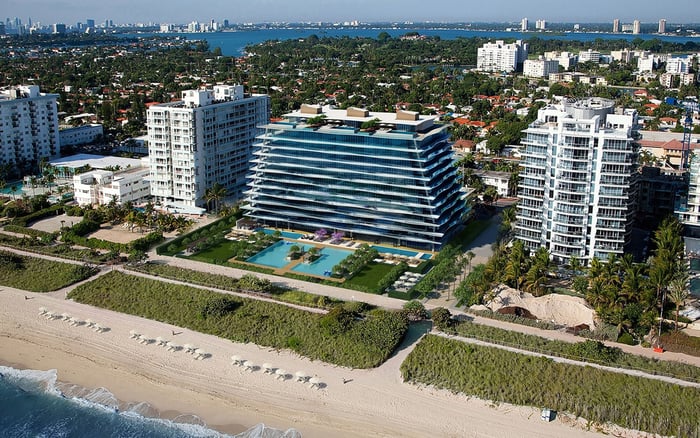
At The Perigon Miami Beach, as with any waterfront condominium under consideration, design and views should be assessed alongside available building documents and proposed insurance terms. The project’s location or presentation should not replace an address-specific review.
A Miami Beach search may include direct oceanfront, bayfront, and other coastal settings. Instead of assigning one exposure profile to the entire market, compare each finalist using consistent questions: What portions of the property are most exposed? Where are critical systems located? What storm procedures are documented? Which responsibilities belong to the association, and which remain with the owner?
The comparison should also account for the building’s age, design, maintenance record, available reserve information, and documented improvements without assuming that any single characteristic settles the issue. A newer residence may present different questions from an established condominium, but both require careful document review.
Buyers considering Setai Residences Miami Beach or Shore Club Private Collections Miami Beach can keep lifestyle and diligence workstreams moving together. Service, amenities, privacy, and architecture define the ownership experience, while insurance, association documents, and building operations help establish whether that experience fits the buyer’s risk tolerance and carrying-cost expectations.
Surfside deserves the same property-by-property discipline. Buyers should avoid treating a townwide label, nearby building, or general coastal description as a substitute for records tied to the exact residence. Even neighboring condominiums may have different physical configurations, association arrangements, maintenance histories, and insurance structures.
For The Delmore Surfside or another Surfside residence, the review should connect site conditions with building operations. Ask how residents and staff access the property during disruptive weather, where essential equipment is located, what backup arrangements are documented, and how the association communicates storm procedures.
This approach makes the Miami Beach-Surfside comparison more precise. The buyer is not attempting to select a neighborhood through a single risk label. The goal is to identify which specific residence offers the most understandable combination of exposure, preparedness, shared obligations, private coverage, and ownership cost.
Condominium resilience depends on more than the interior of the unit. The association’s policies, deductibles, reserves, maintenance practices, emergency planning, and building systems can influence an owner’s financial and practical exposure. Those elements should be considered together rather than reviewed as unrelated documents.
Request the current association insurance materials available for review, along with relevant deductible information and an explanation of coverage responsibilities. Confirm that every document corresponds to the correct association, building, and policy period. If the property includes multiple structures or associations, clarify which entity is responsible for each component.
The physical review should extend beyond visible finishes. Available information about the roof, façade, glazing, waterproofing, drainage, elevators, generators, mechanical equipment, electrical equipment, parking, and access routes can help a buyer form better questions. Any uncertainty should be directed to qualified insurance, legal, engineering, inspection, or association professionals as appropriate.
Reserve information also belongs in the same conversation. It can help a buyer understand how the association plans for shared obligations, but it should be interpreted with the governing documents, available financial materials, and the scope of anticipated work. No single document provides the entire picture.
Insurance diligence should test how the association’s coverage and the proposed owner’s policy work together. Ask what the association policy addresses, what remains the unit owner’s responsibility, which deductibles may apply, and whether the proposed owner coverage responds to the relevant gaps. Assumptions based on another property or an earlier transaction may not match the residence under review.
Terms matter as much as the existence of a policy. Review available limits, deductibles, exclusions, valuation provisions, covered property, and other material conditions with a qualified insurance adviser. If financing is involved, the lender’s requirements should also be identified early enough to address them without compressing the closing schedule.
Premium indications are useful only when based on accurate information. Provide the adviser with the correct address, unit details, occupancy plans, ownership structure, and available association documents. If the property will be used as a second home, confirm that the proposed terms reflect that intended use.
Insurance and building-document review should begin while the buyer still has meaningful contractual options. Delaying requests can leave insufficient time to obtain materials, clarify discrepancies, compare proposed terms, or consult the necessary advisers.
A practical sequence is to identify the exact property, gather available site and building records, request association documents, assess essential building systems, obtain insurance guidance, and compare findings with the contract timeline. Questions that cannot be answered should remain visible in the decision process rather than being converted into assumptions.
The same framework should be applied to every finalist. Consistency makes it easier to compare Miami Beach and Surfside without allowing a striking view, familiar brand, or broad neighborhood impression to overshadow unresolved operational or insurance issues.
The strongest choice is the residence whose benefits and obligations are clear enough for the buyer to evaluate confidently. Views, architecture, privacy, amenities, and service remain central, but they are best considered alongside the building’s systems, association structure, insurance terms, and storm-planning materials.
For discreet guidance when comparing exceptional coastal residences, connect with MILLION.
If branded residences are on your mind — as a home or as an allocation — we would be glad to share what we are seeing, privately.
Begin a quiet conversationApply the same address-specific review to each finalist. Compare site exposure, building systems, association obligations, insurance terms, and contractual timing.
Property configuration and available records can differ even between nearby buildings. Neighborhood labels should not replace a review tied to the individual residence.
Review available information about access points, parking, lobbies, elevators, generators, and mechanical and electrical systems. These shared components can affect how the property operates.
Request the current materials available for the correct association, building, and policy period. Review coverage responsibilities and deductibles with a qualified insurance adviser.
The proposed owner policy should be reviewed alongside the association’s coverage. The goal is to identify the owner’s responsibilities and any material gaps.
Begin while contractual review options remain available. Early work allows time to gather documents, compare terms, and resolve discrepancies.
No. A high-floor home can still depend on access routes and shared equipment located elsewhere in the property.
Ask about documented procedures, resident communications, building access, backup arrangements, and the location of essential systems. Direct unanswered technical questions to qualified professionals.
Reserve information can provide context for shared obligations and anticipated work. It should be considered with the governing documents and available financial materials.
No. Coverage, deductibles, responsibilities, and underwriting details may differ by property and unit.