For collectors choosing between Downtown Miami and Edgewater, the decisive differences lie within individual buildings: documented storage conditions, workable freight access, environmental controls, and a reliable installation plan.
For an art collector, a residence must do more than provide a compelling setting. It must accommodate the collection’s arrival, installation, rotation, and care. Between Downtown Miami and Edgewater, the most useful comparison is not simply between neighborhoods. It is between individual buildings, their documented capabilities, and the people responsible for operating them.
There is no defensible neighborhood-wide winner on art handling, collector storage, freight access, or climate control. An advertised art-storage amenity deserves attention, but it does not establish that nearby towers offer comparable provisions. Equally, a building without an identified art-storage amenity should not be dismissed before its delivery procedures and off-site options are understood.
The buyer’s objective is straightforward: choose a home whose practical arrangements suit the collection, rather than asking the collection to accommodate an uncertain operating model.
One River Point’s advertised amenities include temperature-controlled, secured art storage-a more specific proposition than ordinary residential storage-and multi-zone climate control integrated with smart-home technology. These are useful starting points for a collector’s inquiry, not substitutes for operating specifications.
Ask whether storage is currently available, how space is assigned, what access rights accompany ownership, and whether separate fees apply. Establish who may handle a work, whether outside specialists can enter, and what documentation governs responsibility while an object is stored. The phrase “art storage” identifies an intended use; buyers still need to understand the service behind it.
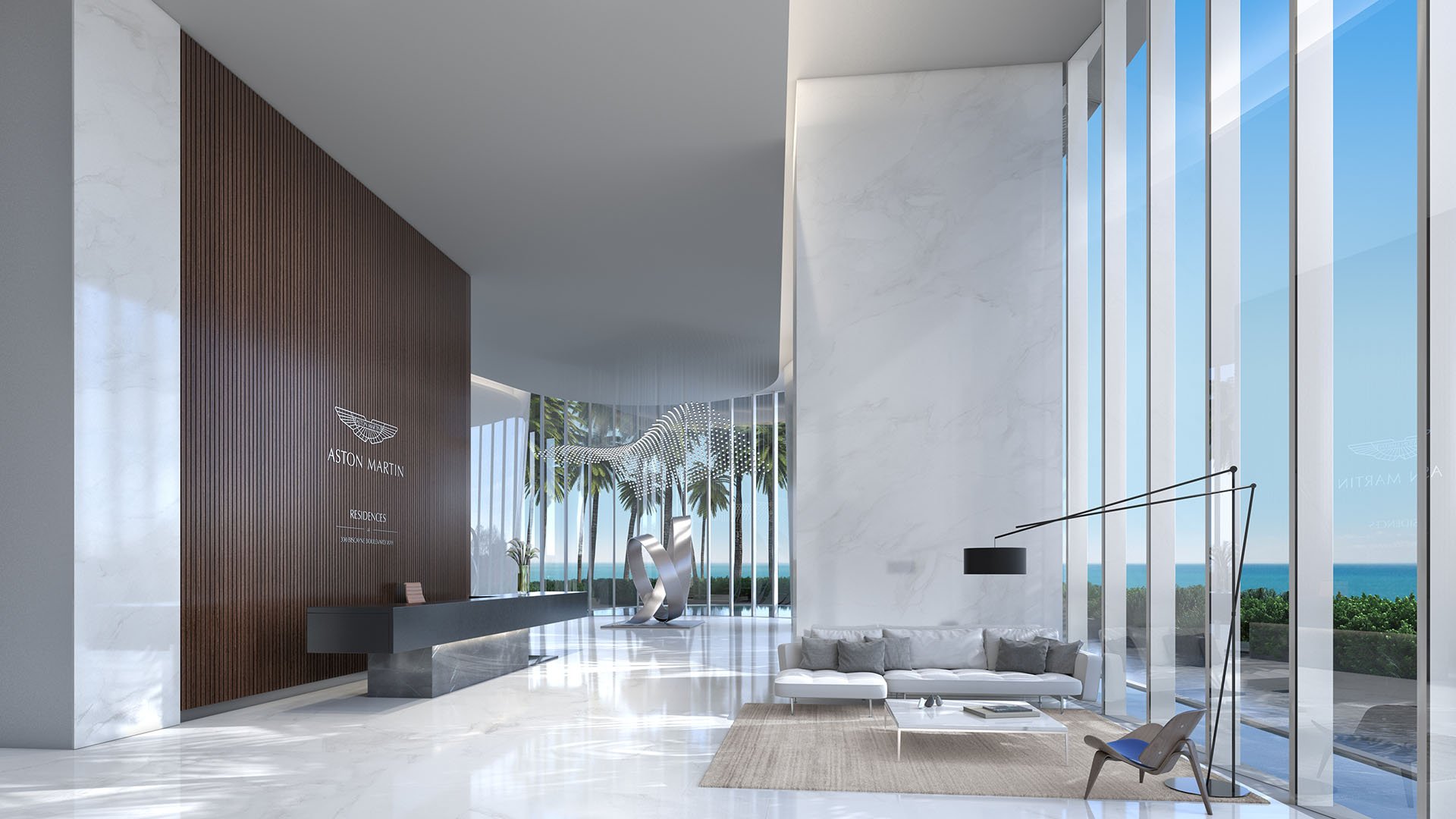
When considering Aston Martin Residences Downtown Miami alongside other Downtown addresses, apply those questions independently. Do not assume One River Point’s advertised features extend to another building merely because both appear on the same residential shortlist.
For an Edgewater shortlist that includes Aria Reserve Miami, start with the collection’s physical requirements. Give the proposed art handler the crated dimensions, weights, and installation needs, then request a building-specific route review. This is a due-diligence exercise, not a claim about any particular tower’s freight capabilities.
Newer towers in Downtown Miami, Edgewater, and Midtown commonly have service elevators and loading docks, but deliveries and rideshare activity can compete for access. A dock’s existence does not establish that a truck can occupy it for the time an installation requires.
A buyer assessing EDITION Edgewater should likewise request written elevator dimensions, door clearances, weight limits, and reservation procedures. Have the handler assess the entire route, including turns and thresholds between unloading and the residence. Elevator specifications alone cannot establish whether a crated work can reach its intended room.
Temperature control is not documented humidity control. Nor does a smart-home interface establish an environmental guarantee for artwork. The advertised ability to adjust a room’s settings is distinct from evidence of stable storage conditions, monitoring, and a defined response when conditions change.
Request HVAC specifications for both the residence and any storage area. Ask whether humidity is actively controlled, what conditions are maintained, where readings are taken, and whether records are available. Have the collection’s conservator advise on appropriate requirements rather than assuming a generic residential setting suits every medium.
Brickell provides a useful nearby comparison, but it should remain geographically separate from Downtown proper. The marketed amenities at St. Regis® Residences Brickell include private, secure climate-controlled storage and smart-home climate and lighting controls. The storage description does not specifically identify an art-storage service. Buyers should verify permitted uses and environmental specifications before treating that amenity as suitable for a collection.
An off-site arrangement can separate the choice of residence from the need to receive or hold works before installation. Doral offers options outside both Downtown Miami and Edgewater, allowing buyers to investigate logistics independently of their preferred residential address.
One fine-art logistics facility there occupies 26,000 square feet, with advertised features that include a dedicated interior dock, climate control, and a standby backup generator. Its concrete tilt-up construction and 22-foot ceilings are additional physical characteristics to discuss during a facility review. None of these features alone establishes suitability for a particular collection.
The generator description does not specify which systems it supports, and the climate-control description does not establish humidity targets. Request written confirmation of backup coverage, environmental monitoring, access procedures, and handling arrangements before committing works to storage.
A separate Doral receiving operation offers climate-controlled holding for pieces awaiting installation, along with certificate-of-insurance issuance and support for freight-elevator and move-in scheduling. This provides a staging option when arrival and installation dates differ. Confirm the scope of handling and insurance for the actual objects involved.
Service-elevator reservations, loading-dock scheduling, insurance paperwork, and restricted moving windows are practical high-rise delivery requirements. For a collector, they belong in the purchase review-not on a checklist deferred until installation is imminent.
Request a written package covering:
Freight-elevator interior dimensions, door openings, and weight limits.
Loading access rules, truck restrictions, and permitted delivery windows.
Reservation lead times, cancellation terms, and arrangements for delays.
Insurance requirements and approval procedures for outside handlers.
Storage availability, assignment terms, fees, and access rights.
HVAC specifications and the scope of any backup power serving collection spaces.
Where possible, ask management and the proposed handler to review the same delivery plan. A clear allocation of responsibility is more useful than a general assurance that the building accommodates valuable objects. For a residence still being planned or delivered, distinguish proposed provisions from services already operating.
Use address-based flood-map searches to review each candidate property rather than assigning a single risk profile to Downtown Miami or Edgewater. Neighborhood labels are too broad to settle a purchase-specific inquiry.
Then establish where storage, loading access, and relevant building systems sit within the property, and have qualified advisers assess the implications. Treat mapped flood information, building arrangements, and insurance terms as related but separate questions. A favorable answer to one should not replace investigation of the others.
The strongest choice is the building that can document a workable delivery route, appropriate storage arrangements, and environmental provisions your advisers consider suitable. Downtown Miami offers a specifically advertised art-storage example; that does not make it the automatic winner. Edgewater deserves the same property-by-property assessment.
Before committing, assemble the written confirmations into a single collection plan covering receiving, storage, delivery, installation, and ongoing care. The real luxury is not an amenity label, but confidence that the home can support the way you live with art.
Explore residences aligned with your collecting priorities with MILLION.
If branded residences are on your mind — as a home or as an allocation — we would be glad to share what we are seeing, privately.
Begin a quiet conversationThere is no established neighborhood-wide winner. Compare each building’s documented storage, freight access, environmental controls, and operating procedures.
One River Point advertises temperature-controlled, secured art storage. Buyers should confirm current availability, assignment terms, fees, and access rights.
No. Temperature or climate-control language does not establish humidity targets, monitoring protocols, or environmental guarantees.
It advertises multi-zone climate control integrated with smart-home technology. That description does not establish collection-specific environmental performance.
It markets private, secure climate-controlled storage, but the description does not specifically identify art storage. Confirm permitted uses and conditions directly.
Request interior dimensions, door clearances, weight limits, and reservation rules in writing. Have the art handler evaluate the complete crated delivery route.
Yes. A Doral receiving operation offers climate-controlled holding for pieces awaiting installation, creating a staging option between delivery and installation.
Not without confirmation of the systems it supports. Request written details of backup coverage and environmental monitoring.
Start with an address-based flood-map search for each property. Review storage locations, building arrangements, and insurance terms separately with qualified advisers.
Confirm loading access, delivery windows, elevator reservations, insurance requirements, and handler approval. Management and the handler should review the same installation plan.