A buyer-oriented framework for reviewing Arbor Coconut Grove’s insurance documents, from building replacement value and code-related rebuilding costs to bespoke interiors and assessment exposure.
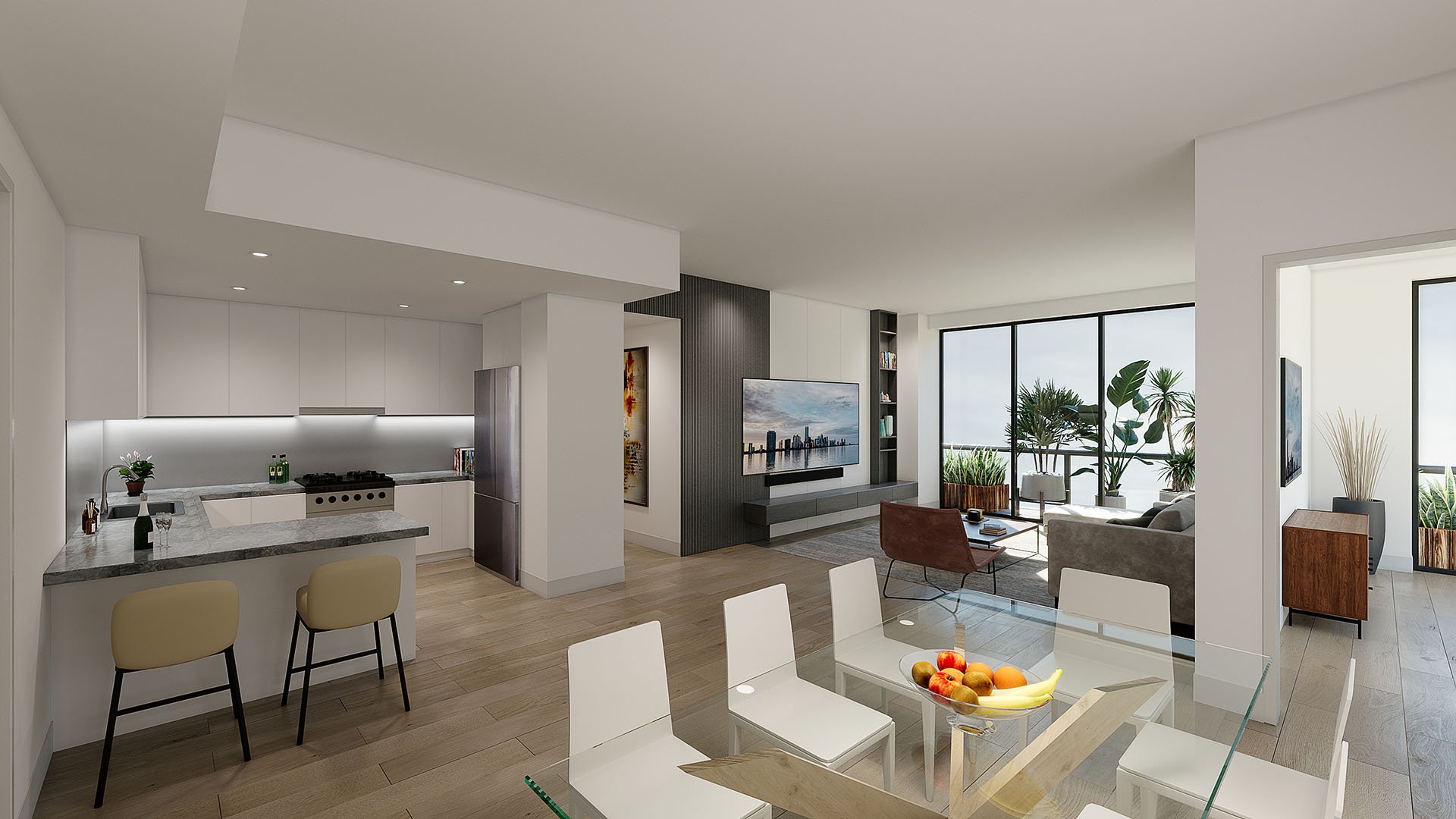
A beautifully appointed residence deserves an equally considered ownership file. For a buyer evaluating Arbor Coconut Grove, insurance diligence should connect three questions: what the association insures, whether its limits reflect replacement cost, and what remains the individual owner’s responsibility. The objective is not merely to confirm that a policy exists, but to understand how the building and residence would be restored after a covered loss.
Treat this as a South Florida condominium review framework, not an assurance of Arbor’s current coverage. Any conclusion about its insurer, building valuation, deductibles, ordinance-and-law protection or owner requirements should rest on the applicable documents. Neither a polished interior nor a familiar condominium name establishes the scope of insurance.
Start with the recorded declaration, bylaws and amendments, articles of incorporation, and current association rules. Add the current insurance policies and available inspection records. Association financial records, management agreements and meeting minutes provide context for insurance costs and governance, but do not replace policy language.
For the insurance review, request declarations, building schedules, insured limits, the valuation basis, deductibles, endorsements and exclusions. Read them together: a declarations page may identify a headline limit without explaining every restriction that governs a claim. Also request the replacement-cost appraisal used to support the building valuation.
Prospective buyers should arrange document delivery through the seller and transaction team rather than assume they have the same records-access rights as an existing owner. Maintain a written list of questions for the association’s insurance representative, the buyer’s own insurance adviser and, where interpretation is required, condominium counsel.
For a Coconut Grove search that also includes Park Grove Coconut Grove, use the same document checklist, but evaluate each association independently. A shared neighborhood is not evidence of shared insurance terms.
Replacement cost, rather than depreciated actual cash value, is the relevant basis for reviewing insurance on covered condominium building property. Association master policies generally protect building structures, common-area improvements and shared systems against covered perils, subject to their terms and exclusions.
Compare the declared building limits with an updated replacement-cost appraisal that reflects current construction costs. Ask when the valuation was prepared, which buildings and improvements it includes, and how the insured schedules align with that scope. A limit cannot be judged apart from the property it is intended to cover.
A practical review should establish:
The replacement value assigned to each scheduled building or covered property grouping.
The appraisal date and whether current construction costs have been considered.
The alignment of appraisal scope, building schedules and declared limits.
The exclusions and endorsements that qualify the apparent breadth of coverage.
These are questions to resolve, not evidence that Arbor is underinsured. The goal is a documented explanation of the valuation, not reassurance based solely on the size of the policy limit.
Replacement-cost coverage does not, by itself, resolve every expense associated with rebuilding under current codes. Ordinance-and-law protection warrants a separate review: it addresses costs that can arise when code enforcement changes what must be removed or reconstructed after a covered loss.
The three coverage categories serve different purposes:
Coverage A: Loss to an undamaged portion of a building when code enforcement requires its removal following a covered loss.
Coverage B: Demolition costs beyond standard property coverage.
Coverage C: Increased construction costs required to rebuild to current codes.
Ask the association’s insurance representative to identify the applicable limits and explain how the endorsements apply. Evaluate those limits against building age and the extent of relevant code changes. Do not assume a replacement-cost valuation answers the ordinance-and-law question.
If the search extends to Four Seasons Residences Coconut Grove, maintain the same distinction between the cost of replacing covered property and the cost of satisfying code requirements. This is a method of comparison, not a statement about either project’s policy.
The insurance boundary is not reliably described as everything inside versus everything outside the residence. Florida condominium insurance responsibilities depend on distinctions between association-insured property and unit-owner property. Drywall, unfinished walls and floors, and certain original fixtures may fall within master-policy coverage; that does not establish coverage for every finished surface or installed feature.
For a highly customized home, prepare a component schedule covering kitchen cabinetry, flooring, millwork and other improvements. Beside each item, record its replacement value and the policy expected to respond. Review the schedule with the owner’s HO-6 insurer alongside the association documents. Developer installation alone is not a sound basis for assuming cabinets, flooring or other finishes are association-insured.
Movable belongings, including furniture and electronics, generally require individual owner coverage rather than the association’s master policy. Distinguish those possessions from installed improvements so the HO-6 review addresses both categories clearly.
Apply the same discipline in a comparison with Opus Coconut Grove: evaluate the particular residence and its improvements, not merely the overall impression of finish quality. The goal is an explicit allocation of responsibility, with unresolved items referred for professional review.
A percentage-based windstorm deductible can represent a substantial association-level retained loss. Ask for the applicable percentage, the insured-value basis to which it applies, and its dollar equivalent under the policy. Without its calculation basis, a percentage is not a useful measure of exposure.
Next, distinguish the association’s retained loss from any amount that could be allocated to an individual owner. Master-policy deductibles and uninsured losses can generate assessments, making the governing documents and financial context relevant to the review.
HO-6 loss-assessment coverage is important to this coordination, but it does not guarantee reimbursement for every deductible assessment or uninsured building loss. Before relying on that coverage, ask the owner’s insurer to explain the applicable limits, exclusions and treatment of master-policy deductible assessments.
Before proceeding with a purchase, seek written clarity on the building valuation, ordinance-and-law terms, interior coverage allocation and deductible exposure. Where those elements do not align, establish what requires a policy adjustment, further interpretation or an explicit acceptance of risk.
An ownership file should make the financial responsibilities behind a residence as understandable as its floor plan. That clarity supports a more considered decision without suggesting insurance can eliminate every uncertainty.
For a considered approach to your next South Florida residence, explore MILLION.
If branded residences are on your mind — as a home or as an allocation — we would be glad to share what we are seeing, privately.
Begin a quiet conversationNo. It provides a condominium due-diligence framework; conclusions about Arbor’s coverage must come from the applicable policies and association documents.
Include governing documents, current policies, building schedules, limits, deductibles, endorsements, exclusions and the replacement-cost appraisal. Financial records and meeting minutes add context.
No. A prospective buyer should coordinate document delivery through the seller and transaction team rather than assume equivalent access rights.
The comparison helps assess whether declared limits align with the cost of replacing covered building property. The appraisal’s scope and current construction costs both matter.
Coverage A addresses loss to an undamaged building portion when code enforcement requires its removal following a covered loss, subject to policy terms.
Coverage B addresses demolition costs beyond standard property coverage. Coverage C addresses increased construction costs required to rebuild to current codes.
No. Original installation alone does not establish coverage; review each component against the applicable insurance responsibilities and policies.
Review custom kitchens, flooring, millwork and other improvements component by component. Movable belongings, such as furniture and electronics, generally also need individual owner coverage.
Identify the applicable percentage and insured-value basis, then translate the deductible into dollars. Separately examine how any resulting association loss could affect owners.
No. Reimbursement depends on the HO-6 policy’s terms, limits and exclusions, including its treatment of master-policy deductible assessments.