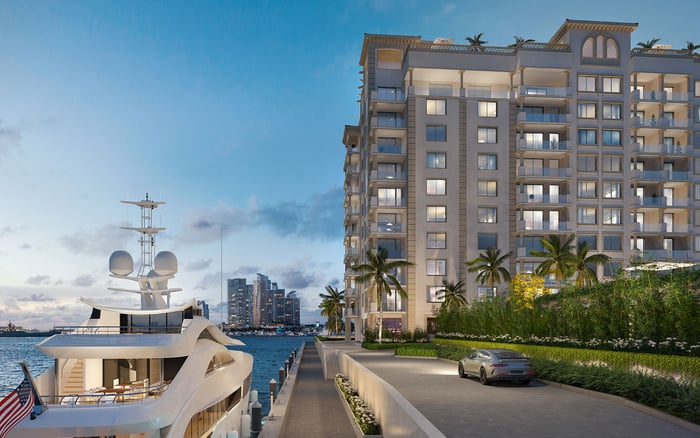
A buyer-focused framework for comparing South Florida luxury condos and waterfront estates through resale liquidity, association approvals, rental flexibility, ownership costs, and a realistic future exit.

The choice between a luxury condominium and a waterfront estate is not simply a preference for an elevated terrace or a private shoreline. It is a decision about control, shared obligations, permitted use and the conditions under which the next buyer can acquire the property. The best purchase serves today's lifestyle without making tomorrow's exit unnecessarily difficult.
For a buyer comparing Miami Beach residences with a standalone waterfront home, the question is not which category is inherently superior. It is which property offers clear costs, documented condition and an exit strategy suited to the intended holding period. A beautiful residence can still be an awkward asset when its obligations are unclear.
In August 2026, South Florida condos and townhouses had 9.7 months of supply and a median marketing period of 69 days, compared with 40 days for single-family homes. July's corresponding figures were 9.6 months of supply and 81 days for condos and townhouses, while single-family homes again recorded 40 days.
These comparisons point toward stronger single-family liquidity. They do not establish that a waterfront estate will sell faster than a luxury condominium. The categories are broader than either purchase under consideration, and a median is not a deadline. Separately, luxury-market median marketing time reached 93 days in Q1 2026, compared with 82 days in Q1 2025.
Before treating either format as more liquid, examine closed comparable sales, not asking prices alone. Compare properties with locations, conditions and ownership obligations that meaningfully resemble the target. For a Brickell buyer considering Una Residences Brickell, the relevant exercise is a residence-specific exit analysis-not an assumption that a regional condo median predicts its resale.
Purchase-approval requirements are building-specific. Do not presume that every association requires an interview, tax returns or the same application timetable. Obtain the governing documents and written purchase procedures early enough to incorporate applicable requirements into the transaction schedule.
Ask what must be submitted, who reviews it, which deadlines apply and whether approval conditions affect the intended ownership structure. These are questions to resolve, not universal requirements to assume. The objective is to understand the process before a closing date creates avoidable pressure.
Florida condominium purchasers have statutory disclosure and cancellation protections, but their application depends on transaction type, required documents and delivery timing. Florida counsel should confirm current requirements and contract-specific deadlines. A general understanding of purchaser protections is no substitute for tracking the documents and dates in the actual transaction.
Condo diligence should include governing documents, association financial information, applicable inspection documents and the structural-integrity reserve study before contractual deadlines expire. Where applicable, the purchaser-disclosure framework includes the inspector-prepared milestone-summary document.
Florida's milestone-inspection framework generally covers residential condominium and cooperative buildings with three habitable stories or more, requiring inspection at 30 years and every 10 years thereafter. Verify the actual deadline and compliance status; building age alone does not settle the question. The 2025 legislation narrowed applicability to three habitable stories and extended the structural-integrity reserve-study deadline to December 31, 2025. Completion status is therefore an important purchase check.
Structural work and reserve-funding obligations can affect ownership costs. Ask what work has been identified, how it will be funded and which assessments remain unresolved. Whether considering 57 Ocean Miami Beach or another condominium, apply the same discipline. A building's name or presentation does not establish its compliance or financial position.
Renting while waiting to sell can appear to be an elegant contingency. It is a credible exit alternative only when the proposed lease is permitted and the carrying-cost calculation works. Verify rental eligibility, minimum lease terms, annual lease limits and applicable approval requirements in the building's documents rather than relying on a listing description.
In Fort Lauderdale, a buyer evaluating Auberge Beach Residences & Spa Fort Lauderdale should investigate the rules governing the contemplated purchase and tenancy. A project reference does not establish rental permission or an approval timetable.
An estate is not automatically unrestricted. Check any HOA obligations, deed restrictions, municipal requirements, permitting issues and rental limitations separately. If leasing is essential to the purchase rationale, confirm eligibility before committing. Then evaluate the economics without assuming uninterrupted occupancy or rental income.
Waterfront estate diligence should extend beyond views and frontage to elevation, flood protection, storm resilience, seawall condition and dock documentation. These checks define the responsibilities that accompany the setting. Obtain property-specific professional evaluations rather than treating visual appeal as evidence of condition.
Flood coverage is separate from standard homeowners coverage, so both belong in the carrying-cost analysis. Seek property-specific insurance terms and review coverage and deductibles with qualified advisers. General insurance guidance cannot establish the underwriting outcome for an individual residence.
The comparison is between different responsibility structures-not between obligations and freedom from obligations. In Bal Harbour, a buyer weighing Oceana Bal Harbour against a standalone waterfront alternative should place association-related commitments alongside estate insurance and condition-related costs. Neither option should be evaluated solely by its purchase price.
Begin with the intended holding period, but do not treat a particular number of years as a proven performance threshold. A shorter planned stay makes transaction costs and resale timing especially important. A longer stay still demands scrutiny of future capital obligations and the capacity to absorb changing carrying costs.
Build a base case and a slower-sale case using closed comparable sales. Estimate likely net proceeds after selling costs, outstanding debt where applicable, unresolved assessments and ownership expenses during marketing. For an estate, include insurance and identified condition-related costs; for a condo, include association charges and known funding obligations.
Keep marketing time distinct from the full exit schedule. Allow time to prepare the property, satisfy applicable transaction requirements and reach closing. Then ask whether the purchase remains comfortable if the sale takes longer or yields less than expected.
Choose the condo when its use rules, approval process and shared financial obligations fit the plan. Choose the estate when its physical responsibilities, insurance position and restrictions are understood and acceptable. In either case, clarity matters more than a categorical promise of easier resale.
For a considered approach to your next South Florida purchase, explore MILLION.
If branded residences are on your mind — as a home or as an allocation — we would be glad to share what we are seeing, privately.
Begin a quiet conversationNo. Regional figures favor single-family homes directionally, but those broad categories do not predict the resale timing of a particular waterfront estate or luxury condo.
Condos and townhouses had a 69-day median marketing period, compared with 40 days for single-family homes. Condo and townhouse supply stood at 9.7 months.
The supplied evidence does not establish a universal interview requirement. Obtain the building's governing documents and written purchase procedures to confirm its actual requirements.
Review governing documents, association financial information, applicable inspection documents and the structural-integrity reserve study before contractual deadlines expire.
Florida's framework generally covers residential condominium and cooperative buildings with three habitable stories or more, with inspections at 30 years and every 10 years thereafter. Verify the building's actual deadline and compliance status.
The 2025 legislation extended the deadline to December 31, 2025, making completion status an important subsequent purchase check. Structural work and reserve funding can affect ownership costs.
That depends on building-specific rental eligibility, minimum lease terms, annual lease limits and applicable approvals. Confirm permission and evaluate carrying costs before relying on leasing as a fallback.
No. Buyers should separately verify any HOA obligations, deed restrictions, municipal requirements, permitting issues and rental limitations.
Examine elevation, flood protection, storm resilience, seawall condition and dock documentation. Review homeowners and flood coverage separately as part of the insurance-cost analysis.
Use closed comparable sales to estimate net proceeds, selling costs and carrying expenses, including unresolved assessments or identified property costs. Test a slower-sale scenario rather than relying on a regional median or a fixed holding-period rule.