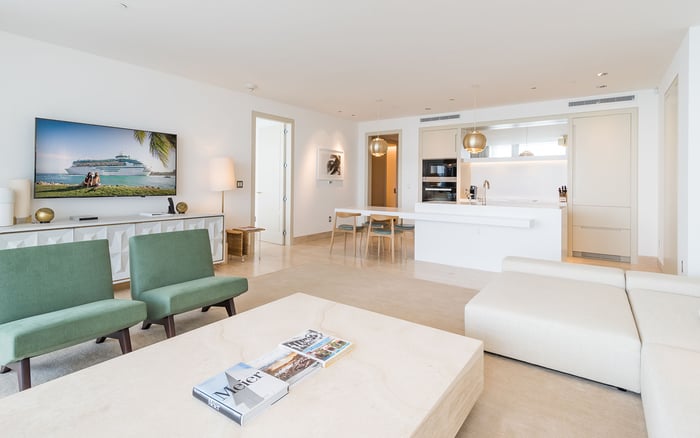
A generous single-level residence and a duplex penthouse offer different ways to live at scale. Compare everyday circulation, terrace rights, building obligations and five-year ownership costs before deciding which South Florida address fits your household.

The choice between a large single-level condominium and a duplex penthouse is less about grandeur than how a household moves. Both can accommodate a substantial residential program. The distinction is whether daily life unfolds on one level or across two, with different implications for privacy, accessibility and entertaining.
Start with an ordinary day, not an arrival scene. Trace the route from bedroom to kitchen, entrance to guest suite, and dining room to terrace. The better residence supports your routines without requiring workarounds. Architectural drama matters, but it should not obscure practical fit.
A large single-level plan may suit buyers who want bedrooms, living rooms and outdoor space connected without internal stairs. That preference becomes particularly relevant for visiting relatives, temporary mobility limitations or long-term occupancy. Still, a single floor is not automatically convenient: long corridors and poorly placed rooms deserve scrutiny.
A duplex can separate entertaining from private life, with gatherings on one floor and quieter rooms on another. Test the actual arrangement, however. A staircase beside a bedroom or a kitchen remote from the principal terrace may undermine the separation you hoped to achieve.
For a Brickell search that includes The Residences at 1428 Brickell, apply the same room-by-room questions to each available plan rather than relying on the building name or residence category. Confirm dimensions, door swings, furniture placement and circulation against the specific unit documentation.
Compare interior area separately from terraces and other non-interior space. Ask how stairs and circulation are counted in advertised measurements. A larger headline number does not reveal how much space accommodates furniture, storage and daily use.
Evaluate a duplex staircase as daily infrastructure, not simply a sculptural feature. Walk it repeatedly during a viewing. Consider carrying laundry, moving between an office and kitchen, and accommodating guests whose mobility differs from your own.
Confirm whether the building elevator serves both floors and whether any internal lift is present, permitted and maintained. Do not assume a penthouse designation guarantees step-free access throughout. If a lift exists, ask who services it and what happens when it is unavailable.
For either format, assess the route from arrival to the principal bedroom, kitchen and outdoor seating. Test whether essential daily activities remain practical if someone cannot use stairs. Treat that as a household requirement, not a presumed resale advantage.
Outdoor space warrants its own examination. Where are the doors relative to the kitchen and living room? Can guests reach outdoor seating without passing through private rooms? Does the furniture arrangement preserve comfortable circulation? These questions matter more than terrace area alone.
For a duplex penthouse, verify legal roof and terrace rights, permitted uses and maintenance responsibilities. Establish who is responsible for finishes, drainage, waterproofing and repairs, and review the waterproofing history. The governing documents should distinguish ownership or exclusive-use rights from assumptions created by marketing language.
When considering Ocean House Surfside, apply those same questions to the specific residence. An impressive outdoor setting does not settle the legal or financial responsibility for its upkeep.
An asking price does not establish what a duplex should command over a single-level residence. Whether evaluating a residence at The Perigon Miami Beach or another South Florida address, examine the particular property's interior area, condition, outlook, outdoor space and ownership obligations alongside relevant closed transactions.
Do not treat asking prices as closed-sale comparables or confirmation of current availability. Test any proposed premium against property-specific evidence rather than the penthouse label.
Neither format should be presumed to appreciate faster or sell more easily. Buy the configuration that suits your household, with pricing supported by a careful comparison of the actual residences.
Layout does not insulate an owner from association obligations. Review the latest applicable milestone inspection, Structural Integrity Reserve Study, engineering recommendations and reserve-funding position. Read board minutes, investigate pending litigation, and identify approved or proposed special assessments before relying on the advertised monthly fee.
Confirm current inspection and reserve-study requirements, including building-specific deadlines, with qualified counsel. Ask which components are addressed, what work is recommended and how it will be funded. These questions belong in the purchase analysis whether the residence occupies one level or two.
Review the association's master insurance policy, deductibles, exclusions, wind and flood coverage, and claims history. Ask an insurance professional to identify potential owner exposure and any coverage needed beyond the master policy.
Prepare parallel five-year budgets covering taxes, association fees, insurance-related charges, maintenance, utilities, financing, closing costs and potential assessments. Add residence-specific obligations, such as an internal lift or terrace maintenance, only after responsibility has been established.
Property taxes depend on jurisdiction, assessment, exemptions and reassessment rules. Do not use the seller's existing bill as the sole forecast. Likewise, a monthly association fee is only one part of ownership cost, not a complete measure of the building's financial position.
Insurance pricing is property-specific. Ask an insurance professional to assess building age, coastal exposure, roof condition, impact-rated openings, construction, deductibles, flood zone and master-policy coverage. Obtain quotes for the actual residence rather than carrying over assumptions from another building.
Whether your shortlist includes Coconut Grove or an oceanfront address, revisit each finalist with a furniture plan and a realistic household schedule. Rehearse a quiet morning, a dinner gathering and a guest stay. Identify where circulation feels effortless and where it demands compromise.
Choose the single-level residence if continuity best serves your life. Choose the duplex if its separation and spatial character justify the vertical movement and verified obligations. Neither format needs to win in the abstract; it needs to work for you.
For a tailored South Florida residence search, explore MILLION.
If branded residences are on your mind — as a home or as an allocation — we would be glad to share what we are seeing, privately.
Begin a quiet conversationA single-level residence places its rooms on one floor, while a duplex divides them between two. The practical choice depends on circulation, accessibility and the separation your household wants.
Avoiding internal stairs may suit accessibility needs, but the actual plan and arrival route still require review. Long corridors and poorly positioned rooms can also affect convenience.
Do not assume it does. Verify building elevator service to each floor and the presence, permitted status and maintenance arrangements of any internal lift.
Separate interior area from terraces and other non-interior space. Confirm how stairs and circulation are counted, then assess usable rooms and furniture placement.
Confirm legal rights, permitted uses, maintenance duties and waterproofing history. Establish responsibility for drainage, finishes and repairs through the governing documents.
Do not assume either format has an appreciation or resale advantage. Evaluate pricing through property-specific comparisons rather than the penthouse designation.
Asking prices alone do not establish a premium over single-level residences. Compare relevant closed transactions and account for each property's area, condition, outlook, outdoor space and obligations.
Review applicable milestone inspections, reserve studies, engineering recommendations and reserve funding. Include board minutes, pending litigation, special assessments and the master insurance policy.
Include taxes, association fees, insurance-related charges, maintenance, utilities, financing, closing costs and potential assessments. Add residence-specific responsibilities once they have been verified.
It should not be the sole budgeting reference. Actual taxes depend on jurisdiction, assessment, exemptions and reassessment rules.