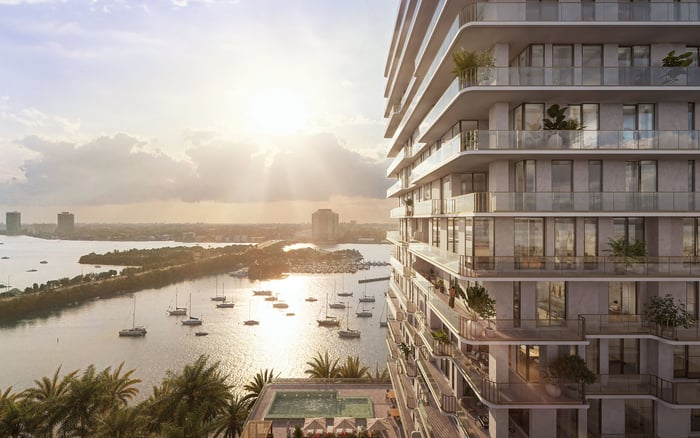
For a Paris-based buyer, the choice between cash and portfolio financing is less about prestige than control. The strongest structure preserves closing certainty, currency flexibility and an appropriate reserve after acquisition.

For a Paris-based buyer considering North Bay Village, cash and portfolio financing create two distinct versions of the same acquisition. Cash prioritizes certainty and simplicity. Portfolio financing preserves liquidity but introduces another institution, another approval process and another set of conditions.
The right choice is not necessarily the structure with the lowest visible cost. It is the one that leaves the buyer best positioned before closing, at closing and throughout ownership. That assessment should reflect the intended holding period, the currency in which wealth is held, the capital reserved for the residence and the buyer's tolerance for financing complexity.
From a Buyer's Guides perspective, this is both an Investment decision and a Second-home planning exercise. Even when personal use is the priority, the capital structure warrants the same discipline applied to any significant international asset.
Cash is compelling when certainty is the primary objective. It can remove financing approval from the transaction, reduce coordination and provide a clearer path to the contractual closing date. For someone managing the acquisition from Paris, fewer dependencies can also make execution easier to oversee.
That simplicity is not a reason to deploy every available dollar. The purchase price is only one part of the ownership plan. A prudent cash strategy also preserves funds for closing obligations, furnishing, ongoing property expenses and unexpected changes in circumstances. The residence should not leave an otherwise liquid buyer unnecessarily concentrated.
Cash can also be deployed selectively. A buyer may close without property-level financing and consider a different liquidity solution later, subject to professional advice and available terms. The strategic question is not simply whether the buyer can pay cash, but whether doing so supports the broader portfolio.
In this context, portfolio financing generally refers to borrowing supported by eligible financial assets, with every material term determined by the lender. Its appeal is clear: the buyer may retain more invested capital while accessing funds for the acquisition.
The tradeoff is that the property decision becomes linked to the performance and eligibility of the supporting portfolio. Advance rates, collateral requirements, pricing, documentation and remedies all matter. Market volatility may also alter the structure's practical comfort, even when the residence itself has not changed.
A Paris-based buyer should request a clear downside analysis rather than focus solely on the initial borrowing rate. What happens if collateral values fall? Which assets are eligible? Can the lender alter its requirements? How much liquidity must remain outside the facility? These answers should be documented before the purchase contract imposes deadlines.
Currency deserves equal attention. If the assets, income, borrowing and Florida purchase are not all denominated in the same currency, exchange-rate movements can affect the capital required. The conversion plan, transfer mechanics and contingency reserve should be established early with qualified banking, legal and tax advisers.
The property itself can alter the preferred approach. A completed residence with a near-term closing creates a different cash schedule from a Pre-Construction purchase with staged obligations. The latter may provide more time to organize liquidity, but it can also require capital to remain available across multiple dates.
Waterfront ownership may also lead a buyer to prioritize a larger post-closing reserve for interiors, personal use and recurring ownership needs. Those amounts should be modeled conservatively rather than treated as incidental.
North Bay Village buyers can apply this framework while comparing distinct opportunities. A residence at Continuum Club & Residences North Bay Village may prompt a different timing discussion from a purchase at Shoma Bay North Bay Village or Tula Residences North Bay Village. The objective is not to impose a universal structure, but to align funding with the selected contract, payment calendar and intended use.
A disciplined comparison should place cash and portfolio financing side by side. For each route, record the funds required at contract, the amount due at closing, the reserve remaining afterward and the consequences of delay. Include currency conversion, banking lead times, financing conditions and the cost of maintaining unused liquidity.
Then stress-test the plan. Consider a weaker market for pledged assets, a less favorable currency conversion and a longer ownership period than initially expected. The preferred structure should remain comfortable across more than one scenario.
The buyer's advisory team should review ownership structure, tax exposure, estate considerations, contract terms, fund transfers and financing documents before any commitment. Cross-border planning is highly personal, and a strategy appropriate for one French resident may be unsuitable for another. Coordination is essential because a decision made for tax or estate purposes can influence banking, title and closing execution.
Cash generally suits a buyer who values a clean closing path, holds abundant liquidity beyond the purchase and does not need invested assets to remain untouched. It may also appeal when financing conditions introduce more complexity than benefit.
Portfolio financing may suit a buyer who wants to preserve investment exposure, can maintain a substantial liquidity cushion and is comfortable with collateral oversight. It should be assessed as a continuing obligation, not merely as a bridge to closing.
A blended approach may be preferable when neither extreme is ideal. The buyer can limit borrowing, retain meaningful reserves and reduce dependence on a single source of capital. Whatever the structure, the strongest offer is one the buyer can complete without hurried asset sales, improvised currency transfers or last-minute renegotiation.
Is cash always the strongest offer structure? No. Cash can improve certainty, but the contract, timing and seller's priorities still shape the offer.
Does portfolio financing place a loan on the residence? Not necessarily. The facility structure and collateral are determined by the lender's documents.
Should a buyer arrange financing before selecting a residence? Preliminary approval and a written liquidity plan should be considered before contractual deadlines begin.
Why does currency timing matter for a Paris buyer? A change in exchange rates can alter the amount of home-currency capital required for a dollar purchase.
Can cash be better for a short closing timetable? It may reduce financing dependencies, provided the funds can be transferred and verified on schedule.
What reserve should remain after closing? The amount is personal and should reflect ownership costs, planned interiors, travel and broader portfolio needs.
Does a staged payment schedule favor portfolio financing? Not automatically. It creates time to plan, but each future obligation still requires dependable liquidity.
What is the principal risk of portfolio financing? The buyer's liquidity can become sensitive to lender terms and changes in the value of pledged assets.
Who should review a cross-border purchase structure? Qualified legal, tax, banking and estate advisers familiar with the buyer's personal circumstances should coordinate.
When should the final cash-versus-financing decision be made? It should be settled before signing a contract whose deadlines depend on that funding choice.
If you'd like a private walkthrough and a curated shortlist, connect with MILLION.
If branded residences are on your mind — as a home or as an allocation — we would be glad to share what we are seeing, privately.
Begin a quiet conversation