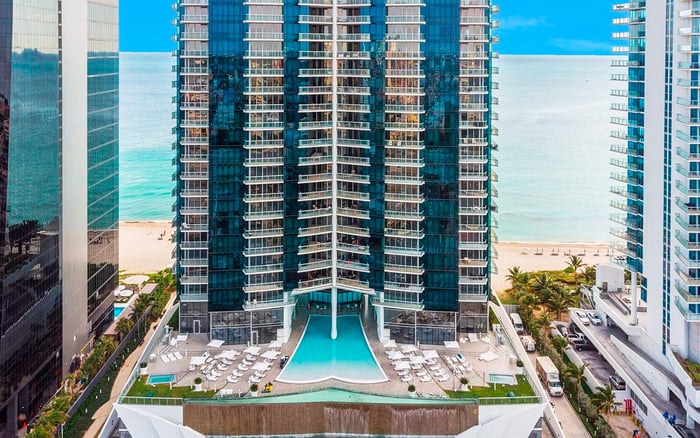
For New York buyers considering a Sunny Isles Beach condominium, the decisive question is not simply whether cash is available. The stronger strategy weighs negotiating certainty, building eligibility, liquidity, occupancy, tax treatment and the carrying costs of two residences.
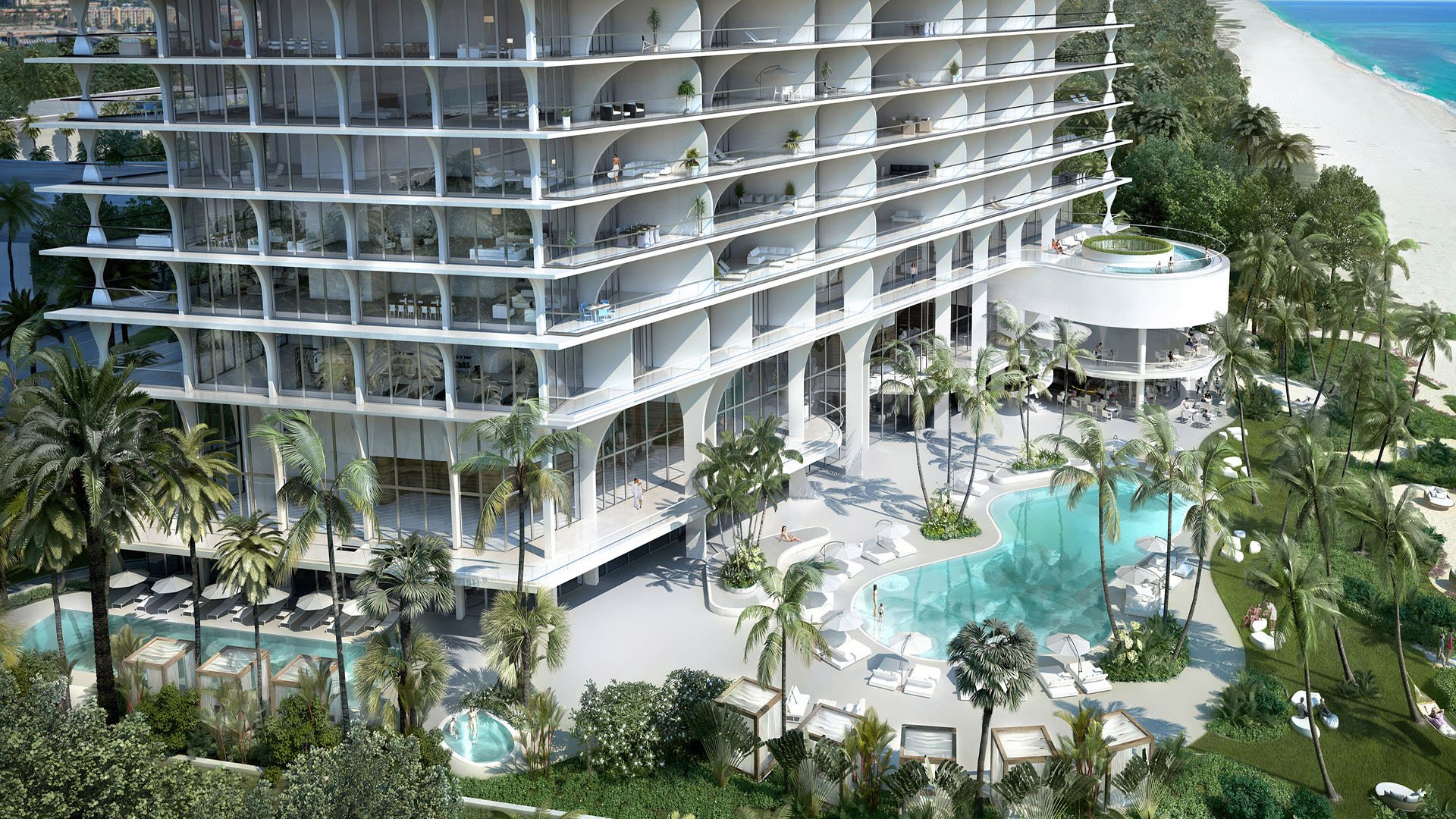
For a New York buyer weighing cash against portfolio financing in Sunny Isles Beach, the analysis begins with the condominium itself. The building’s financial condition, insurance profile, reserves, assessments and structural documentation can determine whether conventional credit is available, a portfolio lender is required, or cash offers a decisive advantage.
That distinction matters in an oceanfront market where residences can differ materially, even within the same corridor. A buyer comparing Bentley Residences Sunny Isles with an established resale building should not assume a single financing plan will suit both opportunities. The unit, project and intended use must be underwritten together.
Cash is prevalent at the upper end of Miami’s condominium market. In 2025, 82% of Miami condo sales above $1 million were all-cash, as were 76% of condo and townhome sales in the broader vacation-home segment. In that context, certainty becomes an essential part of offer strategy, not merely a convenience.
Cash removes mortgage underwriting, appraisal contingencies and the lender’s separate condominium-project approval. When title work and association approvals proceed smoothly, a Sunny Isles purchase can close in roughly one to three weeks. A financed Florida transaction may require approximately 30 to 45 days, compared with about 7 to 21 days for cash.
The practical benefit is lower execution risk. Sellers often prefer cash or an exceptionally strong preapproved borrower because financing introduces appraisal, project-review and lender-approval variables. Cash can therefore strengthen an offer without forcing the buyer to compete solely on price.
That advantage becomes more pronounced when a condominium is non-warrantable, meaning it does not satisfy the project standards used by Fannie Mae or Freddie Mac. These properties have fewer conventional loan options. Even at an established oceanfront address such as Jade Signature Sunny Isles Beach, buyers should evaluate the specific unit and current association package rather than infer financeability from reputation or design stature.
Cash does not eliminate diligence. The purchaser must still complete the condominium-association application, secure a clean estoppel and review title, insurance, reserves, assessments and governing documents. Speed should result from preparation, not compressed scrutiny.
Portfolio or jumbo financing can preserve liquidity for a business, market investments, family planning or substantial post-closing reserves. It also avoids concentrating the full purchase price in a single property. For buyers with strong credit, documented assets and a long holding horizon, that flexibility may outweigh higher borrowing costs.
Non-warrantable Florida condominiums commonly require portfolio or jumbo structures with approximately 20% to 30% down, a FICO score above 700 and significant reserves. Rates may be 0.5 to 1.5 percentage points above conventional loans. Jumbo financing can also require more extensive income and asset documentation, particularly for an investment property.
A warrantable residence classified as a second home may qualify with 10% or more down. An investment property generally requires 20% to 25% and carries higher rates. Buyers considering The Ritz-Carlton Residences® Sunny Isles should have the lender review the project and proposed occupancy before allowing financing terms to shape negotiations.
For a financed second-home purchase, underwriting generally includes the housing expenses of both the New York residence and the Florida condominium in the debt-to-income calculation. The lender may also require two to six months of reserves for each financed property, beyond the down payment and closing costs.
This makes headline loan-to-value ratios incomplete. A buyer capable of paying cash may still choose financing, but should first calculate the liquidity remaining after lender reserves, association charges, property taxes and any known assessments. Conversely, a buyer intent on keeping capital invested should compare the loan’s after-tax cost with the realistic return and volatility of the retained assets.
Occupancy must be stated accurately. A second home is principally for personal use, while a property intended primarily for rent is an investment. Rental-focused purchases may be eligible for DSCR underwriting, which uses rental income rather than relying exclusively on personal U.S. income. The structure should follow the genuine use plan, not the most attractive quoted rate.
Financing does not automatically produce a meaningful federal tax benefit. Mortgage-interest deductions for a qualifying second home are subject to a combined $750,000 acquisition-debt limit across the taxpayer’s properties. A New York owner already near that threshold may receive little additional deduction from a Sunny Isles mortgage.
Buying a Florida condominium also does not, by itself, terminate New York tax residency. Florida’s lack of state income tax generally benefits owners who establish Florida domicile. A Florida second home usually does not qualify for the homestead exemption or the Save Our Homes assessment cap, leaving property tax based on full assessed value.
These questions belong with qualified tax and legal advisers before contract. They should be modeled alongside financing costs, not invoked as a late justification for leverage.
The most resilient approach is to evaluate both paths before bidding. Obtain a portfolio or jumbo review of the buyer and the building, then compare that execution with a cash offer. For a residence at Turnberry Ocean Club Sunny Isles or another Sunny Isles Beach address, the decision framework should include:
Confirm the intended occupancy and rental plan.
Review warrantability, insurance, reserves, assessments and structural records.
Price the loan, including the rate premium, reserve requirements and documentation burden.
Measure the opportunity cost of cash against the risk of retained investments.
Align the closing timeline and contingencies with the seller’s priorities.
Alternative borrowing against securities or business assets may preserve apparent liquidity, but it introduces variable-rate and collateral risk. Compare it directly with a fixed property loan and a clean cash purchase. The strongest strategy is the one that remains durable if markets, borrowing costs or personal plans change.
Is cash always the stronger offer in Sunny Isles Beach? No. It improves certainty and speed, but a fully underwritten borrower with a lender-approved project can also present a compelling offer.
How quickly can a cash condominium purchase close? Roughly one to three weeks is possible when title and association approvals are straightforward.
Does cash avoid condominium-association approval? No. Cash buyers still must complete association requirements and secure a clean estoppel.
What makes a condominium non-warrantable? It is a project that does not satisfy Fannie Mae or Freddie Mac standards, limiting conventional financing options.
How much down might portfolio financing require? Non-warrantable condominiums commonly require approximately 20% to 30% down, plus significant reserves.
Will my New York residence affect underwriting? Yes. Its housing expense is generally included when calculating debt-to-income for a financed Florida second home.
Can projected rent help qualify the purchase? For an investment purchase, a DSCR program may qualify the loan using rental income.
Is mortgage interest fully deductible? Not necessarily. Qualifying deductions are subject to a combined $750,000 acquisition-debt limit across properties.
Does buying in Florida end New York residency? No. Purchasing a condominium alone does not establish Florida domicile or end New York tax residency.
When should the building be reviewed by a lender? Before an offer is finalized, allowing the buyer to price risk and select realistic contingencies.
For a confidential assessment and a building-by-building shortlist, connect with MILLION.
If branded residences are on your mind — as a home or as an allocation — we would be glad to share what we are seeing, privately.
Begin a quiet conversation