Casamar and Waldorf Astoria Residences Pompano Beach both support absentee ownership, but their disclosed service structures differ. Buyers should compare authority, access, emergency procedures and unit-level costs before treating either residence as genuinely lock-and-leave.
For a buyer who divides time among several homes, luxury is measured as much by operational continuity as by finishes, views or amenities. A true lock-and-leave residence should remain secure, supervised and serviceable while its owner is elsewhere. In coastal South Florida, it must also have a clearly understood chain of command before and after severe weather.
That framework brings Casamar and Waldorf Astoria Residences Pompano Beach into a useful shared lens. Both offer oceanfront living in Pompano Beach, together with security, valet and concierge support. Yet the more consequential comparison is not a tally of amenities, but how each property handles unattended units, owner instructions, emergency response and eventual re-entry.
For an absentee owner, luxury becomes operational when authority and access are clearly documented.
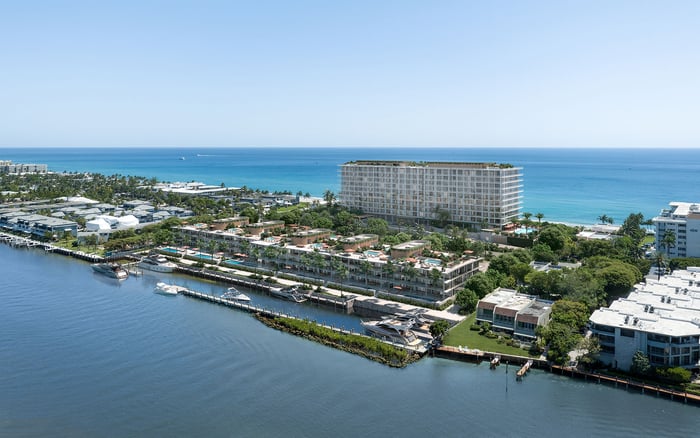
Casamar occupies approximately 283 linear feet of direct oceanfront at 900 North Ocean Boulevard. Its disclosed operating framework includes 24/7 valet parking, on-premises security and personalized concierge service. Controlled-access and safety elements include a doorman, secured lobby and garage, television cameras, smoke detection and, in some residences, impact glass.
Those features establish a credible baseline for second-home ownership. Smart-home readiness with customized password protection can also make remote setup and oversight more practical. Still, technology does not answer the essential governance questions. Buyers should establish who may enter an unattended residence, how credentials are recorded, whether a concierge can admit a vendor and what written authorization is required when the owner cannot be reached.
Casamar’s amenity proposition is broad, with sunrise and sunset pools, oceanfront lounges, a spa, fitness center, pickleball court and golf simulator among its offerings. The distinction to preserve is between managing shared spaces and managing the interior of a private home. Its service package does not define a standardized in-residence program comparable to the more formal structure at Waldorf Astoria.
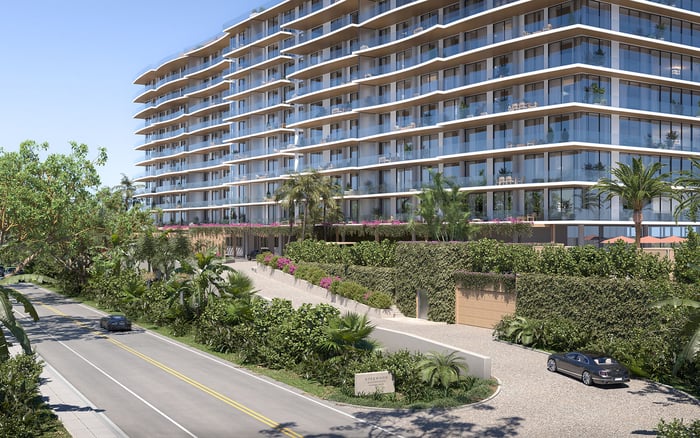
At 1213 South Ocean Boulevard, Waldorf Astoria Residences Pompano Beach presents the branded model in more explicit operational terms. Standard services include a Waldorf Astoria Personal Concierge and a dedicated on-site Director of Residences. Staffing includes 24-hour security and reception, doorman and bellman service, plus valet parking.
For an absentee owner, named roles matter. They create identifiable channels for concierge requests, building operations and emergency maintenance. Parcel receiving includes delivery to the residence, while professional facilities management covers the cleaning and maintenance of amenities and common areas. Residents are also assigned private accounts with signing privileges for hotel services and outlets, settled monthly.
The emergency-maintenance program offers 24-hour response with 15 minutes of complimentary service. That wording should be read carefully: it describes around-the-clock response availability and a complimentary service allowance, not guaranteed arrival within 15 minutes. Buyers should obtain the complete service menu, pricing and authorization rules before relying on the program for unit oversight.
This degree of definition is characteristic of the expectations associated with branded residences. Nearby alternatives such as The Ritz-Carlton Residences® Pompano Beach and W Pompano Beach Hotel & Residences may also appeal to buyers comparing hospitality-led ownership models, although each property’s documents and operating protocols must be assessed independently.
Hurricane readiness is not a single feature. It is a sequence involving preparation, evacuation, restricted access, inspection, elevator restart, restoration of building systems and controlled re-entry. At neither Casamar nor Waldorf Astoria are hurricane re-entry criteria, elevator shutdown procedures or emergency-generator coverage publicly specified.
That absence should prompt document-level diligence rather than assumption. Before contracting, request the current hurricane manual, evacuation and re-entry policy, generator-load schedule and elevator restart procedure. Determine whether generator power serves only life-safety systems or any residential functions, and ask how management communicates when elevators, water, cooling or access controls are unavailable.
Impact glass, where confirmed for the specific Casamar residence, can reduce the need for temporary window protection. It does not resolve questions about balcony preparation, water-intrusion checks or access after authorities reopen the area. In both buildings, an owner should know whether staff can inspect a unit, photograph conditions, coordinate a qualified vendor and authorize limited work during the owner’s absence.
The same discipline applies across Broward’s oceanfront condominium market. Building resilience, operational readiness and personal unit management are related, but they are not interchangeable.
A practical unit-management plan should identify primary and secondary contacts, approved vendors, spending limits, key or credential controls, alarm instructions and the scope of emergency authority. It should also state who can approve entry, how each visit is logged and whether the owner receives written confirmation afterward.
Housekeeping, preventive maintenance and post-storm inspections may carry separate charges even where concierge and common-area management are included. At Waldorf Astoria, the prospectus addresses specifications, proposed budgets, fees, purchase inclusions and amenities that may cost extra. At Casamar, buyers should distinguish association services from privately arranged care inside the residence.
Insurance coordination also belongs in the protocol. Owners should clarify what the association handles, what remains the unit owner’s responsibility and what documentation management can provide after an event. The objective is not to delegate every decision, but to remove ambiguity when time, distance and building access make direct owner involvement impractical.
Casamar fee examples illustrate why unit-specific review matters. Recent monthly charges were $2,838 for Unit 1204, $3,681 for UPH03 and $3,918 for Unit 1603. For UPH03, stated inclusions encompassed management, common areas, insurance, structural maintenance, parking and pools.
These amounts are not a universal fee schedule. Residence size, allocation and listing timing can affect the figure presented. A buyer should verify the current charge through the unit’s estoppel and association budget, then review reserves, insurance, assessments and service exclusions. For Waldorf Astoria, proposed budgets and fee disclosures warrant the same scrutiny, especially where hospitality services or amenities can create additional charges.
The central lesson is simple: recurring cost should be evaluated against actual operational coverage, not the prestige of an amenity list.
Casamar offers a compelling core: direct oceanfront positioning, continuous security and valet, concierge support, controlled access and smart-home readiness. It may suit an owner comfortable arranging a separate layer of private unit care and documenting access authority directly with building management.
Waldorf Astoria defines a more formal residential hierarchy, with a Personal Concierge, Director of Residences, reception, parcel delivery and emergency-maintenance response. That structure may appeal to owners who value clearly named service channels. It still does not replace close review of the prospectus, fee schedules and hurricane procedures.
In either case, the decisive question is not whether the door can be locked when the owner leaves. It is whether the residence can be responsibly monitored, accessed and restored under pre-agreed instructions. That is the standard by which a South Florida lock-and-leave home should be judged.
For discreet guidance on comparing Pompano Beach residences and their ownership structures, connect with MILLION.
If branded residences are on your mind — as a home or as an allocation — we would be glad to share what we are seeing, privately.
Begin a quiet conversationWaldorf Astoria discloses a Personal Concierge, an on-site Director of Residences and defined channels for building operations and emergency maintenance.
Yes. Its disclosed framework includes 24/7 valet, on-premises security, concierge support, controlled access and smart-home readiness.
No. The reviewed public materials do not detail hurricane-specific re-entry criteria, elevator procedures or generator coverage for either property.
No. The program offers 24-hour emergency-maintenance response and separately includes 15 minutes of complimentary service.
The public service description does not define a standardized in-residence management program. Buyers should confirm entry authority, credential logging and available paid services in writing.
Request the current hurricane manual, evacuation and re-entry policy, generator-load schedule, elevator restart procedure, vendor-access rules and unit-entry authorization form.
No. It can reduce the need for temporary window protection where confirmed, but balcony preparation, inspections and post-storm access still require planning.
No. They are listing-specific snapshots and should be verified against the selected unit’s current estoppel and association budget.
It should identify contacts, approved vendors, spending limits, access controls, alarm instructions, visit logs and the scope of emergency authority.
It contains material detail on specifications, proposed budgets, fees, purchase inclusions and amenities or services that may involve additional charges.