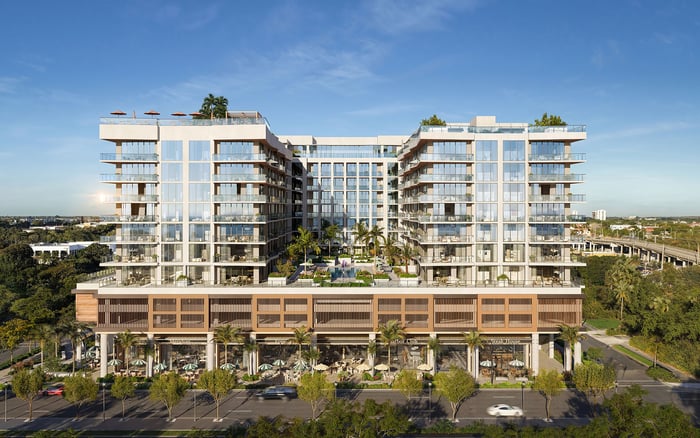
For seasonal owners, evaluating a Palm Beach residence means looking beyond amenities to the written procedures for unit access, storm response, vendor coordination, post-event reporting, and humidity management during extended absences.

For a seasonal owner, some of the most important residential services take place while the home is unoccupied. A polished arrival experience matters, but buyers should also ask who may enter the unit after an alert, how the air-conditioning system is monitored during summer, when post-storm inspections may occur, and whether management can coordinate a vendor before a minor issue worsens.
The strongest choice is not necessarily the residence with the longest amenity list. It is the property whose association rules, management procedures, access arrangements, and any separately retained home-care services can work together. Buyers should verify that coordination through current documents and direct written answers rather than assume that concierge service includes technical oversight.
The true luxury is not merely remote oversight, but a documented chain of action.
Available project information does not support ranking individual residences by hurricane re-entry support, unit management, or humidity performance. Buyers can instead create a focused Palm Beach-area shortlist and apply the same questions to each candidate.
On the island, Palm Beach Residences is one option for buyers considering how a residence may operate during an extended owner absence. Request the current materials governing unit-entry permission, emergency contacts, inspection arrangements, vendor credentials, key or digital access, and incident reporting. The purpose is not to infer service levels from positioning, but to establish what is actually included and who is responsible.
In West Palm Beach, Forté on Flagler West Palm Beach and South Flagler House West Palm Beach can be reviewed through the same operational lens. Ask how duties are divided among front-desk personnel, building engineering, association management, the owner, and any outside property manager.
Buyers considering The Ritz-Carlton Residences® West Palm Beach or Mandarin Oriental Residences, West Palm Beach should likewise distinguish hospitality-style service from technical home oversight. Buyers should not assume that concierge support includes HVAC inspections, dehumidification, storm-related unit access, or emergency spending authority. Each service should be confirmed in writing before closing.
Hurricane re-entry, building access, and permission to enter a private residence are distinct issues to investigate. A person who can return to the surrounding area may still face building-specific safety decisions, security procedures, elevator limitations, service-entry controls, or private-unit authorization requirements.
Ask who is expected to evaluate building access after a storm and how owners receive updates. Determine whether an owner’s representative or home-care provider needs separate credentials, advance registration, or written authorization. Buyers should also confirm how access instructions are stored, updated, and communicated to the relevant parties.
At the unit level, establish who may hold keys or digital credentials and under what circumstances they may be used. The authorization should address routine inspections, alarm responses, storm checks, vendor visits, and emergencies. It should also identify who receives notice after entry and what documentation is expected.
Request the current hurricane-related materials that apply to the residence and review them from an absentee owner’s perspective. Questions should cover pre-storm communication, common-area preparation, security, emergency contacts, post-event updates, and the sequence for evaluating access. Buyers should verify how building procedures interact with any personal home-care plan.
The physical envelope also deserves careful due diligence. Ask which components are treated as common elements and which remain the owner’s responsibility. Windows, doors, terraces, exterior openings, outdoor furnishings, and any protective equipment should be discussed where applicable to the specific property. The goal is to identify who prepares, inspects, and reports on each relevant item without assuming that building management handles everything.
Request an example of the communication an owner might receive before and after a storm, if available. A useful reporting framework would identify when the residence was accessed, who entered, what was observed, whether photographs were taken, whether utilities and HVAC were checked, what immediate action was authorized, and what still requires owner approval. Buyers should confirm the actual reporting format and timing for each shortlisted residence.
Broad descriptions of home watch or residence management do not establish a humidity-control protocol. Regular visits, vendor access, repair coordination, and arrival preparation may be valuable, but the buyer should determine whether HVAC checks or environmental monitoring are included in the written scope.
Ask how frequently the air-conditioning equipment is inspected, whether temperature or relative-humidity alerts are monitored, who receives alerts, and what response procedure follows. Determine what happens outside normal business hours and what authority exists if the primary system stops operating. Any backup equipment, dehumidification option, service fee, or response commitment should be verified for the particular residence.
The unit also needs a documented absence plan. Discuss interior airflow, water handling, plumbing checks, appliance settings, and any finishes, furnishings, or collections that may require special care. Coordinate those instructions with the building’s rules so an outside provider does not act on assumptions that conflict with property procedures.
A residence may involve association management, engineering personnel, concierge staff, security, an owner’s representative, and specialist vendors. The buyer’s task is to understand how responsibility passes among them and where the owner must supply separate authority or coverage.
Begin with five written confirmations: unit-entry authorization, anticipated post-storm inspection procedures, approved-vendor access, emergency spending authority, and owner reporting. Then address insurance documentation, key custody, escalation contacts, after-hours availability, and the process for changing instructions. If an outside provider will be retained, verify that the building permits the planned access and that the provider’s scope can align with association procedures.
Finally, test the proposed arrangement with practical scenarios. Ask what the responsible parties would do if an HVAC alert occurred outside business hours, access remained restricted after a storm, a preferred contractor was unavailable, or a repair exceeded the authorized spending limit. The answers should identify the decision-maker, communication path, documentation, and point at which owner approval becomes necessary.
For discreet guidance in comparing Palm Beach residences through both lifestyle and operational priorities, connect with MILLION.
If branded residences are on your mind — as a home or as an allocation — we would be glad to share what we are seeing, privately.
Begin a quiet conversationA written plan can clarify who may enter the residence, coordinate vendors, authorize work, and report to the owner while the home is vacant.
Not necessarily. Buyers should separately confirm area re-entry considerations, building procedures, and private-unit authorization.
Ask who evaluates access, how owners receive updates, and what credentials or authorization an owner’s representative may need.
Review pre-storm communication, preparation responsibilities, security procedures, emergency contacts, access sequencing, and post-event reporting.
No. HVAC inspections, environmental alerts, response procedures, and dehumidification should each be confirmed in writing.
A reporting framework may include entry timing, personnel, observations, photographs, utility and HVAC checks, authorized action, and pending approvals.
Buyers should ask about windows, doors, terraces, exterior openings, outdoor furnishings, and protective equipment where applicable.
Document unit-entry permission, emergency spending limits, vendor access, key custody, escalation contacts, and reporting expectations.
Confirm that the building permits the provider’s access and that its services can align with association rules and management procedures.
Present scenarios involving an after-hours HVAC alert, restricted storm access, an unavailable contractor, or work above the spending limit.