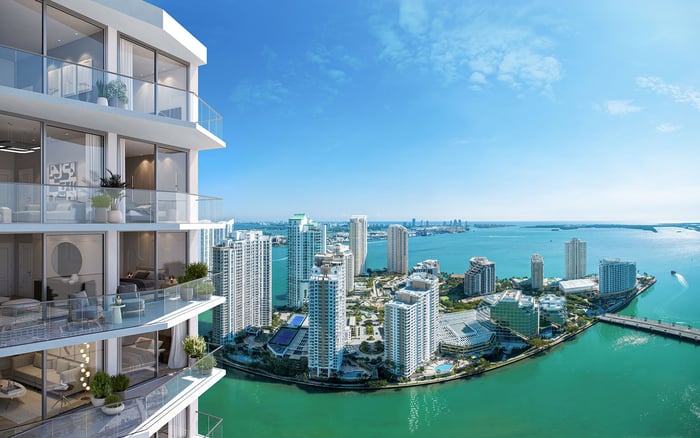
A buyer-focused editorial on Casa Bella by B&B Italia Downtown Miami as an urban alternative for clients who want water-oriented luxury without the constant exposure and maintenance profile of direct beachfront living.
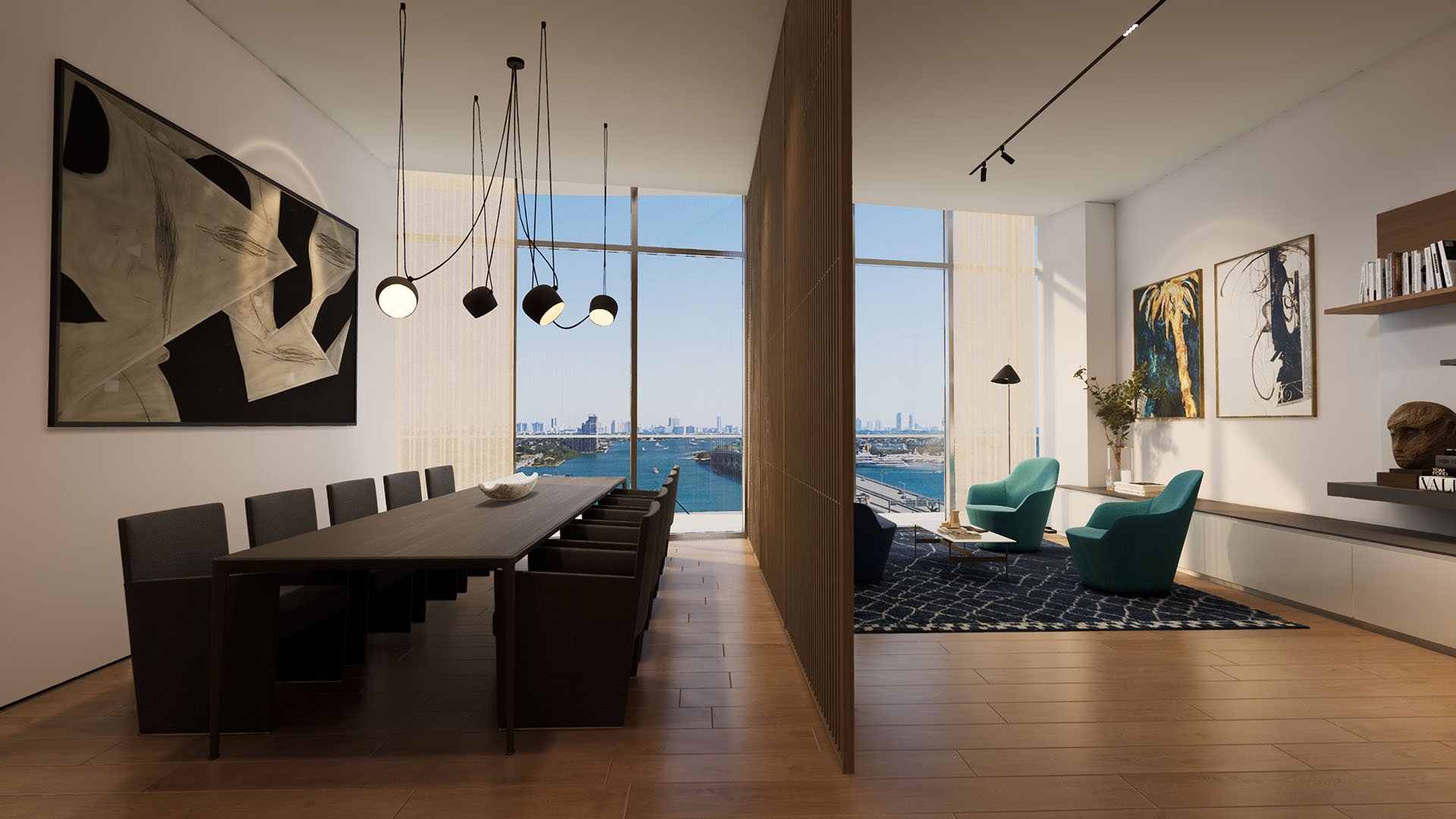
For many South Florida buyers, the phrase “oceanfront home” is less about literal sand at the door than a state of mind: open light, water in the distance, a resort rhythm, and the sense that daily life has been lifted above the ordinary. Yet those same buyers often understand the compromises that come with direct coastal exposure. Wind, salt, storm protocols, balcony usability, insurance questions, and maintenance expectations can all shape the ownership experience.
That is where Casa Bella by B&B Italia Downtown Miami enters the conversation with unusual relevance. The appeal is not to pretend Downtown Miami is the beach. It is to offer a more urban, design-led version of water-oriented living for buyers who want the feeling of a waterfront lifestyle while thinking carefully about exposure, convenience, and long-term usability.
The distinction is subtle, but important. The most sophisticated purchasers are no longer buying only a view. They are buying a daily operating environment. They want beauty, but they also want a residence that works when family visits, when the calendar is full, when the weather is imperfect, and when ownership needs to feel graceful rather than demanding.
In South Florida, the romance of beachfront ownership is powerful. Morning light over the Atlantic, private elevator arrivals, and expansive terraces remain part of the region’s most coveted residential language. But seasoned owners tend to evaluate the coastline with a more technical eye. They ask how usable a terrace is on a windy afternoon. They consider how glass, railings, exterior maintenance, and building procedures affect the experience of ownership.
The oceanfront impulse is emotional, but the ownership decision is practical. A home that looks extraordinary in a rendering or during a calm-season showing must also perform through humidity, salt air, tropical weather, and the realities of high-rise living. Direct exposure can be part of the thrill, but it can also limit how and when outdoor space is enjoyed.
For buyers who still want water, light, elevation, and a sense of Miami spectacle, Downtown offers a different logic. It can provide proximity to the bay, cultural access, dining, private clubs, offices, marinas, and the airport corridor without placing the residence directly on the sand. For some families, that balance is not a compromise. It is the point.
Casa Bella by B&B Italia Downtown Miami is best understood through the lens of design credibility and urban positioning. The B&B Italia association gives the project a recognizable design identity for buyers who care about interiors, proportions, material atmosphere, and the feeling of a composed private residence rather than a generic condominium.
That matters because buyers in this segment often own, or have owned, multiple homes. They compare Miami not only with Palm Beach, New York, London, Aspen, or the Mediterranean, but also with their own standards of comfort. A building must feel edited. The experience from lobby to residence, from morning routine to evening entertaining, needs coherence.
The buyer who gravitates toward Casa Bella is not necessarily abandoning the beach. They may already have a beach club membership, a boat, or a weekend pattern that includes Key Biscayne, Miami Beach, or Fisher Island. What they may not want is for their primary Miami residence to absorb every weather and maintenance burden associated with direct coastal exposure.
In that context, Downtown is not merely a location. It is a strategy. It supports a more fluid life, especially for residents who move among business, culture, travel, dining, and waterfront recreation. The residence becomes a polished base rather than a weather-facing retreat.
Every luxury purchase involves a hierarchy. If the highest priority is stepping directly onto sand, Downtown will not replace a true beachfront address. If the priority is a water-oriented Miami lifestyle with design depth, urban access, and potentially less direct wind exposure, the calculus changes.
The most successful buyers begin by separating fantasy from frequency. How often will the beach actually be used? How often will restaurants, offices, private aviation, museums, performances, medical appointments, or schools shape the week? How much terrace time is desired, and under what weather conditions? Does the owner want a home that feels like a resort, or a residence that supports a more metropolitan life?
This is where terms such as Downtown, Waterview, High-floors, Balcony, and New-construction become more than search filters. They reflect a buyer’s real priorities. A high-floor residence may offer visual drama, but the orientation, exposure, and livability of the outdoor areas matter as much as the height. A balcony may be beautiful, but its value depends on comfort, privacy, and frequency of use.
Casa Bella speaks to the buyer who wants Miami’s water and skyline energy without making every ownership decision revolve around the beach. It is a choice for those who see luxury as a controlled atmosphere, not just proximity to the shoreline.
Because the decision is nuanced, diligence should be equally nuanced. Buyers should study view corridors at different times of day, not only during peak light. They should understand how residence orientation affects heat, glare, privacy, and the perceived relationship to water. A view that feels cinematic at sunset may function differently in the morning, and vice versa.
They should also ask about building protocols that shape daily ownership. Elevator experience, arrival sequence, valet rhythm, guest access, service movement, package handling, and maintenance planning all influence whether a high-end condominium feels effortless. In ultra-premium real estate, luxury is often found in what does not require attention.
For families considering a move from the beach, the question is not whether Casa Bella is a substitute for a beachfront house. It is whether the residence delivers enough of the water-facing emotional benefit while improving the daily operating equation. That includes commute patterns, household staffing, children’s routines, entertaining, travel, and seasonal use.
A buyer should also consider how the home will be used across the year. A residence that is perfect for winter visits may need different attributes if it becomes a primary home. Storage, back-of-house practicality, acoustic comfort, shade, and guest circulation can become decisive after the initial visual impact fades.
The clearest fit is the buyer who wants a refined Miami address with water-oriented presence, but does not want the full exposure profile of a direct beachfront residence. This may include international owners who want a lock-and-leave home, empty nesters moving from a larger house, executives who need Downtown access, or design-conscious buyers who value a branded interiors sensibility.
It may also suit owners who already maintain a beach or resort relationship elsewhere. For them, the Downtown residence is not asked to be everything. It becomes the elegant urban home, the place for dinners, meetings, arts events, and spontaneous weekends. The beach remains part of the lifestyle, but not necessarily the maintenance environment.
The less obvious buyer is the one who initially searches only for beachfront property and then realizes the most expensive view is not always the most useful one. South Florida rewards clarity. If the buyer’s true goal is daily beauty, privacy, and ease, then an elevated Downtown residence may provide a more balanced form of luxury.
Casa Bella by B&B Italia Downtown Miami belongs in the conversation for buyers who are sophisticated enough to distinguish between literal oceanfront and water-oriented living. Its relevance comes from the intersection of design, urban convenience, and the desire to reduce the frictions that can accompany more exposed coastal ownership.
The strongest buyer case is not built on exaggeration. It is built on fit. For the right owner, Casa Bella can offer a poised alternative to the beach, one that keeps Miami’s light and energy close while placing daily life within a more controlled urban frame.
Is Casa Bella by B&B Italia Downtown Miami an oceanfront building? It should be evaluated as a Downtown Miami residence for buyers seeking a water-oriented lifestyle, not as a direct beachfront substitute.
Why would a beachfront buyer consider Downtown Miami? Downtown may offer stronger urban convenience, cultural access, and a different exposure profile while still preserving a Miami water-and-skyline sensibility.
What is the main compromise compared with the beach? The main compromise is immediate sand access. The potential advantage is a more practical daily setting for many urban luxury buyers.
Who is the strongest buyer fit for Casa Bella? A design-focused buyer who wants Downtown access, elevated living, and Miami atmosphere without making direct coastal exposure the central feature.
Should buyers focus only on the view? No. Orientation, privacy, outdoor usability, arrival experience, and building operations are equally important in a high-end purchase.
Does a higher floor automatically mean a better residence? Not always. High-floors can offer drama, but the best choice depends on view quality, exposure, light, and personal comfort.
Is a balcony always useful in Miami high-rise living? A Balcony is valuable when it is comfortable, private, and usable across seasons, not simply because it appears impressive on paper.
How should second-home buyers evaluate the project? They should focus on lock-and-leave ease, service quality, access patterns, and whether the residence works smoothly during short stays.
What makes the B&B Italia association relevant? It signals a design-oriented identity, which may matter to buyers who prioritize interiors, atmosphere, and a cohesive residential experience.
Is Casa Bella mainly an investment or lifestyle decision? For most luxury buyers, it should begin as a lifestyle-fit decision, with investment considerations evaluated through professional guidance.
If you'd like a private walkthrough and a curated shortlist, connect with MILLION.
If branded residences are on your mind — as a home or as an allocation — we would be glad to share what we are seeing, privately.
Begin a quiet conversation