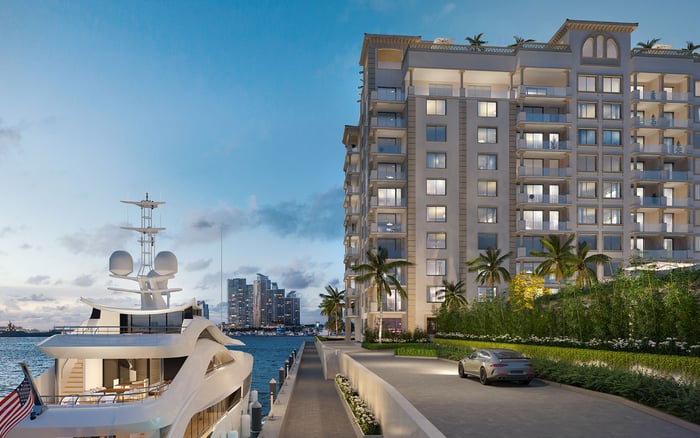
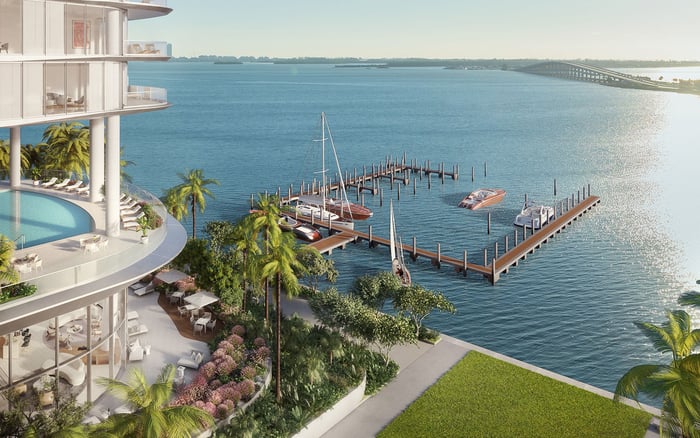
A larger yacht may work within an existing dock authorization, but unchanged decking is not enough to establish compliance. Buyers should verify the approved layout, vessel capacity, submerged-land permissions and structural suitability before committing.
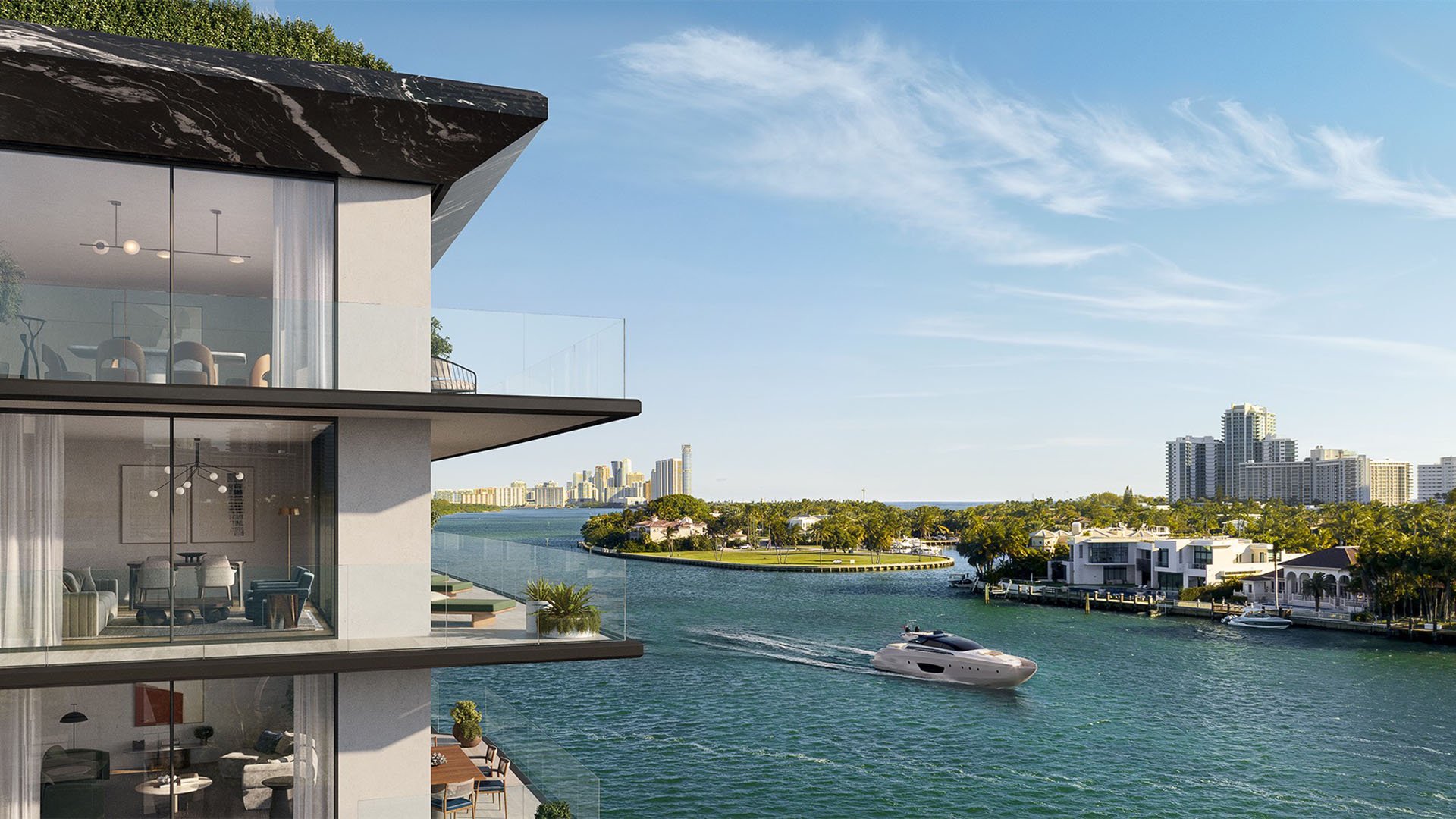
A South Florida waterfront home can sometimes accommodate a larger vessel without changing its dock permit. The answer depends on the property's authorization and the proposed vessel-not on a general assumption that an untouched dock needs no further review.
For a buyer, that distinction matters. A beautifully finished dock may be physically unsuitable for the next yacht. Conversely, a vessel that appears to fit comfortably may raise questions about the approved mooring arrangement, vessel capacity or submerged-land permissions. The essential inquiry is whether both the installation and its intended use remain within existing approvals.
Replacing the boat and altering the dock are separate questions. Neither can be answered simply by comparing the old vessel's length with the new one.
Florida distinguishes among exempt dock activities, activities eligible for general permits and activities requiring individual permits. These are distinct authorization pathways, not interchangeable descriptions of a private waterfront amenity.
Review the existing permit alongside its approved drawings. Dimensions, configuration, location, vessel capacity and environmental effects all matter. An unchanged deck outline is only one part of the review.
A useful starting file includes the permit, approved plans, completion records, lift specifications and any submerged-land documents. Compare those materials with the installation as it stands, then identify precisely what the replacement vessel would require. Do not assume the previous owner's use establishes the scope of permission.
For buyers comparing a private residence with Bay Harbor Towers, the same discipline applies: evaluate the residential choice separately from the documentation supporting any proposed vessel accommodation. A project name or waterfront setting does not establish a particular docking entitlement.
The strongest case for leaving an authorization unchanged is a vessel replacement that remains within existing approvals and requires no work outside them. That conclusion remains case-specific and is ideally confirmed in writing by the relevant permitting authorities.
The analysis changes when the larger boat requires a longer platform, wider deck or different mooring arrangement. A repair-and-replacement exemption requires the structure to remain in the same location, with the same configuration and dimensions, without fill material. Extending or widening the dock does not satisfy that particular exemption.
Mooring pilings also matter. Keeping the main platform intact while adding or relocating pilings does not, by itself, establish that the work is exempt. When seeking a determination, describe every proposed change, including work beyond the deck.
For a Miami Beach buyer considering The Ritz-Carlton Residences® Miami Beach alongside a single-family option, the useful comparison is documented vessel suitability-not simply the appeal of a waterside address. No project-specific berth rights should be assumed.
One private-dock general-permit framework covers a single noncommercial dock designed to moor no more than two vessels. That is not a universal two-vessel limit for every permitted dock in South Florida.
The same framework can accommodate up to 2,000 square feet of over-water surface and wetland area, subject to additional conditions. It also limits waterward extension to 500 feet or 20 percent of the waterbody's width, whichever is less. Terminal platforms have separate size and resource-location restrictions.
These figures are not a menu of improvements available to every owner. They describe a particular permitting pathway; satisfying one measurement does not establish overall eligibility. Nor does an existing small dock automatically carry a right to expand to those limits.
Depth is another constraint. A deeper-draft vessel requires careful review of actual water conditions and the applicable authorization-not an assumption that extending the dock farther offshore will be permissible.
Legal authorization does not establish structural adequacy. Before bringing in a larger vessel, have a qualified marine professional evaluate weight, beam, draft, lift rating, piling and cleat capacity, tidal clearance and storm loads.
Length alone is an incomplete measure. The assessment should address the proposed vessel as a whole and how it would be secured. Any improvements the review identifies must then be assessed against the applicable approvals.
In Fort Lauderdale, buyers considering St. Regis® Residences Bahia Mar Fort Lauderdale alongside private waterfront ownership should keep that distinction clear. The residential decision and the vessel-accommodation decision require separate diligence, without assuming either option supports a specific boat.
Ask for a written suitability assessment rather than a casual assurance that the vessel will fit. The objective is to understand both everyday use and the loads the installation must withstand.
Environmental permitting and permission to occupy state-owned submerged land are separate considerations. Some single-family docking circumstances require a submerged-land lease. Establish whether such documents apply and whether the proposed arrangement remains consistent with them.
State dock authorization may also leave separate local-government or federal approvals to address. A conclusion at one level is not a substitute for every other applicable permission.
Miami-Dade's environmental operating-permit threshold for recreational docking facilities is 10 or more slips, moorings, davit spaces or vessel tie-up spaces. That threshold does not give a smaller private dock blanket permission to expand or change. Facility operating requirements and authorization for proposed work are different questions.
For a Coconut Grove buyer also considering Vita at Grove Isle, keep vessel-related assumptions separate from the residence's broader appeal. The controlling documents-not the neighborhood or project identity-must support the intended arrangement.
Before relying on a dock, assemble a vessel-specific review package: existing approvals, drawings, completion records, submerged-land documents, vessel specifications and a clear description of any proposed work. Have the physical assessment identify necessary changes so authorities are not asked to evaluate an incomplete proposal.
Seek written confirmation of whether the intended use fits the existing authorization and whether additional approvals are needed. If changes are required, understand the approval path before treating accommodation of a larger vessel as an immediate benefit of the property.
The answer can be yes. But a defensible answer comes from matching the vessel, the structure and the permissions-not from leaving the decking untouched.
For a considered approach to South Florida waterfront ownership, connect with MILLION.
If branded residences are on your mind — as a home or as an allocation — we would be glad to share what we are seeing, privately.
Begin a quiet conversationPossibly, if the vessel and its mooring arrangement remain within the existing authorization. The conclusion is case-specific and should be confirmed with the relevant permitting authorities.
No. Approved vessel capacity, mooring arrangements, pilings and other applicable permissions still need review.
The applicable framework does not establish a universal vessel-length threshold. Review must address the existing authorization and the proposed vessel.
No. That exemption requires the same location, configuration and dimensions, with no fill material.
Yes. Mooring pilings are part of regulatory review, even when the main dock platform remains unchanged.
No. The two-vessel condition belongs to a particular noncommercial private-dock general-permit framework, not every permitted dock.
No. That allowance is conditional within a particular general-permit framework, which also includes extension, platform and environmental restrictions.
The assessment should include vessel weight, beam, draft, lift rating, piling and cleat capacity, tidal clearance and storm loads. Physical suitability is separate from legal authorization.
Yes. Permission to occupy state-owned submerged land is distinct from environmental permitting, and some circumstances require a lease.
Obtain the existing permit, approved drawings, completion records, lift specifications and applicable submerged-land documents. Use them with the proposed vessel's specifications to seek written confirmation of the intended arrangement.