For buyers comparing Brickell and Coconut Grove, wellness amenities are only one part of a long-term residential decision. Separate neighborhood access, independent medical care, and building services, then test the residence for adaptability, operating costs, and continuity.

For a luxury buyer weighing Brickell against Coconut Grove, the useful question is not which neighborhood offers more wellness. It is which combination of residence, services, and medical relationships will support the life you intend to lead-even as your needs change.
Separate the purchase into three decisions: neighborhood access, building-level wellness, and an independent medical-care relationship. A treatment room does not establish a primary-care relationship. A wellness concierge does not establish emergency coverage. An extensive club does not, by itself, demonstrate that an apartment can accommodate reduced mobility or a caregiver.
Start with ordinary routines: appointments, exercise, recovery, and arriving home comfortably. Then test less convenient scenarios, including temporary injury, a prolonged absence, and a future need for assistance. The neighborhood should earn its place through those practical requirements, not an amenity count.
Brickell offers examples of both independent concierge medicine and planned residential wellness. Evaluate a prospective primary-care practice’s physician qualifications and scope of care separately from a building’s health-oriented amenities.
At House of Wellness Brickell, the advertised model begins with a 360-degree health assessment at move-in, followed by personalized wellness plans and follow-ups. Proposed services include nutrition consultations, personal training, physical therapy, massage, and IV therapy. Plans also include a lifestyle director, wellness ambassadors, and an app for booking services and programming.
The advertised location at 152 SW 9th Street, adjacent to The Underline and Metromover, adds a neighborhood-access consideration. Buyers should inspect the routes they would actually use; adjacency alone does not establish comfortable, step-free travel.
The Residences at 1428 Brickell presents another planned approach: in-building treatment rooms for services such as IV infusions, alongside an HOA-funded wellness concierge intended to coordinate appointments and connect residents with medical professionals. Evaluate that coordination separately from the care those professionals deliver. Neither the room nor the booking arrangement establishes that treatments are included in ownership costs.
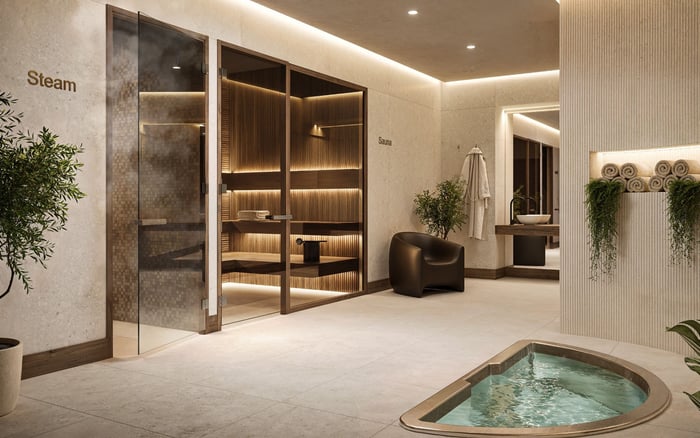
In Coconut Grove, The Well Coconut Grove offers a proposed residential model integrated with a Fitness & Wellness Club exceeding 13,000 square feet. Advertised amenities include a fitness center, mindful movement studio, hot and cold plunges, and a Crystal Cave relaxation lounge. Proposed wellness programming also lists functional medicine, physical therapy, and holistic practitioners.
The appeal is the possibility of fitting wellness into the residential routine rather than organizing every activity elsewhere. Advertised resident benefits include an annual health assessment, health coaching described as “bi-annual,” and preferred treatment pricing. Before assigning value to that package, obtain a written definition of coaching frequency and clarify exactly what the assessment includes.
A full-service wellness concierge and in-home massage, facials, and meditation are also advertised. A hyperbaric chamber and a Vitality Lounge for IV therapy broaden the advertised offering, but their presence does not establish suitability or benefit for an individual resident. Discuss treatment choices with an independent clinician.
Valet parking and 24-hour security also appear among the advertised resident amenities. Assess them as conveniences, not substitutes for documented caregiver access or emergency procedures.
Concierge care need not decide the neighborhood comparison. Physician-led, in-home concierge medical care for individuals and families serves both Brickell and Coconut Grove. That shared service area makes it important to examine the provider relationship rather than assume either neighborhood has exclusive access.
Ask prospective practices about enrollment, home-visit availability, after-hours arrangements, specialist coordination, and coverage while you travel. Request a written explanation of fees and exclusions. Resolve these questions directly; do not infer benefits from the term concierge.
Hospital access deserves an equally specific review. HCA Florida Mercy Hospital lies south of Brickell, and Baptist Health facilities are among the medical-access considerations for buyers. Neither point establishes a hospital-access advantage over Coconut Grove or a dependable emergency-response time. Evaluate the addresses relevant to your care, and keep emergency planning separate from routine appointment convenience.
Aging-in-place suitability requires a different inspection from an amenity tour. Start at the arrival point and trace the entire route to the residence: vehicle drop-off, entrance, elevator, corridor, and front door. Request documentation of step-free access and inspect transitions personally with an appropriate accessibility professional.
Inside the apartment, review bathroom adaptability, shower access, circulation, and whether future changes would require association approval. A generous floor plan warrants closer examination, not an automatic conclusion about accessibility. Ask what can be modified and which building constraints would limit those changes.
Then examine continuity. Request elevator-backup details, outage procedures, emergency protocols, and policies for visiting or overnight caregivers. Consider how deliveries, medical equipment, and authorized provider entry would work when the owner needs assistance.
None of the wellness offerings described here establishes verified aging-in-place suitability. Treat it as a property-specific requirement to document before purchase, not an implied feature of a wellness brand.
Treat development amenities as advertised or planned until their delivery, operation, and contractual status are confirmed. Ask for anticipated opening dates, named operators, staffing commitments, and the documents governing resident access. Establish what happens if an operator changes or a service is discontinued.
Separate the annual budget into association charges, club or membership fees, medical retainers, consultations, treatments, and home visits. An HOA-funded coordinator does not establish that the appointments being coordinated are paid for. Preferred treatment pricing is not the same as included treatment.
The practical objective is continuity: knowing what you can rely on, what you must arrange independently, and what remains discretionary.
Use the same scorecard for each finalist: routine access, independent care, wellness participation, physical adaptability, service continuity, and total recurring cost. Weight those categories around your household rather than giving every amenity equal importance.
A buyer drawn to Brickell’s planned coordination models may reach a different conclusion from one drawn to Coconut Grove’s integrated club model. Both decisions can be sound if the selected residence meets the underlying requirements. The enduring luxury is not simply having more services nearby; it is retaining choice as circumstances evolve.
For a discreet, residence-by-residence comparison aligned with your long-term priorities, connect with MILLION.
If branded residences are on your mind — as a home or as an allocation — we would be glad to share what we are seeing, privately.
Begin a quiet conversationThe choice depends on the specific residence, your routines, and your medical relationships. Planned wellness offerings do not establish a neighborhood-wide advantage in clinical care or accessibility.
Physician-led, in-home concierge medical care serves both Brickell and Coconut Grove. Confirm enrollment, availability, fees, and coverage directly with the prospective practice.
Evaluate physician qualifications and scope of care independently of residential amenities. Ask about home visits, after-hours arrangements, specialist coordination, fees, and exclusions.
Its advertised model includes a move-in health assessment, personalized wellness plans, and follow-ups. Proposed services include nutrition consultations, training, physical therapy, massage, and IV therapy.
Plans include in-building treatment rooms and an HOA-funded wellness concierge to coordinate appointments and connect residents with medical professionals. These arrangements do not establish that consultations or treatments are included.
It markets residences integrated with a Fitness & Wellness Club exceeding 13,000 square feet. Advertised benefits include an annual health assessment, wellness concierge services, and preferred treatment pricing.
Obtain a written definition of the frequency, since the term can be ambiguous. Also confirm session scope, provider qualifications, and any additional charges.
No; wellness amenities alone do not establish suitability. Buyers should separately document step-free access, bathroom adaptability, elevator backup, caregiver access, and emergency procedures for the specific residence.
No comparative travel-time or emergency-response advantage is established here. Evaluate access to the facilities relevant to your own care without assuming a neighborhood-wide ranking.
Confirm delivery dates, operators, staffing, contractual access, and continuity if an operator changes. Separate association charges from memberships, medical retainers, treatments, and home visits.