House of Wellness Brickell presents an extensive wellness offering. Buyers should distinguish the advertised amenities from the written rules governing access, practitioner qualifications, service costs, and acoustic performance.
The most persuasive luxury amenity is not simply a beautiful room. It is a service that fits seamlessly into daily life. At House of Wellness Brickell, that distinction deserves particular attention: the development is marketed as a 34-story, 656-residence address at 152 SW 9th Street, with more than 22,000 square feet of wellness, fitness, and lifestyle amenities.
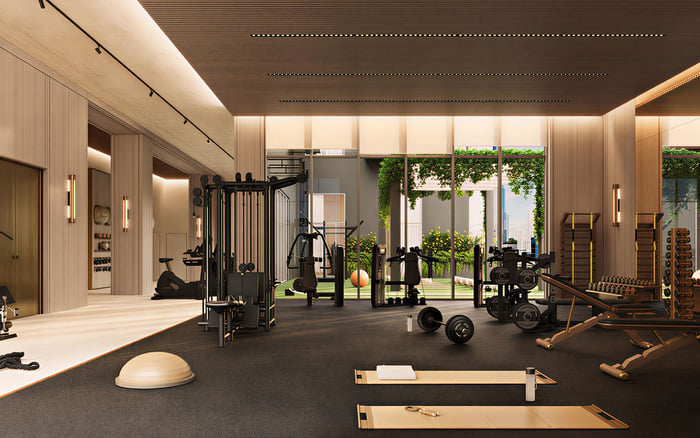
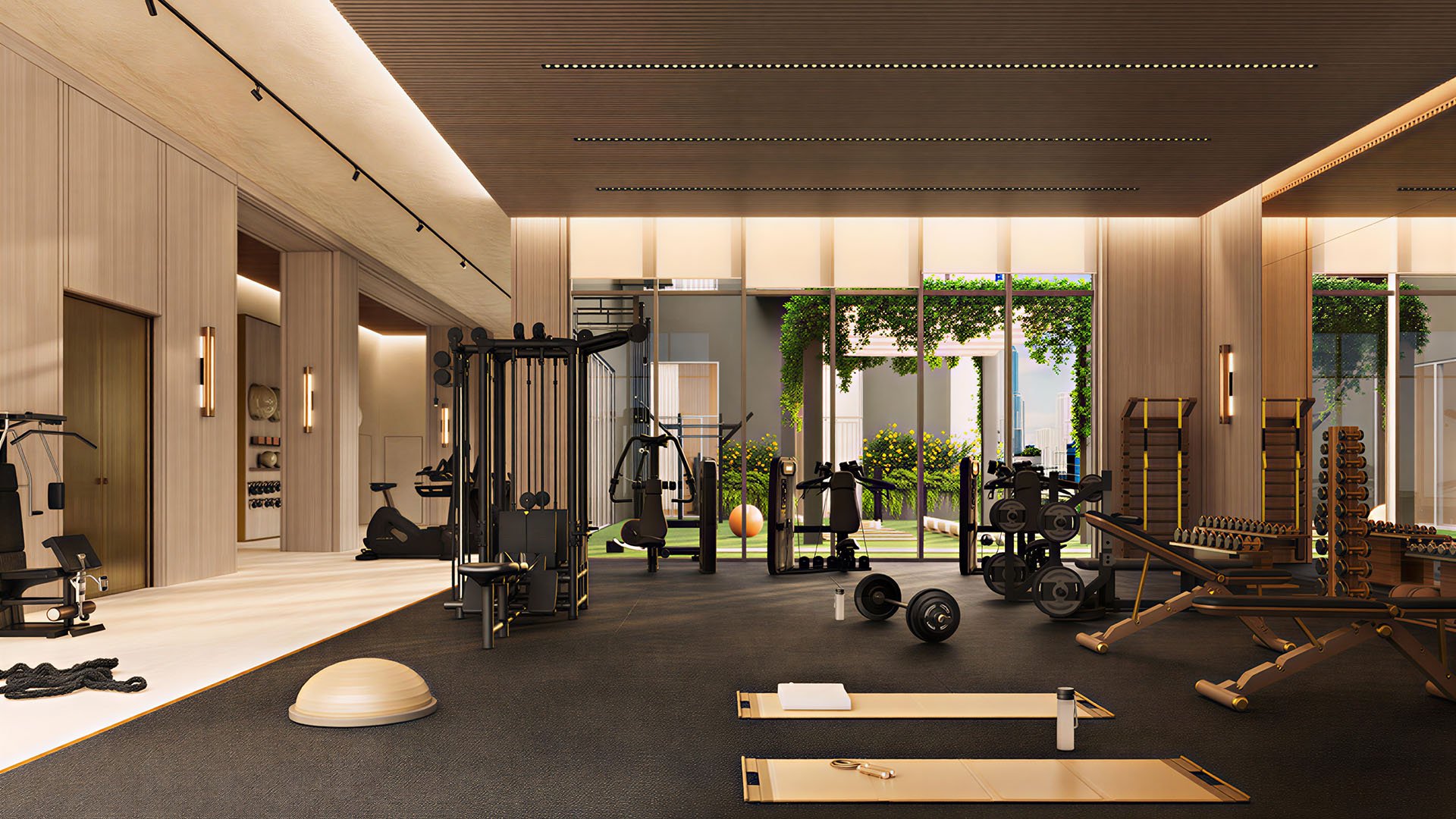
The advertised offering includes a gym, indoor and outdoor functional-training areas, a private personal-training room, and an outdoor class terrace. Promoted services extend to personal training, physical therapy, nutrition, massage, esthetician services, IV therapy, and community programming. The proposition is broad; the practical question is how these spaces and services will operate.
Several operational details remain unspecified. That does not establish that policies, credentialing procedures, or acoustic designs do not exist. It means buyers should request them before treating promotional language as a dependable part of ownership.
A fitness room and a reliably available fitness room are different propositions. A reservation policy identifying which facilities or services require bookings is not publicly specified. Neither are booking windows, session limits, or resident-versus-guest priority.
For a buyer whose exercise routine depends on a particular morning hour, these are central questions. Request written rules covering advance reservations, recurring appointments, waitlists, cancellations, no-show penalties, and guest access. Ask how peak-hour availability is expected to work across the advertised residence count, without assuming that the number of homes alone predicts congestion.
The private personal-training room merits separate clarification. Can a resident reserve it for independent exercise, or is access tied to an appointment with an approved trainer? Does a paid session include room access, or are there separate charges?
Ask for sample app screens showing the proposed booking process. Digital convenience does not, by itself, establish reservation rights, availability, or priority.
The advertised Integrated Wellness Method includes an initial health assessment, a personalized plan, daily programming, a Lifestyle Director, and progress tracking through a dedicated app. These elements describe a coordinated experience, but they do not establish its operating terms.
The operating company, staffing schedule, and service-level commitments remain unspecified. Class capacity, additional class charges, and whether classes are included in monthly association fees also remain unclear.
Request a service schedule distinguishing included programming from separately billed appointments. It should specify operating hours, class frequency, cancellation procedures, and responsibility when a practitioner is unavailable. Ask which commitments are contractual and which remain subject to change.
When comparing the proposition with Cipriani Residences Brickell, apply the same discipline: compare written access and service terms rather than inferring operational equivalence from amenity descriptions. This is a diligence framework, not a claim that the projects share facilities or policies.
Personal training is promoted, but individual trainers, accepted certifications, minimum experience, insurance requirements, and background-screening procedures remain unspecified. It is also unclear whether trainers will be building employees, wellness-operator contractors, or outside professionals admitted through an approval process.
Ask for the credentialing policy, not merely an assurance that trainers will be qualified. Useful details include accepted certifications, renewal requirements, relevant experience, insurance coverage, and the party responsible for verifying compliance. Clarify who handles complaints and whether approval can be withdrawn.
For residents with an established trainer, outside-professional access may determine whether the offering suits their routine. Request the approval process, required documentation, permitted hours, fees, and rules governing use of the private training room.
Clinical services require a separate inquiry. For physical therapy and IV services, request provider identities, applicable Florida licenses, clinical-supervision arrangements, and liability coverage. Request clear provider and credentialing information for other promoted practitioners as well. A shared wellness label should not substitute for service-specific accountability.
The promise of quiet social areas is an aspiration, not a measurable acoustic specification. Wall, floor, ceiling, and glazing assemblies; impact-isolation ratings; mechanical-noise limits; and sound-transmission targets between residences and amenities remain undisclosed.
Acoustic treatments for the gym, outdoor class terrace, rooftop club, podcast room, spa, and treatment rooms also remain unspecified. These omissions do not establish poor acoustic performance. They identify questions that require technical answers.
Request the relevant specifications and ask how the design addresses equipment vibration, airborne sound, mechanical systems, and speech privacy. An acoustic professional can help distinguish a design target from a tested result and assess which documentation applies to a particular residence.
Operating rules matter alongside construction. Ask for fitness-area hours, amplified-music restrictions, rooftop-event rules, and noise-complaint procedures. Physical isolation and management controls address different aspects of the same concern: whether active shared spaces can coexist comfortably with private residential life.
Advertised indoor, outdoor, seventh-floor, and rooftop amenities make residence placement a meaningful diligence issue. Request final amenity plans and equipment locations, then examine the proposed home’s relationship to active common areas above, below, and beside it.
An elevated floor alone is not an acoustic guarantee. Nor does a neighborhood noise indicator measure interior sound isolation. The useful inquiry is specific: which spaces adjoin the residence, what activities are permitted there, and what construction separates them?
A comparison with The Residences at 1428 Brickell should likewise remain residence-specific. Buyers should request comparable documentation for each candidate rather than assume that a floor number, address, or amenity concept establishes quiet.
Before committing, assemble three practical document sets: access rules and pricing; operator and practitioner requirements; and acoustic plans, specifications, and operating restrictions. For unresolved items, request a written explanation of what remains undecided and when confirmation is expected.
Then have counsel review which representations appear in the purchase agreement, declaration, bylaws, rules, or incorporated amenity schedules. Distinguish an advertised intention from an enforceable commitment, and ask who may change operating arrangements after purchase.
The goal is not to diminish the wellness proposition. It is to establish whether the experience being purchased matches the buyer’s routine, expectations, and tolerance for uncertainty. Reliable access, accountable practitioners, and a well-protected private interior are the details that make an ambitious amenity program personally valuable.
For a considered approach to South Florida residential ownership, explore MILLION.
If branded residences are on your mind — as a home or as an allocation — we would be glad to share what we are seeing, privately.
Begin a quiet conversationThe advertised facilities include a gym, indoor and outdoor functional-training areas, a private personal-training room, and an outdoor class terrace.
The reviewed materials do not specify which facilities or services require reservations. Buyers should request written booking rules and sample app screens.
The reviewed materials do not clarify whether classes are included in monthly association fees or carry additional charges. Class capacity is also unspecified.
Outside-trainer access is not clarified in the reviewed materials. Request the approval requirements, fees, permitted hours, and room-use rules.
The reviewed materials do not identify accepted certifications, individual trainers, minimum experience, insurance requirements, or screening procedures.
Request provider identities, applicable Florida licenses, clinical-supervision arrangements, and liability coverage. Evaluate these separately from general fitness services.
A Lifestyle Director and wellness staff are promoted, but the reviewed materials do not identify the operating company, staffing schedule, or service-level commitments.
The reviewed materials do not provide measurable acoustic-performance specifications or identify treatments for the described amenity spaces. This does not establish that acoustic controls are absent.
The advertised amenities span indoor, outdoor, seventh-floor, and rooftop spaces. Buyers should examine adjoining activities, equipment locations, separating construction, and operating hours.
Have counsel review the purchase agreement, declaration, bylaws, rules, and any incorporated amenity schedules. Ask which operating commitments are enforceable and which may change.