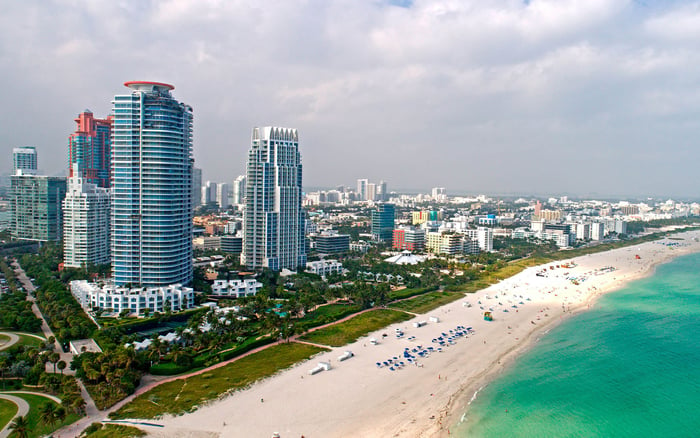
For buyers who fly privately, the Brickell versus Bal Harbour decision begins with the exact FBO, residence entrance and travel schedule. Compare airport-specific driving estimates, driver terms and total ground time before treating either address as the more reliable choice.
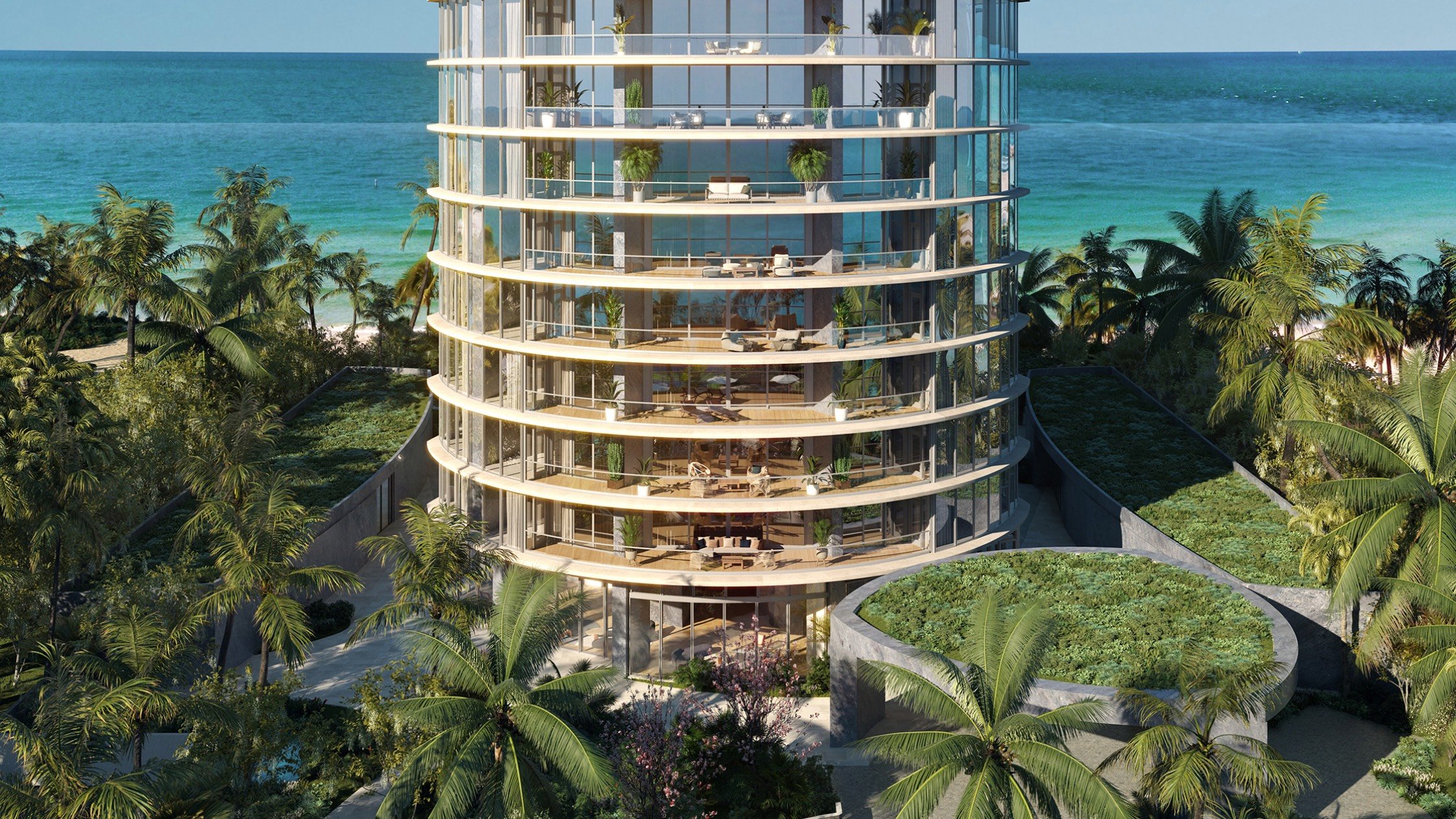
For a buyer who flies privately, the meaningful distance between aircraft and residence is not simply mileage. It is the full sequence: aircraft handling, customs where applicable, baggage transfer, vehicle coordination and the drive to the correct entrance. A short driving estimate answers only part of that question.
Brickell and Bal Harbour deserve a comparison built around that sequence, not the familiar assumption that one delivers logistics and the other lifestyle. Neither should be assumed to be the consistent winner for ground-time reliability. The better choice depends on the airport your operator can use, the precise pickup point and how closely your travel schedule matches the conditions behind a quoted drive time.
The strongest buying decision starts with a repeatable journey, not the shortest advertised transfer.
Start by asking your operator to assess Miami International Airport, or MIA; Miami-Opa locka Executive Airport, or OPF; and Miami Executive Airport, or TMB, for your intended flight. Have the operator identify suitable facilities before requesting driving estimates. Do not treat these airports as interchangeable simply because a neighborhood-level estimate looks appealing.
For each suitable option, ask the driver to specify the route, travel window and exact endpoints behind the quote. Use the resulting estimates to compare journeys rather than selecting the shortest number without its assumptions.
A buyer considering The Residences at 1428 Brickell should request separate airport-to-entrance estimates for each operationally suitable airport. A general “Brickell” destination is useful for orientation, but insufficient when choosing a residence around frequent departures.
For Bal Harbour, ask the operator to evaluate OPF, MIA and Fort Lauderdale-Hollywood International Airport, or FLL, against the intended flight. Then request transfers from the specific facilities the operator identifies, rather than relying on a general airport-to-neighborhood estimate.
Do not substitute a Miami Beach route estimate for a Bal Harbour journey. The comparison should end at the residence entrance you would actually use, with the same attention to travel hours and vehicle requirements applied to the Brickell options.
When evaluating Rivage Bal Harbour, request the actual entrance or proposed arrival point for the comparison. Keep projected logistics distinct from an observed journey. For Oceana Bal Harbour, apply the same endpoint discipline rather than assigning a village-wide transfer estimate to the property.
A fixed-base operator, or FBO, is a specific destination, not merely another name for the airport. Have the flight operator confirm the facility and vehicle meeting point before the driver prepares an estimate.
Request a ground-time plan that separates four elements: aircraft handling; customs where applicable; baggage transfer and vehicle coordination; and driving. These activities may overlap. The aim is not to add arbitrary allowances, but to identify what must be complete before the next stage can begin.
For departure, establish the operator’s required arrival time at the FBO and work backward. For return, clarify when the driver should be in position and how the passenger will be notified. A driving estimate cannot, by itself, establish when you will reach the aircraft or arrive home.
Airport suitability belongs in the same conversation. Ask the operator which airports and facilities are appropriate for the intended flight before letting a favorable driving estimate influence the property decision.
The vehicle arrangement deserves the same precision as the flight. Request a written quote covering waiting charges, tolls, gratuity, flight-delay handling, luggage capacity and the pickup meeting point. Establish who monitors changes and who communicates them. Do not assume a quoted transfer includes every element of the arrival experience.
At the residence, ask where the vehicle can meet passengers, how luggage reaches it and what arrangements apply if the driver arrives early. These are questions to verify, not amenities to presume.
For a shortlist that includes Una Residences Brickell, make the vehicle handoff part of the property visit. The objective is to understand the complete departure routine, not infer a logistics advantage from the neighborhood name.
Rather than assume a universal rush-hour window or fixed buffer, request estimates for your usual weekday, outbound departure hour and return time, using the exact residence entrance and FBO address in each direction.
Ask the driver to distinguish the expected drive time from the contingency recommended for that booking. Where practical, rehearse the route at representative travel times and record the conditions. One successful trip is a useful observation, not proof of lasting reliability.
Test departure flexibility rather than assume it. If your schedule permits an earlier or later departure, ask how that changes the estimate. If it does not, compare both neighborhoods under the same fixed timing constraint.
For a fair property comparison, first hold the airport, vehicle requirements and schedule constant. Then repeat the exercise with any alternative airport your operator considers suitable. This separates the effect of the address from the effect of changing the flight plan.
Brickell may suit a buyer whose preferred airport and regular schedule produce a well-coordinated transfer. Bal Harbour may suit a buyer whose airport arrangements prove equally workable. Neither conclusion should rest on a best-case driving estimate alone.
Choose the residence whose verified arrival and departure routine best fits your life, with clear responsibilities and an agreed contingency for each journey. That is a more useful luxury than an attractive travel-time claim.
For a discreet residence search shaped around your travel priorities, connect with MILLION.
If branded residences are on your mind — as a home or as an allocation — we would be glad to share what we are seeing, privately.
Begin a quiet conversationDo not assume either neighborhood is consistently faster. Compare the exact FBO and residence entrance at your usual travel times.
Ask the operator to assess OPF, MIA and FLL for the intended flight. Request driving estimates only after confirming suitable facilities.
Request an estimate between the confirmed FBO meeting point and the exact residence entrance. Specify the weekday and travel hour rather than relying on a neighborhood average.
Use the same FBO, vehicle requirements and travel schedule for both residence estimates. This helps separate the effect of the address from other changes to the journey.
Do not assume interchangeability with MIA or OPF. Confirm operational suitability, then compare estimates for the actual endpoints and schedule.
Do not substitute a broad Miami Beach estimate for a specific Bal Harbour journey. Request the route to the actual residence entrance.
Ask the operator to separate aircraft handling, customs where applicable, baggage transfer and vehicle coordination from the drive. Clarify which activities overlap rather than simply adding allowances.
Request a written quote for the specific route, vehicle and travel schedule. Confirm inclusions and potential additional charges before comparing offers.
Confirm waiting charges, tolls, gratuity, flight-delay handling, luggage capacity and the pickup meeting point. Establish who communicates changes to the flight or pickup.
Request direction-specific estimates for the exact endpoints at the usual weekday and travel hours. Agree on a booking-specific contingency rather than assuming a universal buffer.