The Perigon’s advertised service package invites a closer look beyond the residence itself. A buyer’s audit should establish how valet, visitor authorization, private entertaining and household support would function under event-week demand.
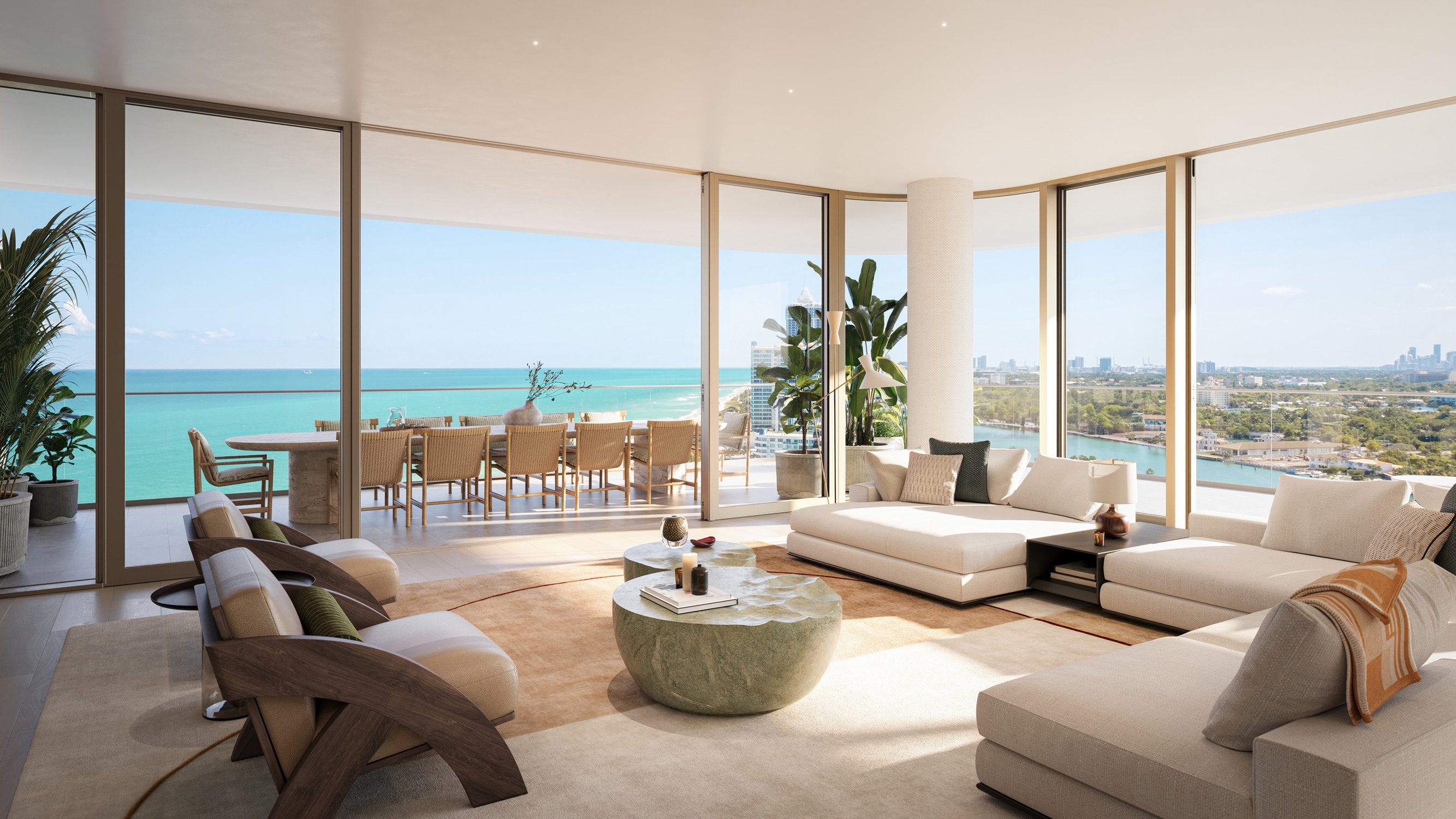
A residence can be beautifully planned yet leave a consequential part of ownership unresolved: what happens between Collins Avenue and the front door when several households arrive, entertain and request their cars at once? For a buyer at The Perigon Miami Beach, that question deserves the same attention as the floor plan.
At 5333 Collins Avenue in Miami Beach’s Mid-Beach/Millionaire’s Row area, The Perigon is marketed as an 83-residence oceanfront condominium. Its advertised service package includes 24-hour security and valet, an on-site general manager, residential butler, house car and dedicated lifestyle concierge. These are meaningful commitments, but they do not establish arrival-time guarantees.
This distinction is not an allegation of poor service. Neither current operational readiness nor event-week performance is established here. The buyer’s task is to distinguish advertised coverage from documented procedures and demonstrated execution-not treat them as interchangeable.
Art Basel, the Miami International Boat Show, Formula 1-related traffic and holiday weekends are useful scenarios for an arrival audit, not evidence of a documented Perigon queue problem. No property-specific queue measurements for those periods are established here.
Begin with your household’s actual routine: arriving with luggage, sending a driver ahead, welcoming dinner guests or coordinating employees while away. Ask management to walk through each scenario, from curb arrival to authorization, parking and elevator access. Do not assume a separate guest lane, shared queue, overflow area or formal digital preclearance system.
For a buyer also considering 57 Ocean Miami Beach, the same scenario-based questions allow a useful comparison without presuming either property’s procedures. What matters is whether the written operating plan fits the household, not which brochure offers the longest service list.
Twenty-four-hour valet describes coverage. It does not disclose maximum waits, staffing by shift, vehicle-storage capacity or event-week service guarantees. Nor does it establish priority among residents, guests, household employees, vendors and delivery vehicles.
Request the current parking and valet policy, together with a written explanation of peak-demand operations. Ask specific questions:
What curb capacity is available, and how are simultaneous arrivals managed?
What staffing is planned for peak periods, and who authorizes reinforcement?
How are vehicle retrieval requests prioritized and delays communicated?
What rules govern overnight guest parking, additional vehicles and self-parking rights?
Where should ride-share vehicles and private chauffeurs drop off or collect passengers?
Ask management to distinguish resident rights from discretionary accommodations. An occasional exception is not an entitlement you can rely on every weekend. Self-parking, in particular, should be confirmed in the governing parking documents rather than assumed as a fallback.
The house car warrants separate questions about booking, availability and competing requests. Its inclusion in the service package does not guarantee transport when valet demand peaks.
A dedicated lifestyle concierge may coordinate highly curated services, but that description does not establish guest preregistration, digital credentials, event-specific access lists or the transmission of valet instructions. Likewise, 24-hour security does not explain how a visitor is approved.
Request a complete walkthrough using a hypothetical invited guest. Establish what information must be submitted, how far in advance, what identification is required and who may authorize entry. Confirm whether an assistant or household manager can act for an owner, and whether that authority expires or can be revoked promptly.
Then examine the exceptions: a misspelled name, an early arrival, a changed driver or a host who cannot answer the telephone. Request the after-hours escalation procedure and clarify who makes the final admission decision. Security should not depend on an informal understanding with one familiar employee.
Privacy belongs in this discussion. Ask what visitor records are retained, who can access them and how elevator permissions are limited. Preclearance should be a defined authorization process, not an assumption that an invitation grants unrestricted building access.
The oceanfront restaurant and speakeasy are advertised as exclusive to residents and their guests. That establishes the intended audience, not unrestricted guest access. Reservation requirements, host-presence rules, capacity limits and time restrictions still require confirmation.
For private entertaining, request attendance limits, advance-notice requirements, catering routes, elevator reservations, security charges, deposits and any event-week restrictions. Ask whether a dining reservation also initiates guest authorization or whether the household must complete separate steps. Neither arrangement should be presumed.
A buyer weighing Faena House Miami Beach alongside The Perigon can apply the same hosting audit to both properties without assuming equivalent policies. The comparison becomes useful when it addresses the evening you intend to host-including departures-rather than hospitality language alone.
The Perigon’s advertised home-management services include cleaning, maintenance, floral arrangements and pantry stocking. For an owner arriving intermittently, the audit should establish how those services intersect with entry permissions: who approves access, who supervises work and who confirms completion before arrival.
Request the move-in and vendor procedures, including any scheduling restrictions that could affect preparation for a busy weekend. Do not treat household employees, contractors and invited guests as interchangeable categories without confirming the rules for each.
Private guest accommodations also warrant document-level review. Advertised descriptions differ between eight and 10 guest suites; the 10-suite description specifies approximately 563 square feet per suite and initial purchase eligibility for residence owners. Confirm the current count, ownership structure, booking rights and availability rather than assuming the suites function as a shared hotel-style amenity.
Before relying on verbal assurances, request the current declaration, bylaws, house rules, parking and valet policy, guest-access rules and vendor procedures. Have counsel distinguish binding rights from operating practices that may change. Seek written clarification wherever the documents leave a material question unresolved.
Once operations can be tested, arrange an authorized peak-demand visit. Measure curb-to-lobby time and valet-request-to-handoff time separately, and include a preregistered guest arrival if that process is offered. Record the conditions and any exceptions; one smooth visit is not a peak-event guarantee.
The strongest outcome is not a promise that waiting will never occur. It is a clear account of who has priority, how guests are approved and who resolves a delay. That is the operational counterpart to a considered floor plan: privacy and hospitality supported by procedures the household understands.
For a discreet conversation about matching a South Florida residence to your ownership priorities, connect with MILLION.
If branded residences are on your mind — as a home or as an allocation — we would be glad to share what we are seeing, privately.
Begin a quiet conversationThe Perigon is at 5333 Collins Avenue in Miami Beach’s Mid-Beach/Millionaire’s Row area. It is marketed as an 83-residence oceanfront condominium.
No maximum valet wait is established by the advertised coverage. Buyers should request written peak-demand procedures and any applicable service commitments.
No documented Perigon queue study for Art Basel, the Miami International Boat Show, Formula 1-related traffic or holiday weekends is established here. Current operational readiness also requires confirmation.
The advertised valet service does not establish arrival or retrieval priority. Request the policy covering residents, guests, employees, vendors and deliveries.
Self-parking should not be assumed to be a confirmed governing right. Verify eligibility and restrictions in the current parking documents.
The advertised concierge description does not specify a formal platform or preregistration workflow. Ask about submission requirements, authorization, identification and after-hours escalation.
Both are advertised as exclusive to residents and their guests, but this does not establish unrestricted entry. Confirm reservations, host-presence requirements, capacity and time restrictions.
Descriptions differ between eight and 10 suites, with differing implications for ownership and use. Buyers should verify the current count, ownership structure and booking rights.
Request the current declaration, bylaws, house rules, parking and valet policy, guest-access rules and move-in/vendor procedures. Seek written clarification of event-week restrictions and private-hosting requirements.
Once operations permit, arrange an authorized peak-demand visit and separately measure curb-to-lobby and valet-request-to-handoff times. Include a preregistered guest arrival if that process is available.