For primary-residence buyers at Sixth & Rio, homestead eligibility turns on ownership, permanent-residence use and the January 1 calendar. Understand the exemption, the longer-term assessment cap and the closing assumptions that belong in your purchase decision.

For a primary-residence buyer, Sixth & Rio Fort Lauderdale presents two connected decisions: whether its New River setting suits everyday life, and whether the ownership timeline supports Florida homestead eligibility. The first is personal. The second depends on qualifying title, genuine permanent-residence use and a specific calendar date.
Homestead can improve the economics of an eligible purchase, but it is not a discount embedded in the asking price. The immediate exemption and potential longer-term assessment protection serve different purposes. Neither guarantees an annual tax bill or makes a second home equivalent to a primary residence.
The disciplined approach is to select the right residence first, then build an ownership budget that remains viable if homestead eligibility begins later than anticipated.
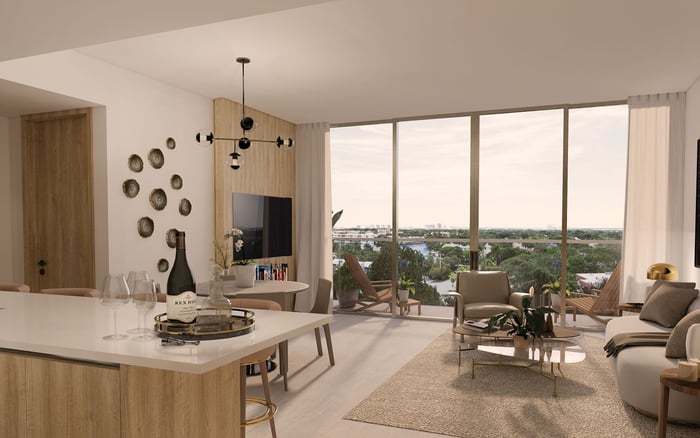
Sixth & Rio is an OceanLand condominium development with 94 residences at 501 SE 6th Avenue, Fort Lauderdale, FL 33301. Its positioning centers on boutique, waterfront-parkside living along the New River.
Evaluate views toward the river, downtown skyline, Smoker Family Park and Rio Vista residence by residence; do not assume every home shares the same exposure. Likewise, the 94-residence count establishes scale-not the proportion of permanent residents, the level of rental activity or the atmosphere of common areas.
Pricing guidance ranges from $900,000 to $3,000,000. Treat that range as orientation, not confirmation of available inventory or a binding quote. Construction is underway, with delivery planned for 2026; that schedule does not guarantee a closing or occupancy date.
Before making an offer, request current residence-specific pricing and a clear explanation of the expected closing and occupancy sequence. Those details connect the lifestyle decision to the homestead calendar.
Florida homestead eligibility generally requires legal or qualifying beneficial title and good-faith permanent-residence use on January 1 of the tax year. A condominium can qualify; that form of ownership does not itself disqualify a Sixth & Rio buyer.
The distinction is between owning a residence and making it your permanent home. An intention to relocate, however sincere, does not replace the required use on the eligibility date. A buyer who owns the unit on January 1 but establishes permanent residence later generally cannot qualify for that year merely because the move eventually occurs.
For anyone also considering Four Seasons Hotel & Private Residences Fort Lauderdale, the same question belongs early in the comparison: will the contemplated residence genuinely become the permanent home? Neither a project name nor a purchase price establishes eligibility.
The first $25,000 of homestead exemption reduces the assessed value subject to all property-tax levies, including school taxes. The additional exemption applies to non-school levies and includes an inflation adjustment. Describing the total exemption as a flat $50,000 therefore requires qualification for the relevant tax year.
Exemption dollars are not tax-savings dollars. The exemption reduces the value subject to applicable taxes; the resulting savings depend on the relevant tax rates. Without residence-specific assessed values and applicable rates, a promised annual savings figure would be premature.
Save Our Homes addresses a different issue. Homesteaded property generally receives a limit on annual assessed-value increases of 3% or the applicable CPI change, whichever is lower. This is an assessment cap, not a tax-bill cap.
For a buyer planning a long holding period, that distinction matters. The immediate exemption can reduce taxable value, while the assessment limitation may become more consequential over time. Neither fixes the total cost of ownership. Keep tax assumptions separate from association expenses, insurance and other budget items that require verification.
Consider a conditional Sixth & Rio purchase: the buyer closes during 2026 and establishes permanent residence by January 1, 2027, with qualifying ownership and use on that date. Those facts could support eligibility for tax year 2027, subject to the remaining requirements and a timely application.
Now change one assumption. The buyer closes in 2026 but does not make the unit a permanent residence until after January 1, 2027. Ownership alone generally would not establish eligibility for 2027. Planned delivery, legal closing, permission to occupy and actual permanent-residence use are separate milestones.
A practical budget should show both an eligible-year scenario and a scenario without homestead for that year. If the purchase is comfortable only under the more favorable version, revisit the assumptions before committing. Tax timing should inform the decision, not encourage a rushed or artificial claim of residency.
The Broward County Property Appraiser administers homestead exemptions and offers an online application portal. March 1 is the usual filing deadline, but buyers should confirm the calendar for their application year rather than rely on an older deadline.
Supporting evidence may include a Florida driver's license or identification card, Florida vehicle registration and voter registration where applicable. These documents support the residency inquiry; they do not substitute for genuinely establishing a permanent home. A residency-based tax benefit claimed elsewhere can also undermine a Florida application.
Existing Florida homeowners should examine portability before finalizing their tax budget. It may allow an existing homestead assessment difference to transfer to the new residence. Form DR-501T is used alongside the new homestead application. Confirm current requirements, timing and the applicable benefit with the property appraiser; do not assume a prior property's tax treatment transfers intact.
A Sixth & Rio residence used only as a second home or investment does not satisfy the permanent-residence requirement. That does not determine whether it is an attractive purchase; it changes the tax assumptions supporting it.
Buyers weighing St. Regis® Residences Bahia Mar Fort Lauderdale alongside Sixth & Rio should make the intended use explicit for each option. Compare the residences on their own merits, then evaluate any potential homestead treatment separately. A plan for seasonal enjoyment should not be underwritten as a qualifying permanent relocation.
The strongest primary-residence case combines a home that suits daily life, a realistic closing schedule and a supportable residency position. Confirm the selected unit's outlook, price and timing, then test exemption and portability assumptions with the appropriate advisers. This is general buyer guidance, not individualized legal or tax advice.
For a discreet conversation about aligning your Fort Lauderdale residence search with your ownership priorities, connect with MILLION.
If branded residences are on your mind — as a home or as an allocation — we would be glad to share what we are seeing, privately.
Begin a quiet conversationYes, a qualifying primary-residence condominium can receive homestead exemption. The buyer must satisfy ownership, permanent-residence and application requirements.
The applicant generally must hold legal or qualifying beneficial title and use the property as a good-faith permanent residence on January 1 of the tax year.
No. Closing during 2026 and establishing permanent residence by January 1, 2027 could support 2027 eligibility, subject to the remaining requirements and timely application.
No, it reduces the value subject to applicable taxes rather than the tax bill dollar-for-dollar. Actual savings depend on the relevant tax rates.
A flat $50,000 description needs tax-year qualification because the additional non-school exemption includes an inflation adjustment. The first $25,000 applies to all property-tax levies, including school taxes.
No, it generally limits annual assessed-value increases to 3% or the applicable CPI change, whichever is lower. It does not cap the tax bill.
No, second-home or investment use alone does not satisfy the permanent-residence requirement.
Apply through the Broward County Property Appraiser, which offers an online portal. March 1 is the usual deadline in general guidance, but confirm the calendar for the actual application year.
Evidence may include a Florida driver's license or ID, Florida vehicle registration and voter registration where applicable. Claiming a residency-based tax benefit elsewhere can undermine the application.
Portability may allow an existing homestead assessment difference to transfer to the new residence, using Form DR-501T alongside the homestead application. Confirm current eligibility, timing and the applicable benefit with the property appraiser.