Shoma Bay advertises package-management amenities, concierge service and security. For buyers receiving valuable shipments, the essential diligence lies in written acceptance rules, courier access, documented custody transfers and liability terms.
A residence should accommodate its owner's daily routine as well as moments that demand discretion: a watch returning from service, confidential documents arriving by courier, or a collectible delivered while the owner is away. At Shoma Bay North Bay Village, the buyer's question is not simply whether a package room is advertised. It is what happens between the courier's arrival and the resident's receipt.
The development at 1850 John F. Kennedy Causeway, North Bay Village, FL 33141, is described as a 333-unit condominium community. Its advertised amenities include a mailroom, mobile package system, concierge package room and refrigerated grocery-delivery room. These offer convenience; they do not confirm end-to-end protection for valuable shipments.
A lack of public detail does not mean a policy is absent. It means buyers should obtain the applicable procedures before relying on the service.
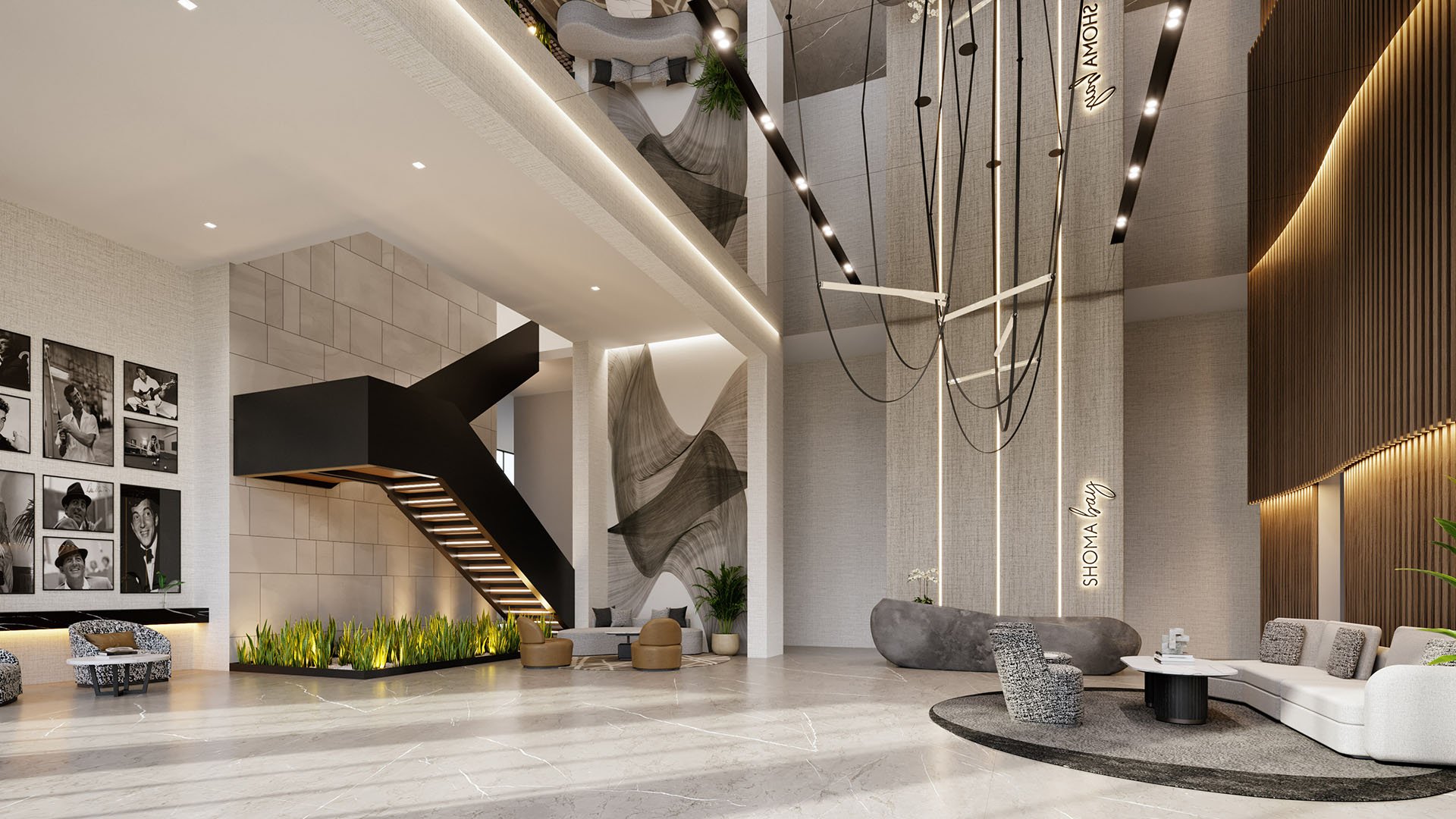
Shoma Bay advertises a lobby with concierge service, 24-hour professional security and video surveillance. None of those descriptions, on its own, establishes physical parcel screening, contents inspection or a documented procedure for handling valuables.
Ask management to define “screening” precisely. Does it mean checking the courier's authorization, matching a shipping label to a resident, examining exterior condition, or something else? Any proposed physical inspection should be explained separately: who performs it, and under what authorization? A general security program does not answer these questions.
The advertised biometric access for the children's club should remain in its proper context. It does not establish biometric protection for parcel storage. A refrigerated grocery-delivery room serves a different need; it says nothing about how jewelry or confidential papers would be handled.
Begin with a practical scenario: a courier arrives with a declared-value shipment while the resident is unavailable. Ask who may accept it, what they record and when responsibility passes from courier to receiving staff.
Request a demonstration or sample intake record showing whether each parcel is linked to its tracking number, unit, courier, receiving employee, arrival time and exterior condition. Ask whether damaged packaging is photographed and whether the resident is notified before staff accept an exception.
The mobile package-system description does not specify custody-transfer records, recipient identities, timestamps or delivery images. The advertised details also do not identify a package-room operator, locker vendor or courier-management platform. A notification alone is not evidence of a complete custody record.
Clarify the service window as well. The advertised description does not publicly specify package-room hours, staffing levels, retention periods or missing-package escalation procedures. Ask what happens after hours and during staff changes; do not extend the 24-hour security claim to parcel service.
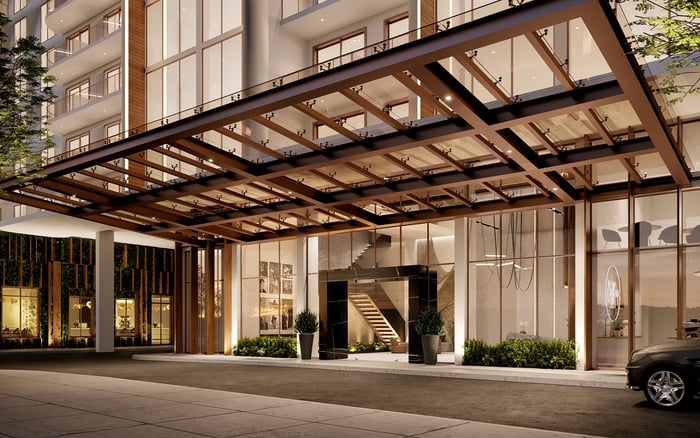
A residential and private porte cochere is advertised, but it does not establish bonded-courier privileges. The publicly described amenities neither identify bonded couriers as an approved category nor explain their access to loading areas, the lobby or residential floors.
For any valuable shipment, obtain written confirmation of courier approval, preregistration requirements and the documents needed to demonstrate bonding and insurance. Ask which entrance and route the courier may use, whether an escort is required, and whether elevator access or direct-to-resident handoff is permitted.
Keep two approvals separate: permission to enter the property and permission to release the shipment to a particular person. If the resident cannot attend, establish whether an authorized representative is acceptable to both the building and the delivery service. Do not schedule a delivery around an assumed exception.
After acceptance, ask where the parcel goes and who can access it. Request written details on restricted access, any dedicated storage for valuables, package-room camera coverage and footage retention. Ask whether staff movements and transfers between storage locations are recorded.
Then examine release. Is verification by government ID, PIN or QR code required? Can a household employee collect a parcel, and how is that authority granted or withdrawn? Does collection produce a signature and a timestamped record identifying both the releasing employee and the recipient? The advertised amenities do not specify individual intake scans, photography, dual-control custody or government-ID sign-out.
Apply the same questions to a comparison with Bay Harbor Towers. This is an audit framework, not a claim about that property's procedures. Compare documented acceptance, storage and release rules-not amenity labels.
The publicly disclosed details do not confirm acceptance rules for adult-signature, restricted-release, declared-value or insurance-documented deliveries. Nor do they disclose a separate protocol for jewelry, watches, fine art, collectibles or confidential documents.
Ask whether value limits or excluded categories apply, whether staff may refuse a parcel, and how refusal is communicated. For an owner who travels, retention periods and procedures for uncollected packages deserve particular attention.
Have counsel and an insurance adviser review the applicable liability language. Establish who bears responsibility after staff acceptance, what insurance exclusions may apply, and what evidence would support an investigation. Ask who handles an incident, how quickly it must be reported, and how relevant records and footage are preserved. Staff acceptance should not be assumed to establish coverage for the shipment's full value.
Before closing, request current package-room procedures, courier-access rules, the resident handbook, condominium rules, and applicable insurance and liability terms. If a procedure is proposed rather than operative, ask for its status and who is responsible for implementation.
Use those documents to walk through one realistic delivery from arrival to collection. Require clear answers at each handoff: who is authorized, what is recorded, where the parcel waits and how exceptions are resolved. Keep verbal assurances separate from written commitments.
The decision standard is straightforward: do not route a valuable shipment through building custody until the acceptance rules, release controls and liability terms satisfy the requirements of the shipment and its insurer.
For a buyer also considering The Perigon Miami Beach, the same discipline applies without implying equivalent services or safeguards. Compare the written delivery procedures at each residence, not the atmosphere of its arrival sequence.
At Shoma Bay, the advertised package program is a starting point for diligence. Until the operating rules and liability terms are supplied, treat it as a convenience amenity rather than confirmed protection for valuable deliveries. The most reassuring answer is a documented route from authorized courier to authorized recipient, with responsibility clear throughout.
For a discreet perspective on South Florida residences and buyer diligence, explore MILLION.
If branded residences are on your mind — as a home or as an allocation — we would be glad to share what we are seeing, privately.
Begin a quiet conversationShoma Bay is at 1850 John F. Kennedy Causeway, North Bay Village, FL 33141. It is described as a 333-unit condominium community.
The advertised program includes a mailroom, mobile package system, concierge package room and refrigerated grocery-delivery room. These descriptions do not establish procedures for valuable shipments.
No. The advertised 24-hour professional security and video surveillance do not, by themselves, establish parcel screening or contents inspection.
The publicly described amenities do not confirm bonded-courier approval or access to residential floors. Buyers should request written entrance, route, elevator and handoff rules.
Its published description does not specify custody transfers, recipient identities, timestamps or delivery images. Request a demonstration or sample record before relying on it for valuable deliveries.
Biometric access is advertised for the children's club, not established for parcel storage. Buyers should ask separately about package-room access controls.
No separate handling protocol for those categories is publicly disclosed in the described amenities. That does not prove a policy is absent; request the applicable written rules.
The publicly disclosed details do not confirm acceptance rules for those deliveries. Obtain written confirmation from the building and clarify the delivery service's release requirements.
Ask about responsibility after acceptance, value limits, insurance exclusions and incident escalation. Also establish how intake records, release records and relevant footage would be preserved.
Request current package-room procedures, courier-access rules, the resident handbook, condominium rules, and applicable insurance and liability terms. Distinguish operative procedures from proposed arrangements.