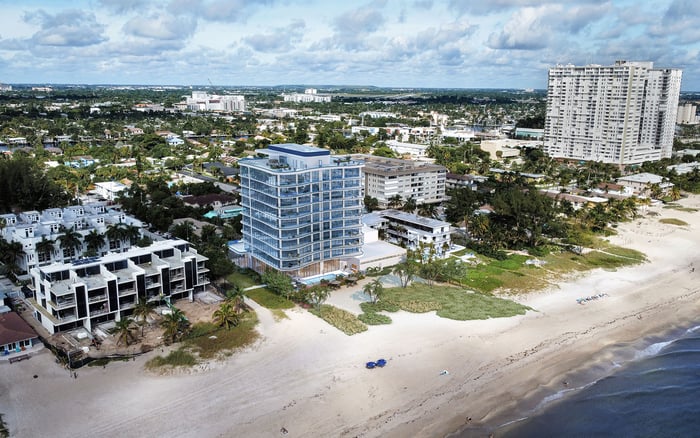
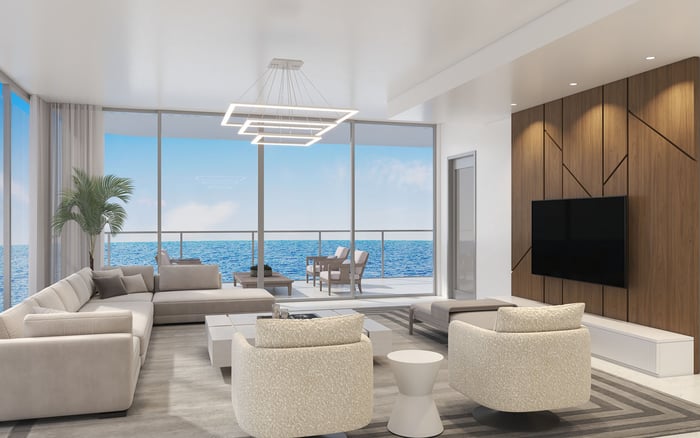
At Ocean 580 Pompano Beach, a discerning buyer’s mechanical audit should separate hospitality services from contractual HVAC support, confirm humidity-alert procedures, and establish precisely what cooling remains available after an equipment failure or power interruption.

The most revealing question in a residence purchase may not concern the view. It is what happens when the cooling stops after midnight and the owner is elsewhere. For buyers evaluating Ocean 580 Pompano Beach, that question belongs alongside the floor plan and finish schedule.
An amenity presentation can describe the intended lifestyle. Mechanical service deserves equally specific documentation. This audit is a framework for requesting that documentation, not confirmation of the project's equipment or service arrangements.
The buyer’s task is not to presume a deficiency. It is to establish who detects a problem, who responds, what remains operational, and who pays. Concierge availability is not a mechanical response guarantee.
Buyers considering Ocean 580 should confirm its current construction and occupancy status before treating proposed services as evidence of operating performance. Where operations have not begun, request proposed contracts, equipment specifications, and commissioning requirements rather than expecting an established service history.
Any commitment to on-site management, valet, or concierge service should be reviewed separately from HVAC support. Hospitality staffing does not, by itself, establish round-the-clock technician coverage or a contractual response time. Keep hospitality staffing and technical service in separate columns of the purchase review.
This distinction also provides a useful framework for a Broward property search. A buyer considering Armani Casa Residences Pompano Beach should request the same documents, without assuming that the developments share a service model or mechanical design.
Ask for the name of the HVAC contractor and the agreement governing emergency calls. The essential distinction is between someone answering the telephone and someone authorized, equipped, and obligated to attend the residence.
The written arrangement should address five practical points:
Coverage: Which hours, weekends, and holidays are covered?
Timing: Does the contract specify acknowledgment, technician arrival, or restoration?
Escalation: Who takes over if the first contact cannot resolve the issue?
Access: Who may authorize and supervise entry when the owner is absent?
Payment: Who approves emergency work and pays call-out charges?
Ask management to walk through a hypothetical overnight cooling failure. The answer should identify a sequence of actions, not merely reassure the buyer that the concierge will help. Confirm how the incident would be documented and how the owner would receive updates.
If these arrangements remain proposed, record that status clearly. A named vendor with defined obligations is a different purchase consideration from an intention to appoint one later.
Treat in-unit high-humidity alarms, condensate-overflow alarms, and remotely monitored indoor-air-quality systems as items requiring written verification. Do not assume these protections are present or absent.
Request a written schedule identifying humidity sensors, their locations, alert thresholds, and notification recipients. Ask whether alerts reach only the resident or also a designated management contact. Establish who is responsible for checking an unoccupied residence and what authorization is required before intervention.
Review condensate float switches and leak detection separately from humidity sensing. The buyer’s checklist should name each requested protection rather than allowing a broad phrase such as smart-home technology to stand in for a specification.
Finally, request a demonstration when the systems are accessible. Have the appropriate professional confirm the alert path, including remote notification and escalation. For an owner who travels, the decisive feature is not merely the presence of an alarm, but an agreed response when nobody is home.
If a listing describes central cooling, electric cooling, or heat-pump heating, ask what those terms mean for the specific residence. Such labels should not substitute for equipment specifications or a description of the system's configuration.
Obtain the mechanical plans and equipment schedules. Ask an independent mechanical professional to distinguish dedicated from shared equipment, identify available spare capacity, and flag components whose failure would interrupt cooling. Request a written explanation of any redundant components and the conditions under which they operate.
Ask specifically about spare cooling capacity, backup compressors, and any alternative equipment arrangement intended to maintain cooling after a failure. Do not assume their presence or absence. Ask what cooling capacity, if any, remains available during each identified equipment failure.
For buyers also evaluating The Ritz-Carlton Residences® Pompano Beach, the same questions create a disciplined comparison. Compare documented configurations and service obligations, not impressions created by an amenity program.
Equipment redundancy and emergency electrical support require separate answers. Request the electrical one-line diagram and any generator load schedule, then have the relevant professional identify exactly which cooling equipment, controls, pumps, and ventilation systems receive backup power, if any. Ask specifically whether the residence’s cooling is included and under what operating limitations.
The financial review should be just as exact. Ask whether maintenance obligations cover filters, refrigerant service, condensate clearing, and emergency HVAC visits. Do not infer those inclusions from unrelated services listed in a maintenance summary.
An assessment amount is not a measure of HVAC-service coverage. Review the declaration, maintenance matrix, budget, reserve documents, and applicable contracts to determine which costs belong to the association and which remain with the owner.
Build that allocation into the ownership budget before treating an assessment as an all-inclusive service package.
When access permits, commission sustained-operation HVAC and humidity testing rather than relying on a brief cooling demonstration. Request available service, leak, repair, and complaint records appropriate to the building’s stage. Where operating history does not yet exist, focus on commissioning documentation and proposed service arrangements.
The final audit should clarify three matters: responsibility, response, and continuity. Keep unresolved items visible and ask the buyer’s advisers which commitments should be documented before proceeding. The aim is not a promise that equipment will never fail. It is a clear account of what happens next.
For a considered approach to South Florida ownership, explore MILLION.
If branded residences are on your mind — as a home or as an allocation — we would be glad to share what we are seeing, privately.
Begin a quiet conversationEstablish who detects a cooling problem, who responds, what remains operational, and who pays. Request written documentation rather than relying on an amenity presentation.
Confirm the project's current construction and occupancy status. Where operating history does not yet exist, review proposed contracts, equipment specifications, and commissioning requirements.
No. Concierge availability alone does not establish HVAC technician coverage or a mechanical response-time guarantee.
Request the named contractor, coverage hours, contractual response times, escalation contacts, unit-entry authorization, and emergency-payment responsibility.
Request written specifications identifying sensors, locations, alert thresholds, and notification recipients. Do not assume these protections are present or absent without documentation.
Confirm who receives alerts and who responds when the residence is unoccupied. Establish entry authorization and escalation procedures in writing.
No. Those descriptions do not identify the complete equipment configuration or establish backup capacity; mechanical plans and equipment schedules are needed.
Request the electrical one-line diagram and any generator load schedule. Have a qualified professional identify whether residence cooling receives backup power and under what limitations.
No. Review the declaration, maintenance matrix, budget, and applicable contracts to determine coverage for routine HVAC maintenance and emergency visits.
When access permits, commission sustained-operation HVAC and humidity testing and request available service, leak, repair, and complaint records. Where operations have not begun, seek proposed contracts, equipment specifications, and commissioning requirements.