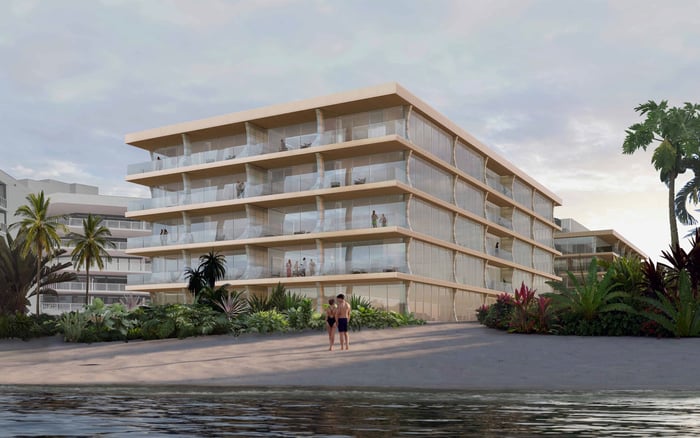
A document-led ownership checklist for The Berkeley Palm Beach, covering sprinkler interruptions, smoke-control testing, elevator procedures, and the records buyers should request before making a purchase decision.

A considered purchase at The Berkeley Palm Beach deserves an operational review alongside architectural and financial assessments. The useful question for a buyer is not whether a building can deliver an impressive presentation. It is whether the responsible parties can explain how life-safety systems are documented, tested, restored after interruptions, and supported during an emergency.
This review is a due-diligence checklist, not a finding that a sprinkler impairment, smoke-control deficiency, elevator incident, or violation exists at the property. It does not confirm the building's smoke-management design or emergency protocols. Those matters require property-specific documentation.
The standard is straightforward: request records that connect an event or test to its outcome. A notice describes an interruption; a restoration record documents its conclusion. A test identifies a result; a corrective-action record explains what followed. For Palm Beach County buyers, that distinction is more useful than reassurance without documentation or concern without evidence.
Begin by asking the property's representatives to confirm its permitting and fire-review jurisdiction and identify the appropriate authorities for record requests. Do not assume that every Palm Beach County or municipal inspection category applies to this property.
Where repair or installation work is documented, request the associated permits, inspection history, and closeout documentation where applicable. Ask which records cover fire alarms, sprinkler systems, fire pumps, and final inspections, rather than relying on an unverified list of inspection categories or codes.
Keep each entry tied to the correct property, permit, and work scope. Records for a similarly named property establish nothing about The Berkeley Palm Beach. A matching name is not a matching property or jurisdiction.
Request any available sprinkler-impairment notices detailing the affected zones, start and end times, notification records, and responsible contacts. Ask for resident communications, any fire-watch arrangements, and the contractor's restoration verification. These requests do not imply that an impairment occurred.
If an interruption is documented, review the notice and closeout together. Ask which areas were affected, what arrangements applied during the interruption, who received notification, and which records confirm restoration. An initial notice is not proof of an unresolved condition, and an informal assurance is no substitute for a documented conclusion.
Where a notice references repair work, request the associated permit and inspection records where applicable. Compare dates and descriptions to understand the interruption, repair, and restoration as one sequence. If that sequence remains unclear, ask for clarification rather than filling the gap with an assumption.
The same discipline can guide a comparison with Alba West Palm Beach: use equivalent document requests without assuming equivalent systems, incidents, or operating histories.
The first smoke-control request should establish the building's actual system design. Do not infer a smoke-management arrangement from the project's name, appearance, or positioning. Ask the responsible technical team to identify which systems exist and which acceptance or periodic testing records apply.
For any applicable system, request acceptance and periodic test records, measured results, documented deficiencies, corrective work, and retests. Include confirmation of return to automatic operation where relevant. The aim is to understand both the test result and the documented operating condition afterward.
A useful review separates the original result from subsequent action. If a deficiency appears, ask whether it remains open and what evidence supports its closure. If a retest is referenced, request the record rather than relying solely on a summary.
Buyers considering Forté on Flagler West Palm Beach can apply the same design-first approach. It offers a consistent framework for comparison without suggesting that either property has a particular smoke-control installation or performance history.
An elevator review has two parts: equipment documentation and the written emergency response. Request inspection certificates, maintenance contracts, outage and entrapment logs, firefighter-operation or recall-test records, emergency-communication tests, and emergency-power transfer records where applicable.
Review each record for scope and date. A maintenance contract answers a different question from a test record; neither alone explains how residents will receive instructions during an interruption. Ask management to identify outstanding corrective items and provide supporting closure records for those described as resolved.
Separately, request written procedures for entrapment, power loss, fire-alarm recall, flooding, and medical emergencies. Ask whether the file identifies responsible contacts and intended resident communications. Ask who coordinates the response, who communicates updates, and how responsibilities are assigned when the usual contact is unavailable.
For buyers also considering Mr. C Residences West Palm Beach, these are comparison questions, not assertions about either property's equipment or procedures. Keep operational claims tied to each building's own records.
For a second-home buyer, request the current emergency plan and ask how notices reach owners who are away. Clarify which contact details management maintains and how an owner can obtain updates about an interruption or its resolution. A written response matters more than an assumed service arrangement.
Build the purchase file around five years of available life-safety testing records, along with open permits and violations, corrective-action documentation, relevant board minutes, and the current emergency plan. Five years is a suggested review window, not a claim about record availability or a retention requirement.
Where the property does not yet have that operating history, distinguish records available now from documents expected later. Ask which party is responsible for providing them and when they should be requested. An unavailable record is not proof that an incident did-or did not-occur.
Organize the review by system, then by unresolved question. For each item, record what was requested, what was supplied, what needs clarification, and who is responsible for the next response. Keep administrative inspection categories separate from conclusions about safety performance.
A practical ownership assessment does not require speculation. It requires a clear account of system design, applicable testing, interruptions, corrective work, and emergency responsibilities. Resolve material questions with the appropriate property representatives and qualified advisers before treating the file as complete.
For a discreet perspective on South Florida ownership and property selection, explore MILLION.
If branded residences are on your mind — as a home or as an allocation — we would be glad to share what we are seeing, privately.
Begin a quiet conversationNo. It provides document requests for ownership due diligence, not evidence of a defect, incident, or violation at the property.
Request any available notices identifying affected zones, start and end times, notifications, fire-watch arrangements, resident communications, and contractor restoration verification.
No. Read the notice together with restoration verification and any associated corrective-action records to understand its outcome.
Confirm the property's actual smoke-management design and which tests apply. Do not assume a specific installation without property-specific documentation.
Request applicable acceptance and periodic test records, measured results, deficiencies, corrective work, retests, and confirmation of return to automatic operation where relevant.
Request inspection certificates, maintenance contracts, outage and entrapment logs, recall or firefighter-operation tests, emergency-communication tests, and emergency-power transfer records where applicable.
Request procedures for entrapment, power loss, fire-alarm recall, flooding, and medical emergencies. Ask for responsible contacts and resident-communication arrangements.
Seek five years of available testing records, alongside open permits, violations, corrective actions, relevant board minutes, and the current emergency plan. This is a suggested review window, not a retention requirement.
Confirming the appropriate authorities helps buyers direct record requests and interpret applicable inspection categories. Administrative categories alone do not establish the property's safety performance.
No. Match every record to The Berkeley Palm Beach, its jurisdiction, and the relevant permit or work scope before drawing conclusions.