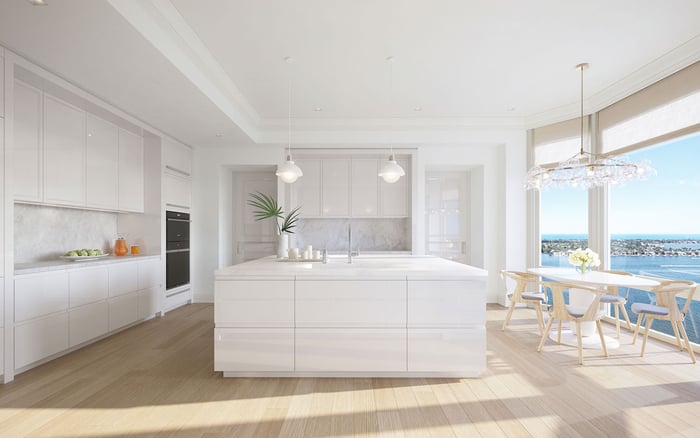
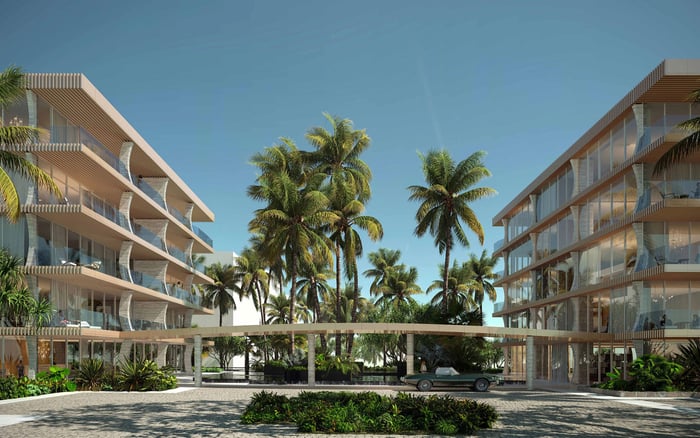
Azure and The Ritz-Carlton Residences Palm Beach Gardens are the relevant waterfront candidates for this quiet-interior brief. Because acoustic comfort depends on the position of a specific home, buyers should compare elevator and service circulation, venue adjacency, vertical alignment, operating patterns, and condominium documents before drawing a conclusion.
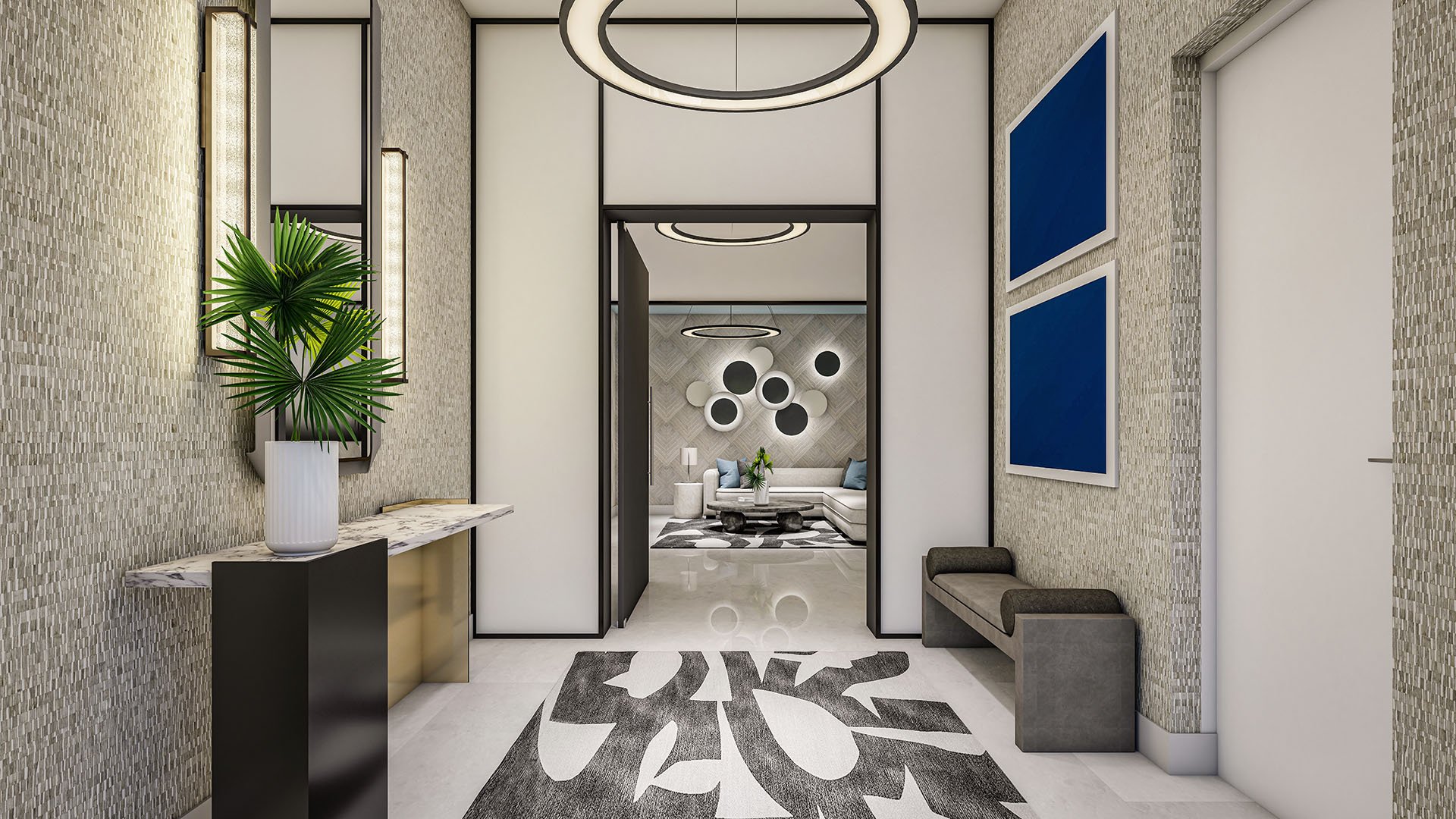
A water view can create a strong sense of retreat, but it does not establish how quiet a residence will feel with the doors closed. Interior calm depends on the relationship between private rooms and the building systems, circulation paths, gathering spaces, and operating areas around them.
For buyers comparing Azure with The Ritz-Carlton Residences® Palm Beach Gardens, the decisive question is not which community sounds quieter in a presentation. It is which available residence has the most protective position for bedrooms, studies, nurseries, and other rooms where interruption matters.
The strongest quiet-interior choice is the home whose circulation and adjacency can be verified before purchase.
Neither community should be ranked on branding, finishes, elevation, or water exposure alone. A careful comparison requires architectural plans, direct observation, document review, and clear answers about how service activity and shared venues relate to the shortlisted home.
Azure belongs in this Palm Beach Gardens comparison, but its suitability must be tested at the residence level. Buyers should begin by requesting a plan that identifies passenger and service-elevator shafts, service vestibules, refuse areas, mechanical spaces, stairs, and other back-of-house elements near the home.
The next step is to trace the full service route. Determine where deliveries enter, how personnel and carts move through the building, and whether that movement shares walls, floors, ceilings, or foyer space with rooms intended for rest or concentration. A circulation feature can appear removed on a marketing plan while remaining relevant through vertical alignment or an adjoining service area.
Shared venues deserve the same scrutiny. Rather than assuming that distance on one level resolves the issue, compare the residence with the floors immediately above and below it. Ask whether terraces, gathering areas, vehicle approaches, marina activity, or building equipment could affect the selected exposure at the times the buyer expects to be home.
Azure may prove well suited to the brief, but that conclusion should follow a review of the exact stack and position rather than a community-wide assumption.
At The Ritz-Carlton Residences® Palm Beach Gardens, buyers should apply the same unit-specific standard. A managed residential experience can be attractive, yet service and amenity programming make it especially important to understand how a particular home relates to active areas and operating routes.
Map the path from arrival to the residence, then separately map guest, delivery, staff, and service movement. Request enough architectural context to identify what sits behind each important wall and what occupies the levels above and below. Bedrooms and studies warrant particular attention because intermittent sounds can matter more in those rooms than in entertaining areas.
Public and semi-public venues should be considered by distance, orientation, and schedule. A home facing away from one activity may still sit above another, while a residence that appears close on a diagram may be protected by intervening space. Only project documents, plans, and observation can resolve those distinctions.
The relevant comparison is therefore not Azure versus The Ritz-Carlton in the abstract. It is one available Azure residence versus one available Ritz-Carlton residence, evaluated under the same quiet-interior checklist.
Start with an unfurnished architectural plan whenever available. Furnished layouts can help explain scale and use, but they may not clearly communicate shafts, equipment rooms, structural zones, service doors, or circulation behind the finished walls.
Mark the primary bedroom, secondary bedrooms, study, media room, and any space intended for focused work. Then identify the nearest elevator shaft, service area, stair, refuse point, mechanical zone, garage or vehicle route, and shared venue. Repeat the exercise using plans for the adjoining levels.
Do not stop at horizontal distance. Vertical relationships can be equally important, especially where a residence sits over or under an operating area. Ask what occupies the roof, podium, parking, and amenity levels relative to the home, and confirm whether any equipment or circulation route aligns with the quietest rooms.
The audit should also distinguish occasional activity from recurring activity. Deliveries, maintenance access, doors, carts, vehicles, gatherings, and building systems may follow different patterns. The buyer's own schedule matters: a concern for someone working from home may differ from the priorities of a seasonal resident who mainly uses the home in the evening.
Condominium documents and other governing materials should be reviewed with qualified advisers. The goal is to understand procedures affecting deliveries, maintenance access, shared-space operation, resident alterations, and other activities that may influence daily use. Marketing material should not substitute for the controlling documents.
Direct observation is the practical counterpart to document review. A single staged showing offers only a snapshot, so revisit when building and venue activity may differ. Spend time without conversation in the rooms that matter most, as well as in the elevator foyer, terrace, parking area, and approach to the residence.
Listen for doors, voices, carts, equipment, vehicles, music, and activity from adjoining spaces. Note whether the sound is continuous, intermittent, or tied to a particular route. If a concern emerges, ask for a specific explanation and supporting plan rather than relying on a general assurance.
Buyers who want broader Palm Beach County context may also review The Ritz-Carlton Residences® West Palm Beach and Palm Beach Residences. Those links can inform a regional comparison, but the final shortlist for this brief should remain centered on Palm Beach Gardens and evaluated with the same plan-first discipline.
The best waterfront residence for a quiet-interior buyer is the one that performs most convincingly under a consistent review. Favor clear separation between important rooms and service infrastructure, limited exposure to active shared areas, understandable vertical relationships, and operating patterns compatible with the buyer's routine.
If either project cannot provide enough information to evaluate a specific home, uncertainty should remain part of the decision. A premium view or polished interior does not answer an unresolved question about shafts, service circulation, mechanical areas, or venue adjacency.
For private guidance on comparing Palm Beach Gardens waterfront residences for privacy and interior calm, connect with MILLION.
If branded residences are on your mind — as a home or as an allocation — we would be glad to share what we are seeing, privately.
Begin a quiet conversationThe guide compares Azure and The Ritz-Carlton Residences Palm Beach Gardens for buyers prioritizing interior quiet.
Not without reviewing specific residences. Acoustic comfort depends on each home's position, adjoining spaces, vertical alignment, and operating environment.
No. Shaft placement, service circulation, nearby equipment, and shared venues must still be evaluated.
Request the residence plan, plans for the levels above and below, and a site plan showing circulation, service, mechanical, and shared areas.
A residence may sit above or below an active venue, operating area, vehicle route, or equipment zone even when it appears separated on its own floor.
Prioritize bedrooms, studies, nurseries, media rooms, and other spaces intended for sleep, concentration, or quiet use.
Identify passenger and service shafts, vestibules, doors, stairs, service rooms, and circulation paths adjoining the residence.
Visit more than once and choose times when service, venue, vehicle, or resident activity may differ from the initial showing.
Listen for doors, voices, carts, equipment, vehicles, music, and sound from spaces above, below, or beside the home.
They may clarify procedures governing deliveries, maintenance access, shared spaces, and other operations relevant to daily use.