For buyers moving from Kuwait City to Palm Beach Gardens, home-office continuity should be treated as core property due diligence. A strong plan verifies connectivity, flood exposure and neighborhood power infrastructure at the exact address, then adds layered internet, appropriately planned backup power and a practiced household response.

After leaving Kuwait City, a buyer selecting a Palm Beach Gardens residence may prioritize privacy, space and an effortless connection to South Florida. Yet for an owner who manages investments, leads a company or remains active across time zones, the home office is more than a beautifully furnished room. It is a private operating environment whose performance depends on infrastructure beyond the desk.
That changes the acquisition brief. Broad claims about neighborhood fiber, a polished generator specification or visible utility upgrades cannot replace exact-address verification. An effective pre-contract review separates three questions: What is the property’s documented flood exposure? Are the neighborhood distribution lines underground or overhead? Which internet services can actually be installed at the residence?
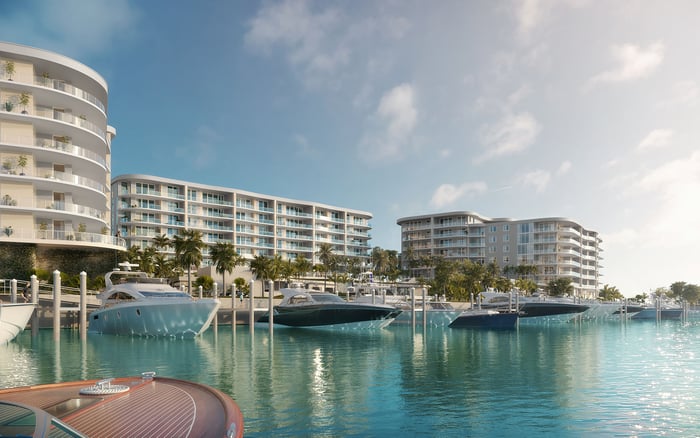
This discipline applies across property types. A buyer considering The Ritz-Carlton Residences® Palm Beach Gardens should ask the same continuity questions that would accompany a single-family-home search. The technical answers may differ, but the business objective is identical: preserve access, communications and essential comfort when ordinary services are interrupted.
A luxury home office should be evaluated as private infrastructure, not merely interior space.
General coverage descriptions are useful for screening, not closing. Before the inspection period ends, obtain written serviceability confirmation for the precise street address or unit. Confirm the available technology, installation path, expected activation timing and equipment location. In a condominium, clarify how service reaches the unit and whether building infrastructure limits provider choice.
Buyers comparing the wider Palm Beach and West Palm Beach corridor, including Palm Beach Residences, should repeat the inquiry for every candidate. Proximity does not establish identical availability. Connectivity therefore belongs in the due-diligence schedule, not on a post-closing technology list.
Request enough detail to understand where cabling enters the property, where network equipment can be secured and whether the intended office can be connected without relying solely on wireless coverage. The review should also consider how the installation will affect finished interiors and whether building or community approvals may be needed before work begins.
A resilient office begins with an address-verified wired primary service, with fiber considered when it is available at the property. The secondary connection should use a different provider or physical network where possible, reducing the likelihood that one provider failure disables both paths. A properly configured router can manage failover and reduce manual intervention during a video call or time-sensitive business event.
Cellular service can provide another layer. Citywide maps cannot establish performance inside a specific office, particularly where building materials, glazing and room placement affect reception.
Test candidate carriers in the intended room, with doors and glazing in their usual positions. Check performance at different times and identify a suitable location for the backup device. A carrier distinct from the household’s primary mobile service may provide additional diversity. Cellular access should be treated as a contingency rather than an assumed equivalent to wired broadband.
The final design should also account for the small components that keep the system functioning. Modems, routers, switches and wireless access points need appropriate power protection, ventilation and secure placement. Document the configuration so a household member or technology adviser can restore service without reconstructing the network under pressure.
A broad statement about utility reliability does not define an individual homeowner’s exposure. For an executive working from home, even a localized interruption can disable communications, network equipment or climate control at an inconvenient moment.
Begin with a critical-load schedule prepared with a qualified electrician or engineer. It should identify network hardware, computers, secure storage, task lighting and the cooling needed to keep occupants and equipment operating safely. From there, determine whether the appropriate solution is a dedicated critical-load panel or broader standby coverage.
A UPS can bridge brief interruptions and generator startup, but it cannot replace properly planned emergency power. Before closing, review generator capacity, fuel arrangements, transfer-switch design, permissible placement, ventilation, flood exposure, permits and applicable community-association requirements. A specification that appears ample on paper may prove less useful if the equipment or fuel system is vulnerable to the same event it is meant to address.
For buyers also considering Mandarin Oriental Residences, West Palm Beach, distinguish building-level emergency systems from power delivered within the residence. Ask which residential circuits, elevators, access systems, communications systems and cooling functions remain available during an outage, and request confirmation from the appropriate project or building representative.
A new or expensive home should not be presumed to have underground neighborhood distribution lines. That condition requires verification. Buyers should identify the visible and documented utility arrangement, determine what serves the immediate neighborhood and avoid relying on landscaping or streetscape impressions.
Underground service does not eliminate outage risk. Upstream infrastructure, local equipment and conditions at the property can still affect continuity. The purpose of this review is not to promise uninterrupted service; it is to understand the property’s dependencies and design backup systems accordingly.
Keep utility account details, the home’s service address and essential contact information available on a charged mobile device and in the household’s secure records. That preparation can make it easier to report a localized issue and follow restoration communications.
Use documentation tied to the exact property rather than a neighborhood assumption. Flood exposure should inform the placement of the office, network rack, UPS units, transfer equipment and generator components. A qualified adviser can help interpret the available property information and identify where specialist review is appropriate.
This is especially important in a waterfront search, where priorities such as views and access can overshadow infrastructure placement. The same question should accompany comparisons with The Ritz-Carlton Residences® West Palm Beach: Which systems are protected, where are they located and what remains operational if access or normal services are constrained?
Reviewing flood exposure does not predict that a particular home will sustain damage. It is a planning input that helps a buyer determine where critical equipment belongs and which protections merit specialist evaluation.
Technology is only one layer. Identify the hazards relevant to the property, confirm evacuation information and select an intended destination before an emergency. Households requiring special accommodations or pet-friendly arrangements should investigate their options in advance. The plan should also establish how family members, staff and business counterparts will communicate when normal channels are unavailable.
Keep critical documents in a secure household kit, with protected digital backups and encrypted portable copies of essential business records where appropriate. Select an alternative workplace before it is needed, and verify that it has its own power and connectivity arrangements. Practice the plan periodically, update contact information and assign responsibility for generator checks, network failover and document access.
The result is discreet resilience: not a room crowded with visible equipment, but a residence designed to support power, data and decision-making through an interruption.
For a confidential Palm Beach Gardens property strategy centered on resilience, connect with MILLION.
If branded residences are on your mind — as a home or as an allocation — we would be glad to share what we are seeing, privately.
Begin a quiet conversationGeneral coverage descriptions do not prove that a specific house or condominium unit can receive service. Obtain written address-level confirmation before closing.
Review exact-address internet availability, documented flood exposure and the neighborhood power-line configuration. Also confirm where critical equipment can be installed safely.
Use a verified wired primary connection, a secondary path on a different provider or network where possible and cellular service as a contingency.
It can provide backup access, but indoor reception and performance vary. Test candidate carriers inside the intended office before relying on them.
A properly configured router can move traffic to a backup connection when the primary service fails. This can reduce manual intervention during an interruption.
A qualified electrician or engineer should identify critical loads before recommending system capacity and configuration. The review should include office equipment, networking, lighting and necessary cooling.
A UPS can keep essential equipment operating through a brief interruption or during generator startup. It is not a substitute for appropriately planned emergency power.
The visible streetscape may not reveal how the property is served. Verification helps buyers understand infrastructure dependencies and plan backup systems accordingly.
Property-specific flood information should guide the placement of network equipment, power protection and generator components. Specialist review may be appropriate for the selected residence.
Include communication procedures, secure document backups, evacuation planning, equipment responsibilities and a preselected alternative workplace. Review and practice the plan periodically.