
A resale-first framework for selecting South Florida penthouses by buyer-pool breadth, unit scale, floor elevation, view durability, and the quality of comparable sales.
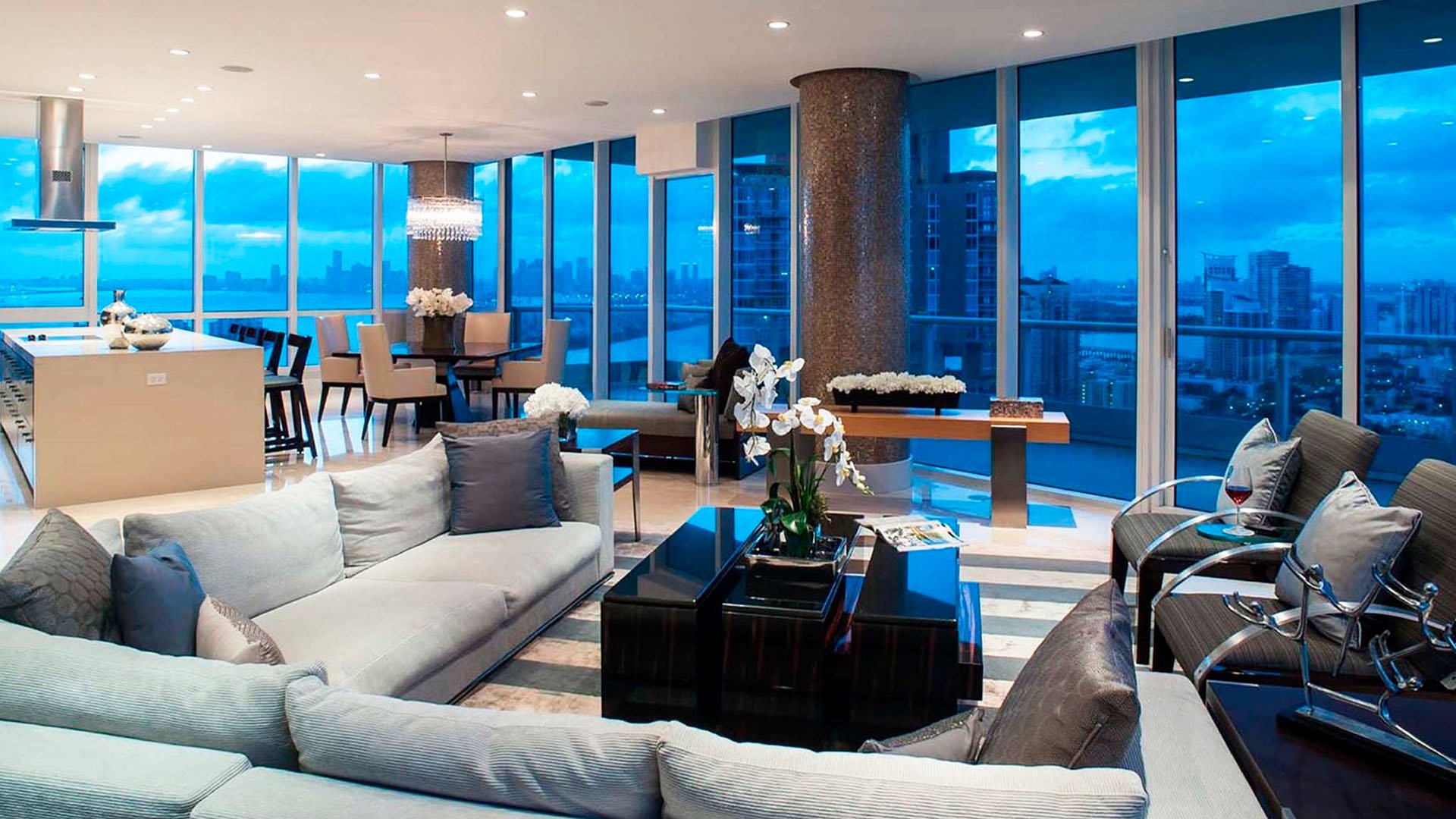
A penthouse may be singular, but its eventual resale still rests on familiar disciplines: location, price, layout, condition, comparable sales, and the number of buyers who can readily understand its value. In South Florida, the most liquid choice is not automatically the largest residence or the highest floor. More often, it is the home whose rarity remains legible without becoming so specialized that its future audience narrows sharply.
Buyers should distinguish between trophy attributes that may broaden demand and personal features that can be difficult to value at resale. The strongest candidates make their advantages clear through proportion, usability, outlook, privacy, and a defensible relationship to other residences in the building or submarket.
The strongest resale proposition pairs penthouse scarcity with a market deep enough to explain its value.
The following profiles prioritize buyer-pool breadth, comparable-sale relevance, functional design, and the durability of floor and view advantages. They provide a selection framework rather than a prediction for any individual residence.
1. Right-sized Brickell penthouse - broad urban appeal
A right-sized Brickell penthouse can suit buyers seeking an elevated urban residence without the complexity of an exceptionally customized mega-home. Efficient circulation, easily furnished rooms, and a practical bedroom count can make the value proposition easier to understand.
Resale-minded buyers should compare the penthouse with premium non-penthouse residences in the same tower and with competing Brickell properties. The analysis should isolate the value of elevation, exposure, outdoor space, privacy, and finish rather than treating the penthouse designation as sufficient justification for a premium.
2. Coconut Grove penthouse - privacy with neighborhood character
A Coconut Grove penthouse with balanced indoor and outdoor areas can combine privacy, elevation, and a distinctive residential setting. The preferred resale profile offers intuitive entertaining space, functional bedrooms, and terraces that feel connected to the principal rooms.
The premium should still be tested against other luxury residences in the building and nearby. Highly personal alterations may reduce the usefulness of comparable sales or narrow the future buyer pool.
3. Coral Gables penthouse - disciplined scale and layout
In Coral Gables, a penthouse with a rational bedroom count and clear separation between private and entertaining areas can present a straightforward resale story. Flexible rooms are valuable when they can credibly function as an office, guest suite, media room, or additional bedroom without compromising circulation.
Buyers should pay close attention to whether the layout feels naturally residential. Oversized transitional spaces, difficult furniture placement, or excessive specialization can make total area less meaningful.
4. Miami Beach penthouse with a durable outlook - rarity that must remain usable
A Miami Beach penthouse can offer compelling water, skyline, or city exposures, but the view should work from the rooms used every day. Privacy, glare, terrace wind, and the relationship between indoor and outdoor areas may influence long-term appeal as much as the panorama itself.
The strongest profile is not simply the residence with the greatest elevation. It is the home whose outlook, floor plan, and outdoor space form a coherent experience that future buyers can quickly recognize.
5. Scarce penthouse in an established tower - clearer comparable context
Scarcity can be easier to value when a building also provides relevant resale activity among other residences. A broader set of building-level comparables may help buyers distinguish the penthouse premium from differences tied to floor, exposure, terrace utility, condition, and finishes.
This profile still requires discipline. Comparables should be adjusted carefully, and unusual customization should not be assumed to retain its original cost or appeal.
Resale-minded buyers should think in functional size bands rather than total area alone. A compact penthouse should avoid compromised bedrooms, awkward terraces, or circulation that consumes too much space. A mid-sized residence benefits from flexible guest or office areas. At the largest scale, every additional room should serve a credible purpose because complexity and highly specific customization can narrow the audience.
Brickell candidates such as The Residences at 1428 Brickell and Cipriani Residences Brickell provide useful contexts for examining how a penthouse proposition sits within a broader urban luxury market. The essential exercise is to compare the residence with premium non-penthouse units and competing buildings, adjusting for floor, exposure, terrace utility, condition, and finish.
A well-composed smaller penthouse may appeal to more buyers than a much larger home with underused rooms. Conversely, a large residence can remain compelling when the plan is intuitive, the rooms have clear purposes, and the ownership proposition can be explained without relying on size alone.
High floors can create separation, light, and commanding outlooks, but elevation alone is not a resale thesis. A slightly lower residence with a broad, coherent water view may be more marketable than a higher home with fragmented exposures. Buyers should examine what occupies the foreground, whether the principal rooms share the strongest outlook, and how the view changes throughout the day.
In Miami Beach, The Perigon Miami Beach provides a relevant setting for considering how water, horizon, and city exposures can shape buyer perception. The same discipline applies throughout Miami-Dade, Broward, and Palm Beach: assess the view from daily living areas rather than relying solely on terrace photography or floor number.
A water view is most valuable when it is visible from the rooms used most often. Buyers should also distinguish permanent geographic features from outlooks that may depend on surrounding conditions. Sunset orientation, glare, privacy, and terrace wind can influence usability as much as the photographable panorama.
Comparable sales should be selected for relevance rather than convenience. Begin within the building, then expand to competing properties with similar locations, views, floor plans, and levels of finish. Premium non-penthouse residences may provide useful reference points when direct penthouse comparables are limited.
The analysis should separate structural attributes from removable or personal elements. Floor elevation, exposure, ceiling volume, terrace configuration, and privacy may be integral to the residence, while furniture and specialized decorative work may appeal to a narrower audience.
Buyers should also consider listings that remained available or were withdrawn when that information is available. Closed sales reveal what transacted, while unsuccessful offerings may help identify premiums or design choices the market did not readily accept.
Begin with the depth of the likely buyer pool, then move inward. Review building-level sales, relevant competing residences, and the relationship between asking price and usable attributes. Assess whether the home can be shown, furnished, and explained without complexity.
Test the floor plan against multiple household types. Confirm that bedrooms offer privacy, entertaining areas connect naturally, service spaces are practical, and terraces are genuinely usable. Examine principal views from seated and standing positions, at different times of day, and from the rooms that define daily life.
Finally, consider the exit strategy before the purchase. Resale strength generally improves when the layout supports credible uses, the views are durable, the outdoor areas are functional, and the premium can be defended through relevant evidence. That discipline does not diminish the romance of a penthouse purchase; it helps preserve it.
For a discreet assessment of South Florida penthouse opportunities, connect with MILLION.
If branded residences are on your mind — as a home or as an allocation — we would be glad to share what we are seeing, privately.
Begin a quiet conversationA broad future buyer pool, rational layout, durable views, defensible pricing, and relevant comparable sales can support resale liquidity.
No. A lower residence with a coherent outlook and usable outdoor space may appeal to more buyers than a higher home with fragmented views.
An efficient layout and practical room count can make an urban penthouse easier for a broad buyer pool to understand and use.
Balanced indoor and outdoor areas, intuitive entertaining space, functional bedrooms, and a clear relationship between principal rooms and terraces deserve close attention.
A rational bedroom count, flexible rooms, and clear separation between private and entertaining areas can make the residence easier to evaluate.
Yes. Underused rooms, complex carrying obligations, and highly specific customization can narrow the future buyer pool.
They help separate the value of penthouse scarcity from premiums associated with floor, view, terrace, condition, and finishes.
They should consider durability, coherence, privacy, glare, terrace wind, and visibility from the rooms used every day.
It can when the building has relevant transactions that help buyers compare the penthouse with other residences.
Efficient circulation, usable bedrooms, flexible rooms, practical service areas, and an intuitive connection between indoor and outdoor spaces can broaden appeal.

.jpg&width=700&height=438&fit=cover)