A buyer-focused guide to clarifying terrace ownership, drainage responsibilities, furnishing approvals, and storm preparation at Nora House, with the questions counsel and management should answer in writing.
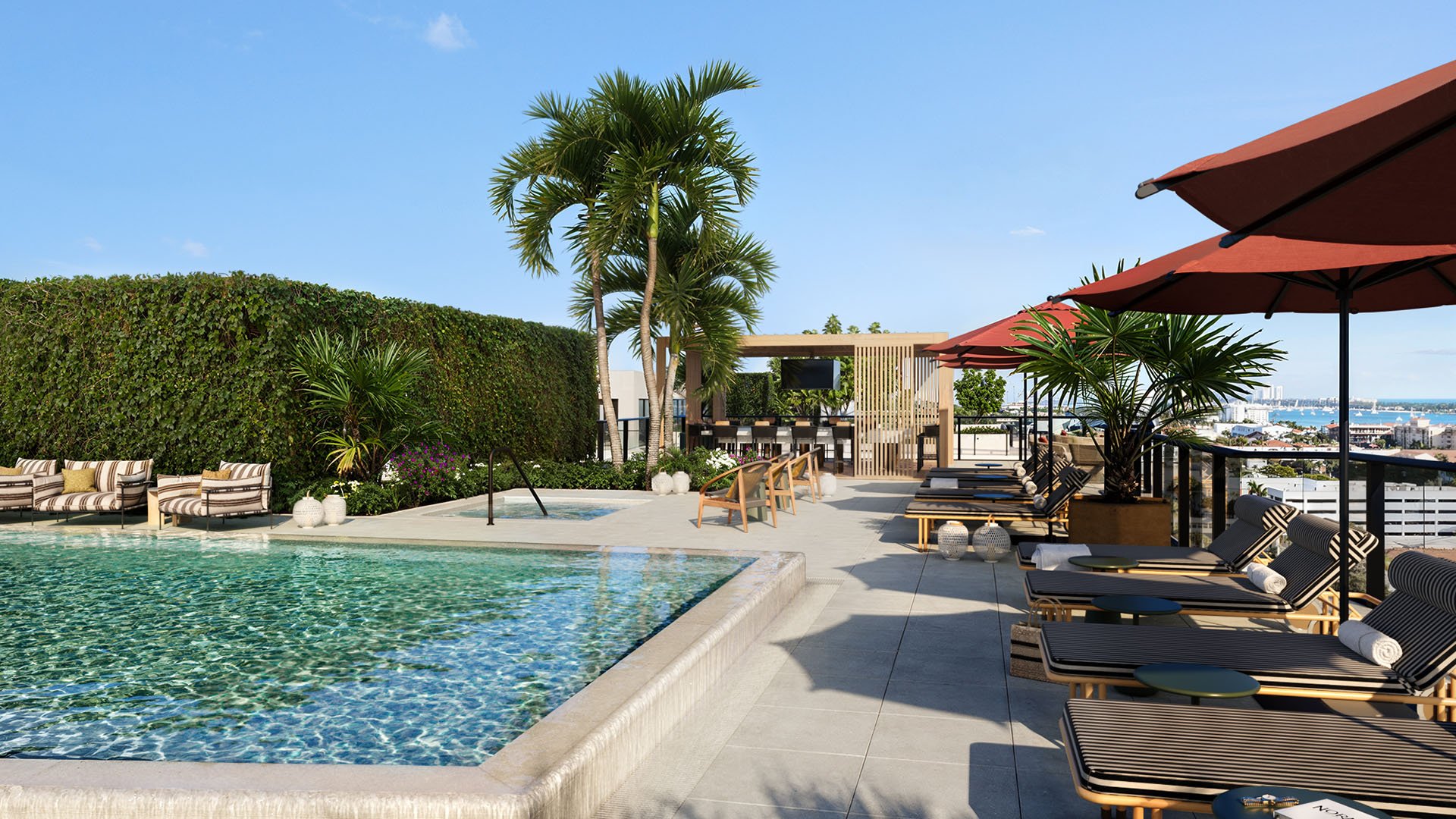
A well-considered terrace can extend a residence’s living space, but its practical value depends on more than proportions and furniture. At Nora House West Palm Beach, buyers should establish three things before planning an outdoor room: how water leaves the terrace, what may occupy it, and what must happen when severe weather approaches.
Ask counsel and management to identify the governing provisions for facility use and any budget-dependent services. Terrace-drainage design, permitted outdoor furnishings, and storm-securement procedures call for a written exchange, not assumptions drawn from marketing.
For buyers also considering Alba West Palm Beach, the same discipline provides a useful comparison framework. Evaluate each residence through its own documents rather than transferring expectations from another building. The objective is not to uncover a presumed restriction, but to understand the conditions under which outdoor living will work.
The first question is legal rather than decorative: is the terrace part of the unit, a common element, or a limited common element? Ask counsel to identify the controlling declaration language and amendments, then explain the responsibilities each assigns to the owner and association.
Have counsel explain the applicable maintenance, repair, and replacement obligations under the governing documents and law. Do not treat exclusive use as proof that every component is the owner’s responsibility.
Request a component-by-component explanation covering the slab, drains, waterproofing, railings, thresholds, and adjacent façades. Distinguish routine cleaning from repair and replacement, and ask who pays when a blockage is associated with an owner’s furnishings or activities. Counsel should also explain the relevant insurance and deductible provisions; maintenance responsibility and insurance coverage should not be assumed to be identical.
The useful deliverable is a written allocation of responsibility tied to the governing documents. It should clarify whom to contact, who authorizes work, and how costs are assigned.
Ask management for approved drainage plans and available as-built drawings. The review should identify slopes, primary outlets, emergency overflows, waterproofing transitions, and stormwater connections. Have the design team explain the intended water path and how it remains accessible for inspection and maintenance.
Ask the design team to confirm the applicable code edition, the approved discharge arrangement, and whether the terrace design includes secondary drainage or emergency overflows. These are technical questions, not claims about Nora House’s approved system or its code requirements.
Ask how drains are inspected, how owners should report slow drainage, and whether available engineering or repair records bear on the terrace under consideration. Clarify any required clearance around outlets before selecting floor coverings or planters. None of these questions implies that a defect exists.
When comparing Nora House with Forté on Flagler West Palm Beach, treat drainage documentation as a separate evaluation category. An attractive outdoor layout is no substitute for understanding the approved system and its maintenance obligations.
Treat the furnishing plan as an approval exercise before making it a procurement exercise. Ask management which planters, rugs, deck tiles, grills, umbrellas, furniture, and storage boxes are permitted. For each category, establish whether written approval is required and whether placement must preserve access or clearance around drains.
Give management a proposed layout and product information rather than asking only whether outdoor furniture is allowed. A written response addressing specific pieces and locations is more useful than a general assurance. Ask whether a change in material, dimension, or attachment method requires another review.
Counsel should address drilling, gluing, or anchoring to slabs, railings, and façades, including any applicable restrictions intended to protect waterproofing and structural components. Do not presume an attachment is acceptable merely because it appears to secure an object.
For a buyer weighing Mr. C Residences West Palm Beach alongside Nora House, furnishing permissions offer a practical comparison point. Compare written permissions, not presumed flexibility. These questions do not establish that any particular item is prohibited at either property.
Ask management which weather notice activates the building’s terrace procedures and exactly when owners must complete them. Establish whether all furniture must move indoors or whether specified items may remain outside using expressly approved securing methods.
Request item-specific instructions for umbrellas, planters, furniture, and other loose outdoor objects. Confirm whether any securing method requires advance approval, and obtain the building’s instructions directly rather than relying on practices at another South Florida property.
Ask counsel for any adopted hurricane-protection specifications and an explanation of whether terrace furniture falls within them or under separate association rules. Have counsel clarify the applicable legal requirements without assuming that protection specifications automatically establish furniture tie-down requirements.
The operational answer should identify acceptable methods, responsible parties, communication channels, and deadlines. A general instruction to prepare for a storm leaves too much unresolved.
For an owner who travels, the essential question is who acts when the owner cannot. Ask whether management removes furnishings, whether storage is available, and whether any service requires advance authorization or a separate charge. Do not assume these services exist or are included.
Counsel should explain any entry rights, charges, or penalties that may apply to noncompliance. Management should clarify how an authorized representative receives notices and coordinates access. Resolve these questions before relying on a caretaker or building staff to carry out the plan.
Request the current declaration, amendments, bylaws, rules, storm checklist, insurance and deductible provisions, and available engineering or repair records. Keep furnishing approvals and the drainage explanation with those documents. Where answers differ, ask counsel and management to reconcile them in writing.
A well-resolved terrace plan connects everyday enjoyment with maintenance and storm readiness. It lets the buyer choose furnishings with confidence while understanding the obligations that accompany them.
For a considered approach to South Florida residential choices, explore MILLION.
If branded residences are on your mind — as a home or as an allocation — we would be glad to share what we are seeing, privately.
Begin a quiet conversationAsk counsel and management for the governing documents and written procedures. Confirm drainage responsibilities, permitted furnishings, and storm-securement instructions rather than relying on marketing.
Ask counsel whether it is part of the unit, a common element, or a limited common element. Have counsel identify the controlling declaration language and amendments.
Have counsel confirm responsibility under the governing documents and applicable law. Request a component-by-component allocation for slabs, drains, waterproofing, railings, thresholds, and adjacent façades.
Request approved drainage plans and available as-built drawings identifying slopes, outlets, emergency overflows, waterproofing transitions, and stormwater connections.
Ask counsel and the design team to confirm the applicable code edition and approved terrace design. Request an explanation of discharge arrangements and any secondary drainage or emergency overflows.
Obtain a written answer from management rather than assuming particular items are allowed. Ask about planters, rugs, deck tiles, grills, umbrellas, furniture, storage boxes, and required approvals.
Do not assume attachments are permitted. Ask counsel and management which methods require approval and how waterproofing and structural components must be protected.
Ask management which weather notice triggers action and what deadline applies. Confirm whether items must move indoors or may remain under approved securing methods.
No such assumption should be made. Ask counsel whether terrace furnishings fall under any adopted specifications or separate association rules.
Clarify who can remove and store furnishings, what authorization is needed, and whether storage or paid services are available. Ask counsel about applicable entry rights, charges, and penalties.