A buyer-focused guide to evaluating Hillsboro Beach new-construction condos for water views, lower obstruction risk, and usable balcony exposure. It emphasizes orientation, elevation, terrace geometry, privacy, wind, shade, and document-based verification rather than relying on presentation imagery alone.
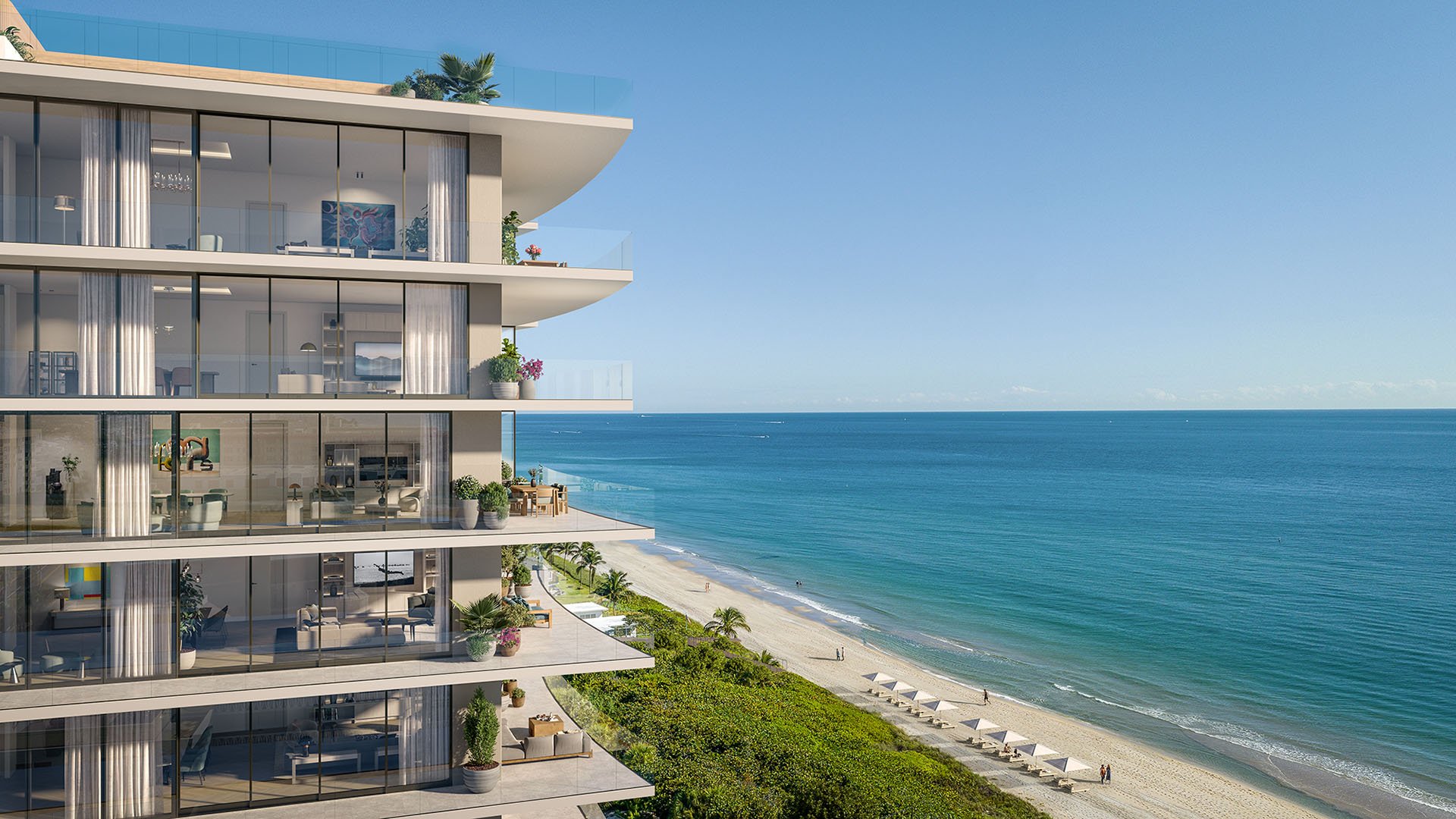
For buyers prioritizing water views, the strongest residence is not necessarily the one with the highest floor or largest terrace. Orientation, elevation, neighboring structures, landscaping, railings, columns, overhangs, and the angle from primary living spaces can all influence the experience.
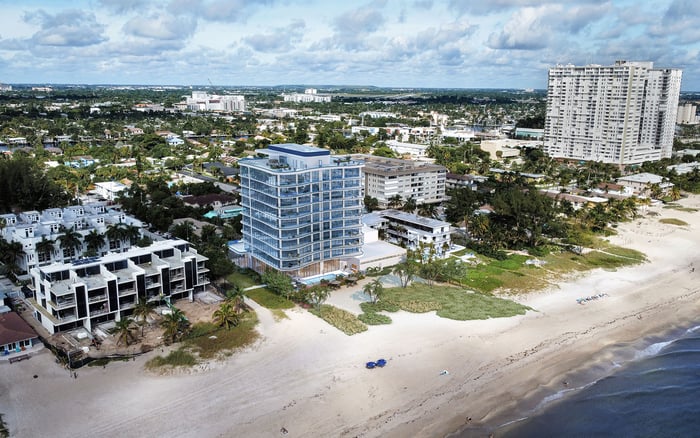
A project-specific review can begin with Rosewood Residences Hillsboro Beach. Buyers should compare available plans and project materials rather than assume that every residence within a waterfront development offers the same outlook, privacy, or outdoor comfort.
Lower obstruction risk should be treated as a due-diligence goal rather than a promise that a view will never change. A useful review considers what is immediately in front of the residence, what appears at each side angle, and how the outlook changes between standing and seated positions.
Floor plans and presentation images should be supplemented with dimensioned drawings, orientation information, and any available view studies. Buyers should also identify whether structural columns, balcony dividers, railings, roof elements, vegetation, or neighboring terraces enter important sightlines.
Corner residences may provide a wider visual field, but they can also increase exposure to wind and adjoining balconies. Higher elevation may improve distance views, while a lower residence may place the water more prominently in the foreground. The preferred configuration depends on whether the buyer values breadth, immediacy, privacy, or shelter most.
A balcony should be evaluated as functional architecture, not simply as listed outdoor area. Depth and shape determine whether dining, lounging, and circulation can coexist comfortably. Door placement, columns, planters, railings, and privacy screens can further affect usable space.
Orientation influences when direct sun reaches the terrace, but comfort also depends on overhangs and surrounding conditions. Buyers should consider the hours when they expect to use the balcony and assess shade, glare, heat, wind, and wind-driven rain during those periods.
Furniture planning is a practical test. Placing intended tables, seating, and circulation paths on a dimensioned plan can reveal whether the terrace supports the desired routine without blocking doors or narrowing movement.
Project representations should be checked against the governing documents and transaction materials. Buyers can request the residence plan, balcony dimensions, compass orientation, reflected ceiling or soffit information when available, railing details, drainage approach, finish specifications, and relevant disclosure language.
The review should also distinguish between a conceptual rendering and a contractual commitment. Any statement about views, exposure, delivery, amenities, or residence features should be verified in the applicable documents rather than inferred from marketing imagery.
A site visit can help buyers assess neighboring conditions and the broader setting, but future conditions cannot be established from a single visit. Legal, engineering, insurance, and inspection questions should be directed to qualified professionals working from current documents.
Buyers willing to compare Hillsboro Beach with nearby Broward waterfront settings may also review Armani Casa Residences Pompano Beach and The Ritz-Carlton Residences® Pompano Beach. These project pages can broaden the comparison while keeping the search focused on South Florida.
The comparison should remain residence-specific. View direction, terrace configuration, privacy, and exposure can vary within the same development, so a project name alone does not determine the best fit.
What should buyers prioritize when comparing water-view residences? Compare orientation, elevation, immediate foreground conditions, side angles, and sightlines from the rooms and terrace areas used most often.
Does a higher floor always provide the best water view? No. Higher elevation may broaden a view, while a lower position may create a stronger sense of connection to the water.
Can any water view be treated as permanently guaranteed? Buyers should not assume permanence. View-related representations and limitations should be reviewed in the applicable project and transaction documents.
Why do seated sightlines matter? Railings, planters, walls, and furniture can affect the view from a seated position even when the standing view appears open.
What makes a balcony practically usable? Adequate depth, efficient shape, convenient door placement, shade, privacy, drainage, and manageable wind all contribute to everyday usability.
How should buyers evaluate sun exposure? Review compass orientation together with overhangs and the intended hours of balcony use, then assess likely shade, glare, and heat.
Are corner terraces always preferable? Not necessarily. They can widen sightlines but may also bring more wind or greater visual contact with neighboring terraces.
Which documents are useful for evaluating a terrace? Dimensioned plans, orientation information, railing details, finish specifications, disclosures, and relevant contract documents can support the review.
Should buyers rely on renderings to judge a view? No. Renderings are presentation materials and should be compared with plans, disclosures, and other applicable documents.
How can a buyer compare Hillsboro Beach with nearby waterfront projects? Use the same criteria for every residence: orientation, elevation, terrace geometry, privacy, exposure, documents, and personal lifestyle priorities.
For a discreet conversation and a curated building-by-building shortlist, connect with MILLION.
If branded residences are on your mind — as a home or as an allocation — we would be glad to share what we are seeing, privately.
Begin a quiet conversation