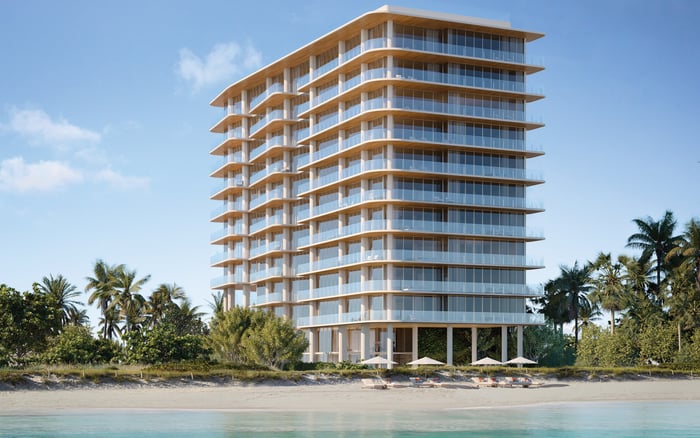
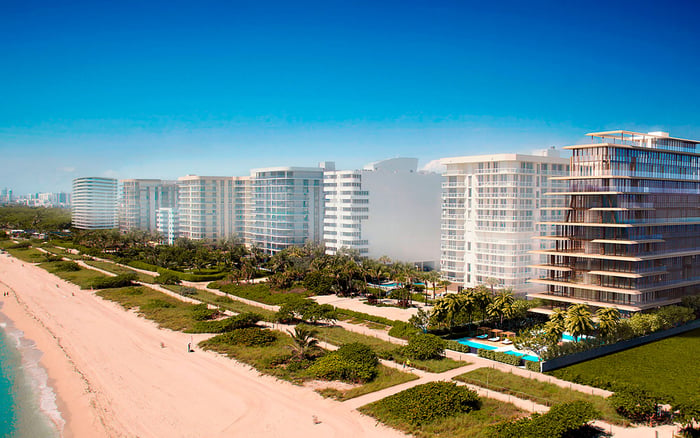
A buyer-focused comparison of four oceanfront residences in Surfside and Bal Harbour, balancing private-school access, family-scale layouts, privacy, services, and convenient dining.

For families considering Miami Beach, the most consequential luxury is often not a theatrical amenity, but a weekday that works: an efficient school departure, a practical route home, dinner nearby, sufficient bedroom separation, and space for staff or visiting relatives. These fundamentals can matter more than an extensive amenity inventory.
The northern coastal corridor deserves particular attention. Miami Beach’s private-school roster includes Hebrew Academy (RASG) at 2400 Pine Tree Drive, Lehrman Community Day School, and options in North Bay Village. This makes Mid-Beach, North Beach, Surfside, and Bal Harbour logical starting points, though no map should substitute for a live commute test.
Four properties create a useful spectrum. Oceana Bal Harbour combines a substantial oceanfront setting with proximity to Bal Harbour Shops, restaurants, and services. Farther south, The Surf Club Four Seasons Surfside offers resort-caliber service and dining within its grounds. The objective is not to identify a universal winner, but to match a residence to the household’s operating rhythm.
1. Oceana Bal Harbour | convenience near shopping and dining
At 10201 Collins Avenue, Oceana Bal Harbour is a 239-residence luxury oceanfront condominium. Its proximity to Bal Harbour Shops places luxury retail, restaurants, and services close to home, reducing the need to travel into central Miami for many routine occasions. Area schools include Ruth K. Broad Bay Harbor K-8 Center, Nautilus Middle School, and Miami Beach Senior High, though boundaries should be reconfirmed.
2. The Surf Club Four Seasons Residences | serviced family living
Occupying 9001 and 9111 Collins Avenue, The Surf Club contains 147 residences across approximately eight acres of oceanfront gardens and pathways. Four Seasons services, pools, landscaped grounds, and on-site dining make it compelling for a primary or seasonal household that values operational ease. Its Surfside address is just north of Miami Beach and a short drive from Bal Harbour’s shopping and dining district.
3. Ocean House Surfside | family-scale plans and staff space
Ocean House at 9309 Collins Avenue has residences marketed from approximately $5 million. Its program includes a four-bedroom, seven-bathroom Sky East layout, while plans feature expansive terraces and dedicated family and staff spaces. These elements are particularly relevant for multi-child households, live-in help, or buyers seeking formal separation between entertaining and private routines.
4. Arte Surfside | boutique privacy on the ocean
Arte at 8955 Collins Avenue contains only 16 oceanfront residences. That limited count distinguishes it from larger branded resorts and suits buyers who value privacy and a quieter residential atmosphere over an extensive service ecosystem. The trade-off deserves careful evaluation: a low-density building can feel exceptionally discreet, but families should compare its daily support structure with that of a full-service resort residence.
The decisive comparison begins inside the home. Before being persuaded by shared amenities, a family should model bedrooms, homework areas, guest accommodation, staff circulation, storage, and terrace use. Ocean House Surfside is especially relevant when larger layouts and dedicated household spaces carry more weight than a branded hospitality program.
Service-oriented buyers may prefer a property with integrated pools, grounds, dining, and hospitality support. Privacy-oriented buyers may instead gravitate toward Arte Surfside, whose 16-residence scale presents a distinctly boutique proposition. Neither model is inherently more family-friendly. The right choice depends on whether the household prefers readily available assistance or fewer neighbors and a more residential cadence.
Oceanfront living also requires a complete cost review. Compare condominium fees, insurance-related obligations, reserves, active pricing, and the services actually included. Marketed prices are only a starting point, and the utility of a large residence can vary materially with its plan.
A useful private-school screen is whether a residence can reach at least two preferred schools within an acceptable window. Yet even a 15-minute target is meaningful only when tested during the family’s actual drop-off and pickup periods. Causeway traffic can substantially affect trips from Surfside or Bal Harbour to schools in Coconut Grove and Pinecrest.
Families considering Hebrew Academy may find northern and Mid-Beach locations practical because the school is at 2400 Pine Tree Drive. Admissions availability must be established separately from proximity. Public-school boundaries and eligibility also require direct verification before a purchase; an address-based listing does not guarantee future assignment.
Disciplined, real-world checks are essential. Drive each route on representative weekdays, include a second child’s destination, and add the return trip to work or home. A residence that appears central on a map may not support the household’s actual sequence.
Dining convenience is not merely recreational for a family buyer. It can absorb evenings when schedules change, guests arrive, or household staffing is lighter. Oceana’s position near Bal Harbour Shops and local restaurants supports that flexibility without requiring a journey into central Miami. The Surf Club presents another model, with on-site dining and nearby access to the Bal Harbour district.
The practical question is frequency. Buyers should distinguish between destination restaurants visited occasionally and reliable dining that complements school nights and weekend routines. They should also test walking and driving patterns from the building rather than treating neighborhood proximity as uniform.
Begin with three nonnegotiables: school routes, minimum interior program, and preferred service level. Then compare privacy, dining access, terrace utility, fees, and current inventory. Bal Harbour may appeal to households prioritizing retail, restaurants, and services close at hand. Surfside offers a range from hospitality-led living to low-density discretion, all along the northern edge of Miami Beach.
No ranking can replace due diligence. Independently confirm admissions, school boundaries, driving times, condominium financials, fees, residence dimensions, and active prices. The best purchase preserves the elegance of the home while making ordinary family days notably easier.
Which residence offers the clearest resort-style proposition? The Surf Club combines Four Seasons services, pools, landscaped grounds, and on-site dining across an approximately eight-acre setting.
Which option is the most boutique? Arte Surfside has only 16 residences, making it the lowest-density choice in this comparison.
Which property highlights family and staff spaces? Ocean House plans include dedicated family and staff areas, expansive terraces, and a four-bedroom Sky East layout.
Which residence is closest to Bal Harbour Shops? Oceana Bal Harbour is positioned near Bal Harbour Shops, restaurants, and local services.
Is school proximity enough to choose a building? No. Families should verify admissions and boundaries, then drive the route during actual drop-off and pickup periods.
Can Surfside work for a Hebrew Academy commute? Its location north of Miami Beach can be practical, but families should personally test traffic to 2400 Pine Tree Drive.
What should seasonal residents prioritize? They may value integrated service, on-site dining, security, and straightforward arrival and departure routines.
What should full-time families prioritize? Bedroom separation, storage, staff needs, school logistics, fees, and dependable everyday dining deserve close review.
Are public-school assignments guaranteed by nearby listings? No. Boundaries and eligibility can change, so buyers should verify them directly before purchasing.
What costs should be reviewed beyond price? Examine condominium fees, reserves, insurance-related obligations, included services, and the residence’s practical utility.
For a tailored shortlist and next-step guidance, connect with MILLION.
If branded residences are on your mind — as a home or as an allocation — we would be glad to share what we are seeing, privately.
Begin a quiet conversation