A buyer-focused assessment of Brickell’s branded residences, separating launch pricing from resale evidence and examining what St. Regis, nearby Aston Martin, and changing market liquidity mean for a long-term purchase.
For a buyer planning to own in Brickell well beyond the launch campaign, the essential question is not which name commands the most attention today. It is which residence will remain compelling when the next purchaser weighs its layout, outlook, ownership costs, and asking price against the alternatives.
The strongest long-term proposition is a home whose purchase price can be defended without relying entirely on its branding. A celebrated name is not irrelevant. But the personal value of the branded experience is distinct from the financial assumption that a future buyer will pay the same premium.
St. Regis is a Brickell candidate to examine on that basis. Nearby Aston Martin offers an instructive, but geographically separate, early-resale comparison. Neither currently establishes a long-term winner after the initial brand premium. The useful shortlist is therefore conditional: prioritize the residence and the terms, then assess what the name adds.
Brickell’s historical luxury market provides context. In Q2 2024, it recorded 83 luxury condominium sales, the highest volume among the Greater Downtown submarkets reviewed. Its luxury median sale price was $1.4 million, while pricing reached $893 per square foot, up 7% year over year. Average selling time was 51 days.
Those figures describe a particular quarter, not the present value of a specific tower. Nor do they justify a launch price several years later without a review of comparable residences.
Later figures suggest a more demanding resale environment. In June 2025, the Brickell Avenue Area submarket had more than 18 months of resale supply. In February 2026, supply for Brickell luxury units priced at $1.6 million or more stood at nearly 47 months.
These figures cover different populations and periods; they are not a continuous, directly comparable series. Nevertheless, they make patience an important underwriting consideration. A desirable address and a lengthy selling period can coexist. Buyers should budget for carrying costs through an extended sale process rather than assume neighborhood recognition guarantees a prompt sale.
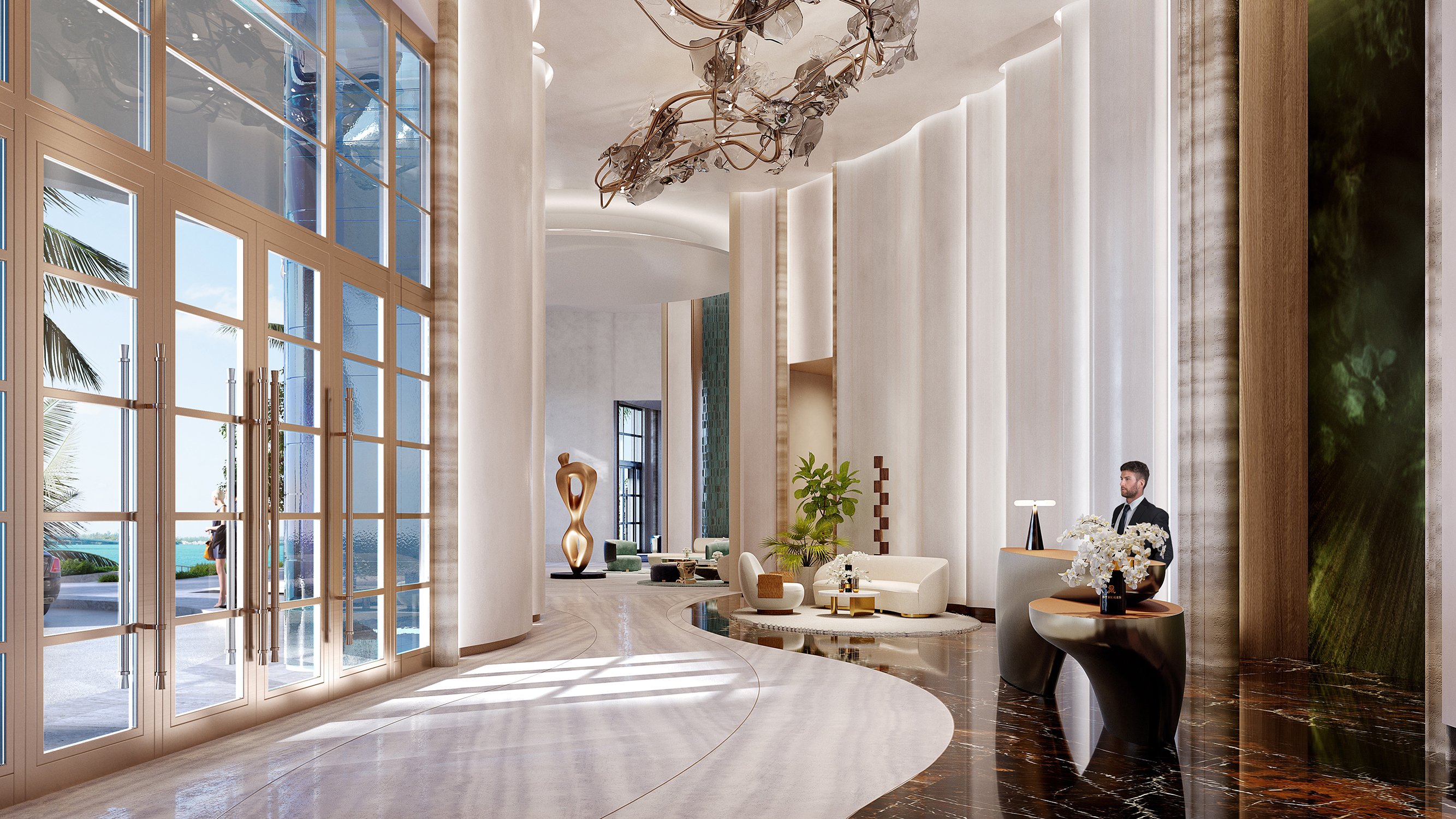
At 1809 Brickell Avenue, St. Regis® Residences Brickell is marketed as a bayfront development with residences spanning approximately 2,100 to 7,000 square feet. That combination gives buyers concrete property characteristics to evaluate separately from the name.
The project is in preconstruction, with no resale history yet. Its appeal must therefore be assessed prospectively. A buyer can examine the proposed home, contractual commitments, and total ownership budget, but cannot count an established long-term resale record among the offering’s attributes.
Indicative May 2026 pricing placed St. Regis around $2,500 per square foot, compared with approximately $1,950 per square foot for new branded Brickell residences. These are marketing comparisons, not matched transactions demonstrating a recoverable brand premium.
The right question is what supports the difference for the particular residence under consideration. Request a comparison that addresses size, floor, exposure, outdoor space, specifications, and contractual obligations. If much of the purchase rationale remains emotional, recognize that value as a lifestyle expenditure rather than assume it will be recaptured at resale.
Aston Martin Residences Downtown Miami is in Downtown Miami, not Brickell. It is useful here as a nearby branded-residence comparison, not as an entrant in a Brickell building ranking.
Recorded resales showed average appreciation of 23.1% against prior recorded prices, with an average holding period of just 0.9 years. That is short-term evidence, not proof of how the building will perform through a longer ownership cycle.
Separate October 2025 figures reflected post-delivery price discovery: prices approximately 14% lower year over year, 117 days on market, and average discounts of 13% from asking prices.
These findings are not necessarily contradictory. Appreciation against a unit’s prior recorded price and a year-over-year change in observed market pricing measure different things. A seller may realize a gain over an earlier purchase even as the broader pricing environment softens. Neither measure, on its own, isolates the lasting value of the brand.
For any prospective purchase, ask for closed transactions that resemble the actual residence, not simply the tower’s most flattering sale. Separate developer closings from subsequent resales, and distinguish ordinary residences from unusually large or exceptional homes. Where possible, compare similar floors, exposures, sizes, and condition.
If Cipriani Residences Brickell is also on the itinerary, apply the same questions rather than assume another recognizable name provides a validated resale benchmark. Its inclusion in a buyer’s comparison does not, by itself, establish superior value retention.
Asking prices deserve particular care. In June 2025, average asking prices in the Brickell Avenue Area were near $1.2 million and $828 per square foot, against winter 2024-25 closed-sale averages of $944,000 and $714 per square foot.
That gap is neither a measurable brand premium nor a guaranteed negotiation discount. Unit mix and observation periods differ. Treat it as a reason to investigate achievable pricing, not as a formula for an offer.
A long-term purchase should be comfortable to hold even when the preferred exit is unavailable. Before committing, request the applicable association budget, reserve information, insurance details, assessment disclosures, and documents governing services. For preconstruction, distinguish proposed budgets and commitments from established operating results.
Then test a conservative ownership scenario: no assumed price appreciation, a longer-than-preferred marketing period, and the full cost of carrying and selling the residence. This is a planning exercise, not a forecast.
Evaluate the home without its logo as well. Does the floor plan suit the next likely buyer? Is the outlook central to the asking price? Are the services worth their ongoing cost to you? These questions clarify what you are purchasing beyond recognition.
St. Regis merits consideration for buyers drawn to its marketed bayfront setting and residence scale, provided they accept that its resale thesis remains untested. Aston Martin illustrates why early gains and softer market pricing require careful interpretation. Neither supports a promise of lasting brand-driven appreciation.
The best Brickell purchase is the specific home whose entry price, ownership obligations, and everyday usefulness remain convincing under conservative assumptions. Pay knowingly for personal enjoyment, but require separate evidence for an investment claim.
For a discreet review of Brickell residences through a long-term ownership lens, connect with MILLION.
If branded residences are on your mind — as a home or as an allocation — we would be glad to share what we are seeing, privately.
Begin a quiet conversationThe available evidence does not establish a building-level winner after the initial brand premium. St. Regis is a candidate to evaluate, but its long-term resale proposition remains untested.
The project description used here identifies St. Regis as preconstruction with no resale history yet. Indicative pricing should not be treated as evidence of future resale performance.
St. Regis is marketed as bayfront at 1809 Brickell Avenue, with residences spanning approximately 2,100 to 7,000 square feet. Buyers should evaluate those characteristics separately from the brand.
No. Aston Martin Residences is in Downtown Miami and serves here as a nearby branded-residence comparison.
Appreciation against a unit’s prior recorded price differs from a year-over-year change in market pricing. Different transaction samples and periods can produce both outcomes without contradiction.
Brickell recorded 83 luxury condo sales, a $1.4 million median sale price, and pricing of $893 per square foot. Average selling time was 51 days, but these historical figures are not current building valuations.
The February 2026 figure for Brickell units priced at $1.6 million or more signals a potentially demanding exit environment. It does not predict how long an individual residence will take to sell.
No. Differences in unit mix and observation periods can affect that gap, so it does not isolate the value of branding or establish an expected discount.
Request comparable closed sales and applicable association budgets, reserve information, insurance details, assessment disclosures, and service documents. For preconstruction, distinguish proposed costs from established operating results.
Consider a scenario with no price appreciation, an extended selling period, and full carrying and selling costs. Treat this as a planning exercise rather than a forecast.