Before committing to Four Seasons Residences Coconut Grove, buyers should understand who stands behind the transaction and how arbitration, court venue, and forum-selection language could shape a dispute.
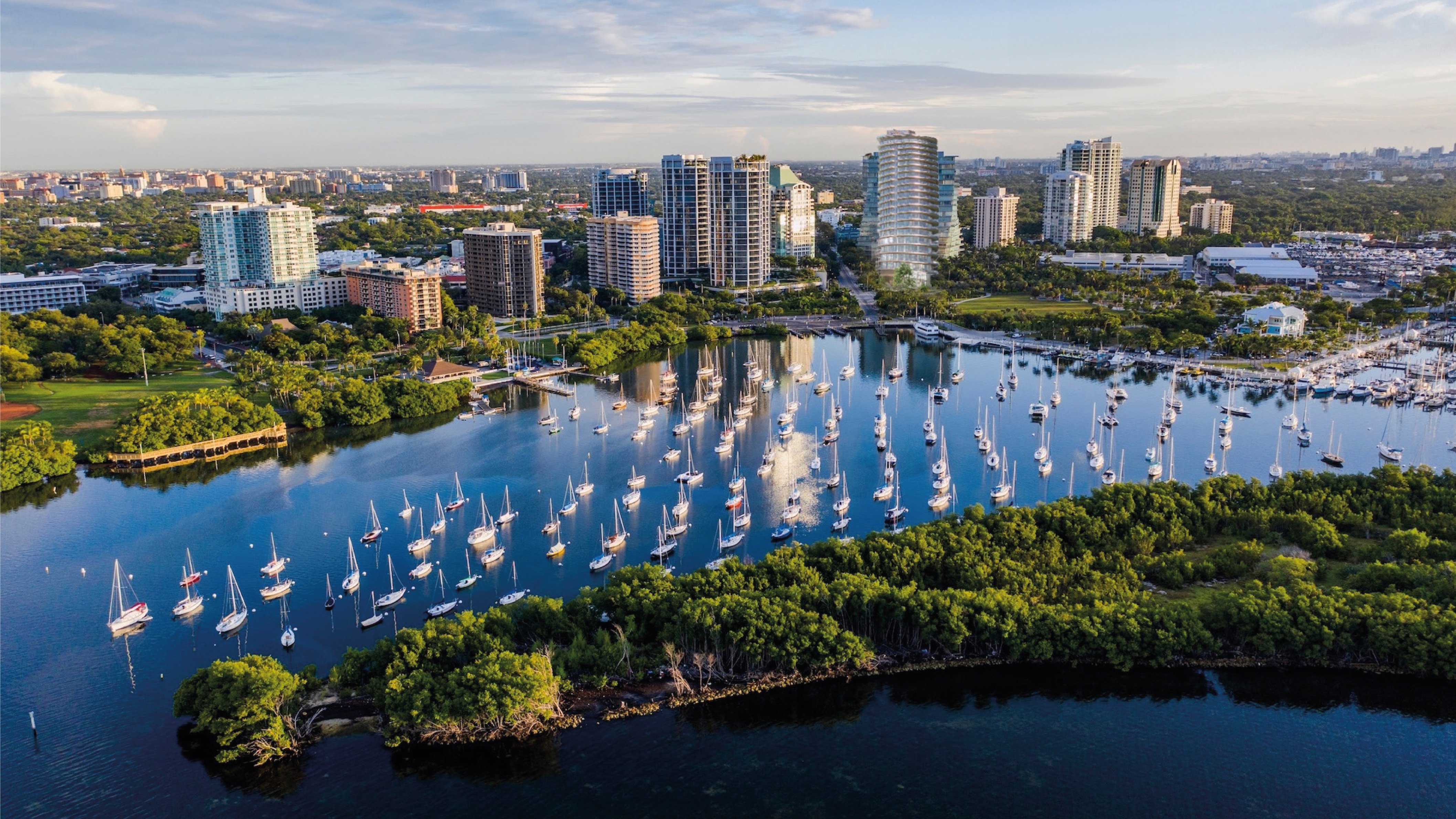
A luxury residence is selected for the life it promises. Its purchase agreement deserves attention for a different reason: it can establish the route a buyer must follow when expectations and performance diverge. For anyone considering Four Seasons Residences Coconut Grove, arbitration, venue, and forum-selection language belong in the same pre-signing review as the commercial terms.
These provisions address distinct questions. Will a covered dispute proceed before an arbitrator or in court? Where must proceedings take place? Which jurisdiction’s law governs? The residence’s address does not, by itself, answer them. Nor should a buyer assume that a familiar hospitality name identifies every entity responsible for the transaction.
The objective is not to anticipate conflict at every turn. It is to understand the agreement before a disagreement makes its procedural terms consequential.
The agreement to look solely to “MSBO” for matters relating to the project’s marketing, development, and unit sales warrants careful attention, particularly when the residential brand is central to a buyer’s decision.
That floor-plan disclaimer does not establish that every possible claim against Four Seasons or another entity is barred. Nor does it replace a review of the purchase agreement. Counsel should identify the seller’s full legal name, examine the capacity in which each relevant entity participates, and assess how the disclaimer relates to the transaction documents.
The same discipline applies to a comparison involving Mr. C Tigertail Coconut Grove. Assess each transaction’s allocation of responsibility independently; do not carry assumptions about one branded residence into another. No particular dispute provision should be inferred from a project’s name.
Before signing, ask counsel to explain, in plain language, which entity undertakes each material obligation and which provisions govern a claim concerning it.
A court venue or forum-selection clause identifies the designated court and geographic location for contractual disputes. An arbitration provision addresses whether covered claims must proceed through binding arbitration rather than a court trial. If arbitration is required, confirm its location separately. Governing law concerns the law applied, not simply where proceedings occur.
Ask counsel to read these provisions together, not as isolated paragraphs. A reference to Florida law does not answer where arbitration must occur. Likewise, a court-venue clause should not be read as eliminating arbitration without examining the agreement as a whole.
Residential agreements can specify a particular county. They can also tie venue to the county or district containing the seller’s principal place of business. These are examples of contractual structures, not statements about the terms at this Coconut Grove project.
The practical question is precise: what forum does this agreement select, for which disputes, and with what exceptions?
Florida generally treats forum-selection clauses as presumptively valid and enforceable. Contracting parties may agree on venue, so buyers should not regard the clause as incidental language they can readily disregard once a dispute arises.
Federal litigation adds another consideration. Under the federal forum-selection framework, a party suing outside a valid contractually selected forum bears the burden of explaining why that choice should not control. When the clause selects another federal district, the defendant may seek transfer under the federal venue-transfer statute. The contractual choice ordinarily controls absent exceptional public-interest considerations.
This framework does not guarantee that every clause will be enforced in every case. It does explain why choosing a preferred courthouse after a dispute begins may be less straightforward than a buyer expects.
Before signing, ask whether the language requires a particular forum or merely permits it. Have counsel identify the designated location and explain how venue tied to the seller’s office would operate. The distinction between the property’s location and the contractual forum deserves explicit review.
Florida residential construction contracts can require binding arbitration of covered disputes. The key word is “covered.” Language extending to disputes “arising out of or relating to” a contract can encompass contract-performance and construction-defect claims, depending on the agreement’s wording.
Florida arbitration analysis examines three threshold questions: whether a valid written agreement exists, whether the dispute presents an arbitrable issue, and whether the right to arbitrate has been waived. An arbitration paragraph is therefore the beginning of the analysis, not its conclusion.
A separate jury-trial waiver does not necessarily undermine a clear arbitration provision. Buyers should have both provisions reviewed together rather than assume one cancels the other.
If arbitration appears in the transaction documents, ask counsel to identify its scope, location, incorporated rules, and any stated fee arrangements. These are review questions, not representations that this project uses a particular administrator or cost allocation. Once a disagreement develops, litigation conduct can also matter: actions inconsistent with exercising arbitration rights can raise a waiver issue.
Florida construction law generally voids provisions requiring legal actions against Florida contractors to occur outside Florida, subject to exceptions involving federal arbitration law or projects on federal land. That protection is not a blanket rule that every dispute concerning Florida property must remain in Florida.
For construction contracts involving interstate commerce, federal arbitration law can require enforcement of an agreed out-of-state arbitration location despite the Florida restriction. Counsel should evaluate the parties, contract, and applicable law before reaching a conclusion about an outside forum.
Construction-defect claims require another layer of review. Florida’s Chapter 558 framework imposes notice-and-opportunity-to-cure procedures that should be considered alongside contractual dispute-resolution requirements. A buyer facing a defect should seek advice about those procedures before choosing a filing strategy.
For a buyer also considering The Well Coconut Grove, the useful comparison is document-specific. Neighborhood preferences may narrow a shortlist, but they do not establish equivalent dispute rights across transactions.
Ask for a concise written explanation of the contracting parties, covered claims, designated court, arbitration location if applicable, governing law, and notice requirements. Discuss any requested revisions before signing, without assuming the seller will negotiate or that counsel can guarantee how a clause will be treated in a future dispute.
The desired result is clarity, not a prediction of conflict. A considered purchase pairs confidence in the residence with an informed understanding of the agreement supporting it.
For a considered perspective on South Florida’s luxury residential choices, explore MILLION.
If branded residences are on your mind — as a home or as an allocation — we would be glad to share what we are seeing, privately.
Begin a quiet conversationNo. Buyers should confirm whether the actual transaction documents require arbitration and which disputes any provision covers.
The floor-plan disclaimer states that purchasers agree to look solely to MSBO for matters relating to marketing, development, and unit sales. It does not establish that every possible claim against another entity is barred.
It identifies the designated court and geographic location for resolving contractual disputes. Its wording should be reviewed to determine whether the selected forum is mandatory or permissive.
Not by itself. The agreement may select a court venue or arbitration location that requires separate review.
Florida generally treats these clauses as presumptively valid and enforceable. Their application still depends on the clause and the circumstances of the dispute.
When a valid clause selects another federal district, the defendant may seek transfer. The contractual choice ordinarily controls absent exceptional public-interest considerations.
Florida analysis examines whether a valid written agreement exists, whether the issue is arbitrable, and whether the right to arbitrate has been waived.
Not necessarily. A clear arbitration provision can remain enforceable even when the contract also contains a jury-trial waiver.
Potentially. For a construction contract involving interstate commerce, federal arbitration law can require enforcement of an agreed out-of-state location despite Florida’s restriction.
Florida’s construction-defect framework imposes notice-and-opportunity-to-cure procedures. Counsel should consider them alongside contractual dispute-resolution requirements before selecting a filing strategy.