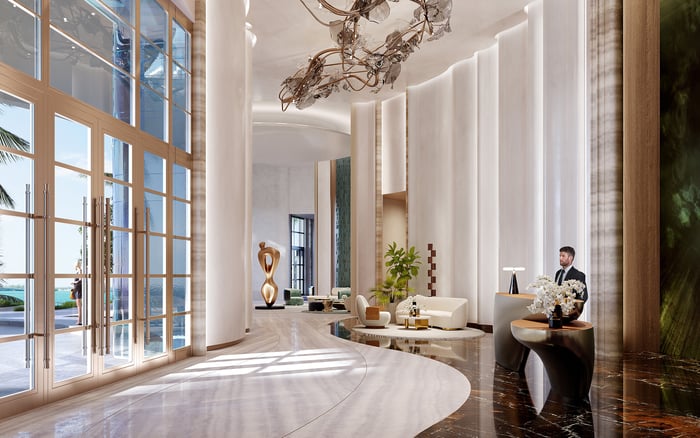
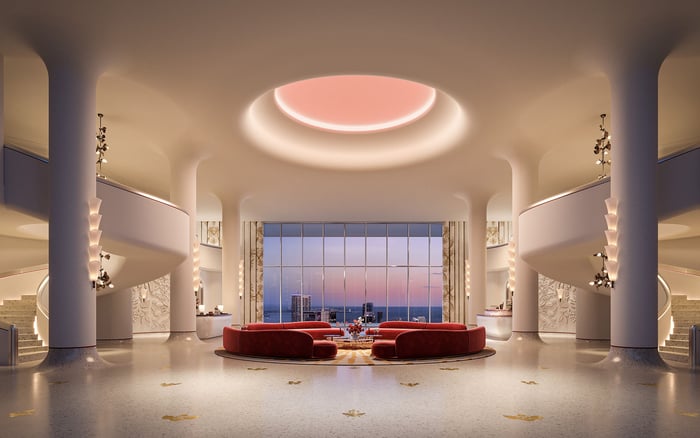
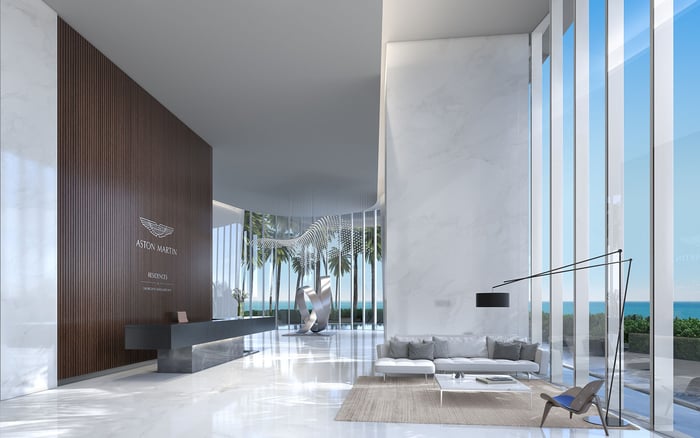
For buyers comparing Faena Downtown and St. Regis Brickell, hospitality branding is only the starting point. Arrival routes, amenity access and written operating rules deserve a separate privacy review.
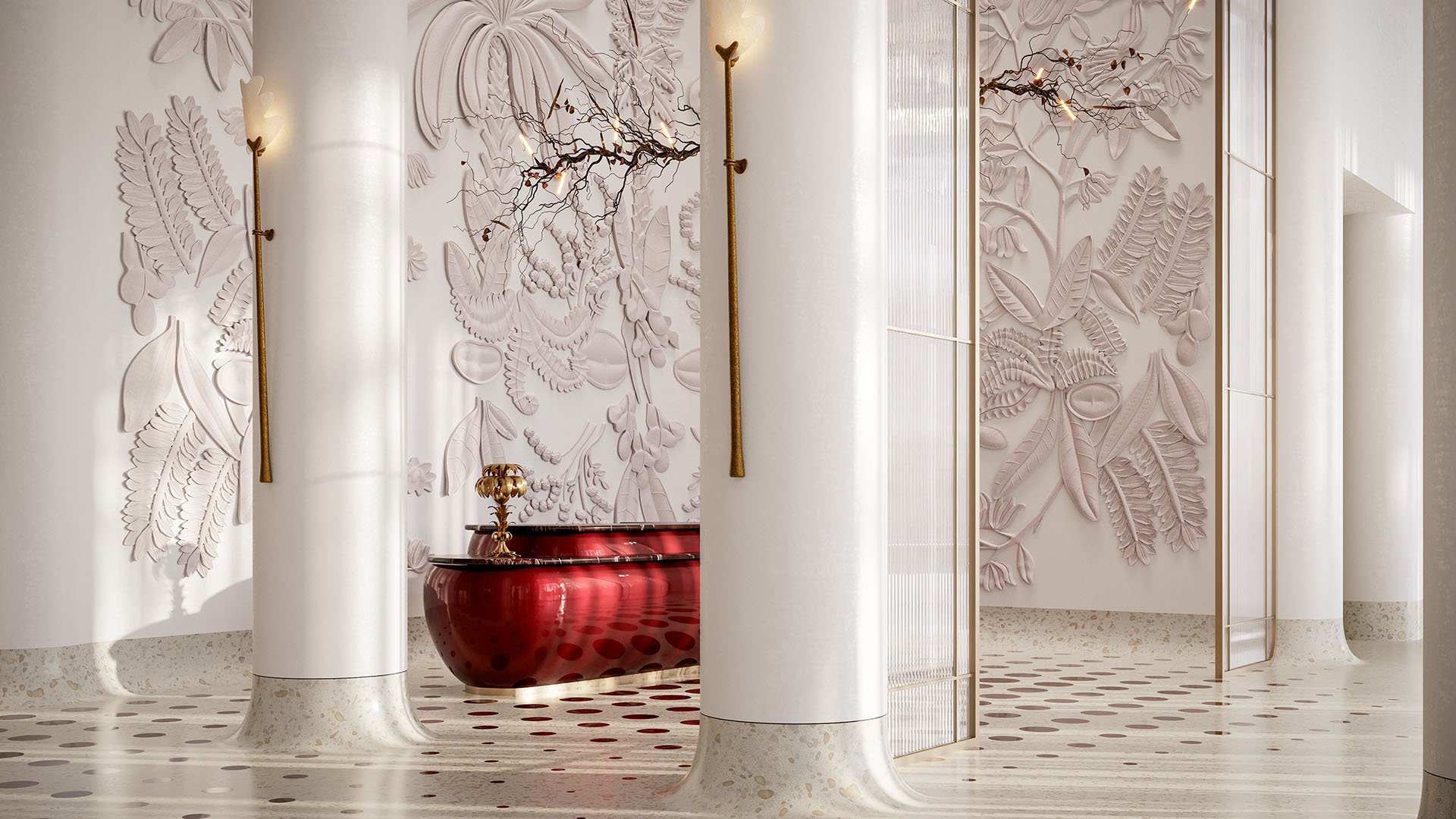
The most revealing question in a luxury residence is not simply who provides the service. It is who can reach the spaces between the street and your front door. For buyers weighing Faena Downtown against St. Regis Brickell, that distinction deserves as much attention as finishes, views and the atmosphere of the amenities.
Hospitality branding can describe a service standard without defining a building's occupancy or access rules. A residence can promise hotel-caliber attention without accommodating hotel guests. Conversely, a residential designation alone does not resolve questions about visitors, deliveries, events or elevator permissions.
Begin with a precise distinction: St. Regis Brickell is marketed as strictly residential, without hotel guests; Faena Downtown's hotel-luxury positioning does not, by itself, establish an on-site hotel or shared guest circulation. Neither statement should be read more broadly than its terms allow.
On the South Brickell bayfront, St. Regis® Residences Brickell offers an explicitly residential interpretation of its hospitality identity. Its address is 1809 Brickell Avenue, Miami, FL 33129. For a purchaser seeking separation from transient hotel traffic, the stated absence of hotel guests is a meaningful starting point.
Each residence is described as having a private elevator and entry foyer. That language matters, but it does not confirm that every owner has an exclusively dedicated elevator cab. The practical questions concern floor permissions, visitor authorization procedures, service access and arrangements during maintenance or an outage.
These specifications date to March 2022 and should be reconfirmed against current documents. Strictly residential does not mean that everyone entering must be an owner or personal invitee. Access for staff, contractors and other authorized entrants still warrants discussion. Nor does the absence of hotel guests independently establish rental restrictions. Those require a separate review.
Faena Residences Miami Downtown Miami is identified as “The River,” Downtown Miami, and described as fully serviced condominiums. Its positioning combines five-star hotel luxury with bespoke residential living, emphasizing culture, design, wellness, entertainment and connection.
That combination may appeal to buyers seeking an expressive, socially engaging residential environment. It does not establish that hotel guests share the lobby, that amenities admit the public or that an on-site hotel forms part of the project. Operating boundaries require a separate review from the hospitality language.
Faena's specific lobby boundaries, guest-registration procedures, event routes and resident-exclusive amenity rules should remain open due-diligence questions-not assumed features or shortcomings. Buyers should also resist importing arrangements from Faena's Miami Beach properties. The Downtown development is a separate proposition; familiarity with another Faena address cannot substitute for reviewing its own plans and rules.
A useful privacy review follows people through the building rather than stopping at an amenity inventory. Ask the sales team to trace several ordinary journeys on current plans: an owner arriving home, an invited overnight guest, a delivery, a household employee and a contractor. If hotel occupancy is contemplated anywhere in the relevant development, ask to see that route separately rather than presuming it exists.
Begin at the vehicle drop-off and pedestrian entrance. At what point is access controlled for residential arrivals? Can someone waiting for another destination remain in the residential reception area? Ask where visitors wait and how an owner authorizes them to proceed.
Then follow the vertical route. Clarify elevator access credentials, permitted floors and the relationship between passenger and service circulation. A private foyer may provide valuable separation at the residence, but it does not explain the earlier stages of the journey.
Finally, test the exceptions. How would a furniture delivery, maintenance call or elevator interruption be handled? These are not allegations about either project. They are practical scenarios that help purchasers assess whether the proposed arrangements match their expectations for everyday privacy.
“Public” requires a precise definition in this review. A space accessible to owners' guests is not necessarily open to the general public. A programmed gathering is not automatically a public event. Ask who may enter each space, who approves admission and whether access changes by time or occasion.
For any dining, wellness, entertainment or gathering space presented during the sales process, request written clarification of its intended users. If outside appointments, memberships or events are contemplated, ask how those visitors would arrive and whether their routes would intersect with residential circulation. These are conditional questions, not established features of either building.
Capacity and priority deserve equal attention. Ask how owner reservations, guest limits and temporary closures would work. A useful answer goes beyond calling an amenity private: it explains whose access takes precedence and who can change the policy.
Faena Downtown has an advertised delivery target of 2028, not a guaranteed completion date. When a purchase precedes completed operations, a persuasive presentation should lead to document review, not replace it. Ask which plans are current, which operating policies are proposed and which commitments appear in the purchase documents.
A focused review should cover entrance and elevator plans, intended amenity eligibility, visitor procedures and applicable leasing provisions. Ask counsel to distinguish enforceable commitments from descriptions that may change, and to identify who holds authority over future access policies. Where an answer remains provisional, factor that uncertainty into the purchase decision rather than treating the matter as settled.
The same discipline applies if The Residences at 1428 Brickell enters your shortlist. Compare questions and documents across properties without assuming their circulation arrangements are equivalent. A consistent review helps distinguish personal preference from contractual protection.
Neither cultural energy nor residential quiet is a proxy for privacy. Some owners welcome frequent interaction; others prioritize an arrival with minimal exposure. What matters is whether access, staffing and space planning support the experience you intend to purchase.
St. Regis Brickell has an explicit no-hotel-guests positioning. Faena Downtown offers fully serviced residential living with a distinctive hospitality and cultural identity. A sound decision rests not on assigning either a privacy ranking from those descriptions, but on confirming how each proposed home would function for you.
For a discreet review of your South Florida residential shortlist, connect with MILLION.
If branded residences are on your mind — as a home or as an allocation — we would be glad to share what we are seeing, privately.
Begin a quiet conversationNo. It is marketed as strictly residential, without hotel guests.
No. Its five-star hotel-luxury language describes hospitality positioning and does not establish an on-site hotel or hotel-guest access.
It is on the South Brickell bayfront. Its published purchaser address is 1809 Brickell Avenue, Miami, FL 33129.
Not necessarily. St. Regis purchaser specifications describe a private elevator and entry foyer for each residence, but that does not establish exclusive ownership or use of an individual cab.
Public amenity access is not established. Buyers should request current written eligibility rules and clarification of visitor routes.
No. Faena Downtown is a distinct development, and its own plans and operating rules should govern the review.
No. Buyers should review the applicable leasing provisions separately rather than infer them from residential positioning.
Ask to trace owner, invited guest, delivery, household employee and contractor journeys. Review where authorization occurs and whether those routes intersect.
The advertised target is 2028. It should not be treated as a guaranteed completion date.
Request current entrance and elevator plans, amenity eligibility rules, visitor procedures and leasing provisions. Have counsel distinguish binding commitments from proposed arrangements that may change.