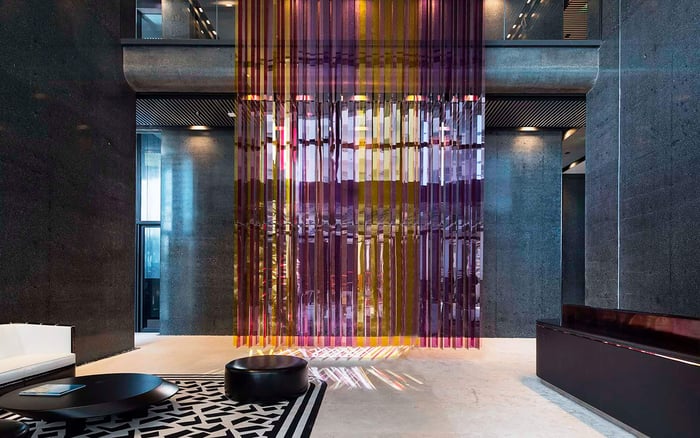
A privacy-first guide to evaluating South Florida branded residences, from arrival sequences and shared-space exposure to service culture and long-term discretion.
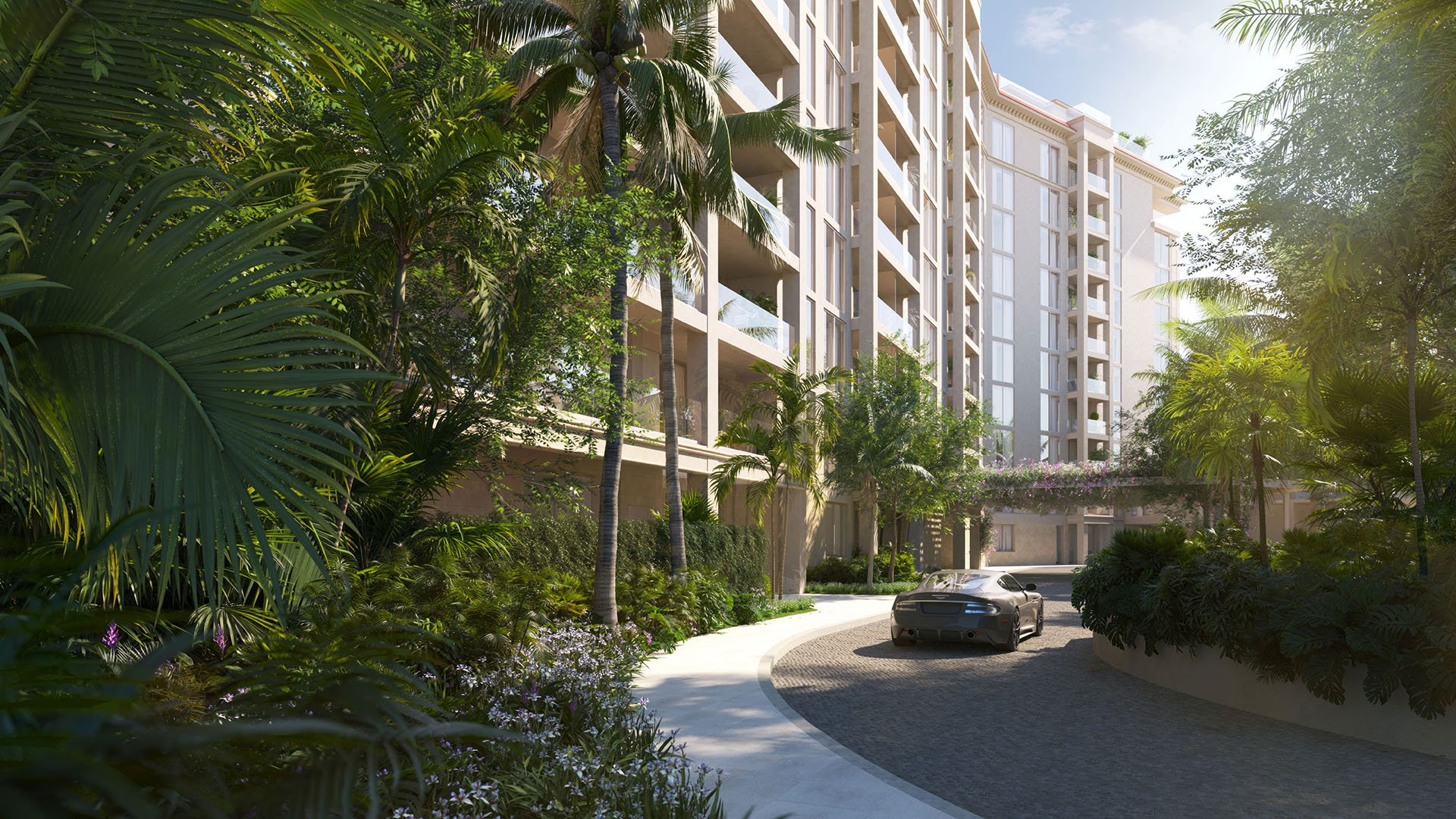
For privacy-focused buyers, low-density living is not a marketing phrase. It is the cumulative result of architecture, circulation, staffing, access control, amenity planning, and the behavior encouraged by a property’s operating model. A residence can feel composed and discreet when arrivals are calm, shared spaces are appropriately scaled, and service is attentive without becoming intrusive.
The inverse is equally true. A visually striking address may offer expansive homes yet still create frequent exposure in lobbies, elevators, pools, restaurants, or valet areas. Buyers should look beyond broad notions of exclusivity and examine the full journey from curb to residence.
This guide considers several branded residences across South Florida as starting points for a privacy-led search. A celebrated name does not automatically ensure seclusion. The strongest choice is the property whose physical plan and service culture align with the owner’s daily rhythms.
Miami Beach offers a compelling field for buyers seeking hospitality credentials without surrendering residential calm. The Ritz-Carlton Residences® Miami Beach belongs in a considered comparison, particularly for purchasers evaluating how branded service translates into an owner’s everyday experience. The essential questions involve entry protocols, guest handling, residential circulation, and the management of staff interactions.
Also in Miami Beach, Faena House Miami Beach presents another relevant reference for buyers who value a distinctive identity. Rather than treating design recognition as a proxy for privacy, purchasers should study the relationship among residences, amenities, exterior approaches, and service areas. A private home begins with spatial separation, not simply an evocative name.
In Surfside, The Surf Club Four Seasons Surfside invites a different line of inquiry: how a hospitality environment distinguishes the residential experience from the broader social life of the address. Buyers should request precise explanations of residential-only routes, visitor procedures, amenity access, and the protocols governing deliveries and household staff.
Farther north, Auberge Beach Residences & Spa Fort Lauderdale is a natural consideration for those comparing branded living in Fort Lauderdale with Miami’s coastal enclaves. The most useful analysis is not a city-versus-city generalization, but a close review of the specific residence, its exposure to shared areas, and the property’s operation during peak periods.
For buyers drawn to Boca Raton, The Residences at Mandarin Oriental Boca Raton merits inclusion in a cross-market study of branded service and discretion. Prospective owners should distinguish promised hospitality from documented residential procedures, then determine whether the operating structure supports quiet, predictable routines.
Begin with the floor plan, but do not stop at the residence. Request the relevant building plans and trace every routine journey: resident arrival, guest arrival, pet access, package delivery, private staff entry, parking, beach or pool access, and movement to wellness spaces. The number of thresholds and shared touchpoints often reveals more than a broad density label.
Next, examine the elevator strategy. Ask how many homes share the elevator serving the residence, whether service traffic is separated, how guests are authorized, and what happens when an elevator is unavailable. Privacy is strongest when the plan remains functional under ordinary operational pressure.
Amenity scale also matters. A generous program can be desirable, but buyers seeking discretion should understand who may use each space, whether reservations are required, and where circulation routes overlap. A beautiful lounge beside a primary residential path may feel less private than a smaller room set apart from everyday movement.
Finally, study the governing and operating documents with counsel. Confirm rental policies, guest rules, access rights, commercial uses, event provisions, service standards, and the allocation of shared expenses. These details shape the lived environment long after the first impression fades.
Privacy is personal. A full-time owner may prioritize seamless daily arrivals, household staffing, and quiet weekday amenities. A second-home buyer may care more about secure lock-and-leave operations, advance provisioning, and consistent residence care during absences. Families may focus on guest management and practical movement, while public figures may require closer coordination among personal security, drivers, and building personnel.
The neighborhood context deserves equal scrutiny. Miami Beach and Surfside can suit buyers seeking coastal access and established luxury settings, while Fort Lauderdale and Boca Raton broaden the geographic search. Yet no area tag can substitute for visiting at different hours, observing traffic around entrances, and experiencing the route from vehicle to front door.
A branded residence earns its premium when service reduces friction while preserving autonomy. The ideal staff presence is responsive, controlled, and almost imperceptible. Buyers should meet the relevant management team, ask scenario-based questions, and listen for precise procedures rather than polished generalities.
Before making an offer, create a privacy brief that ranks nonnegotiables. Include acceptable elevator sharing, visitor authorization, household staff access, delivery handling, preferred amenity use, residence exposure, and security coordination. Give the brief to the broker, attorney, and design advisers so every professional evaluates the same priorities.
Compare individual residences, not merely buildings. Orientation, proximity to elevators, adjacency to service spaces, and relationship to amenity levels can materially alter the sense of retreat within a single property. A carefully selected home in a larger setting may feel more discreet than a poorly positioned home in a smaller one.
The final decision should unite three forms of confidence: confidence in the physical plan, confidence in enforceable rules, and confidence in management. When all three support the owner’s routine, low-density living becomes tangible rather than an abstract promise.
What does low-density living mean in a branded residence? It means limited day-to-day exposure to other occupants, guests, and service traffic, supported by thoughtful planning and operations.
Does a lower residence count guarantee privacy? No. Circulation, amenity access, staffing, guest policies, and the position of the individual home can matter just as much.
Which documents should a privacy-focused buyer review? Review governing documents, rules, floor plans, operating provisions, rental policies, and available access protocols with qualified counsel.
Why is elevator planning important? Elevator sharing determines how often residents encounter neighbors, guests, deliveries, and staff during ordinary routines.
Should buyers visit at more than one time of day? Yes. Multiple visits can clarify arrival traffic, lobby activity, amenity use, noise, and staffing patterns.
Can hotel-style service coexist with residential discretion? It can when residential routes, access permissions, staff procedures, and guest handling are clearly defined.
How should second-home buyers evaluate privacy? Focus on access during absences, residence care, delivery controls, advance provisioning, and authorization for personal staff.
Do amenities reduce privacy? Not necessarily. Their location, access rules, capacity, and relationship to residential circulation determine their effect.
Is the neighborhood as important as the building? Yes. Street activity, entrance visibility, traffic patterns, and the route home all influence daily discretion.
What is the best first step in a private search? Write a detailed privacy brief, then use it to compare specific residences, documents, operations, and management practices.
For a confidential assessment and a building-by-building shortlist, connect with MILLION.
If branded residences are on your mind — as a home or as an allocation — we would be glad to share what we are seeing, privately.
Begin a quiet conversation