Five South Florida developments offer distinct approaches to residential privacy, from owners-only arrival spaces to private elevators and controlled waterfront enclaves. For seasonal buyers, the decisive question is how those features work together from arrival to residence.
For a seasonal owner, privacy begins before the front door. The meaningful distinction is not whether a building carries a hospitality name, but whether its layout and operating rules separate residential life from visitor traffic. An owners-only lobby, direct private-elevator entry and controlled access each address a different stage of that journey.
These five South Florida projects take distinct approaches to that brief. Their order reflects an editorial preference for documented separation and access control, not a measured ranking of hotel-guest encounters. Waldorf Astoria takes first position for its explicit owners-only arrival spaces within a mixed-use development-not because it eliminates hotel contact.
Treat the development details, pricing and delivery targets here as September 2026 snapshots, not live availability or completion guarantees. For buyers planning a seasonal calendar around occupancy, that distinction belongs at the start of the conversation.
1. Waldorf Astoria Residences Miami: Downtown Miami
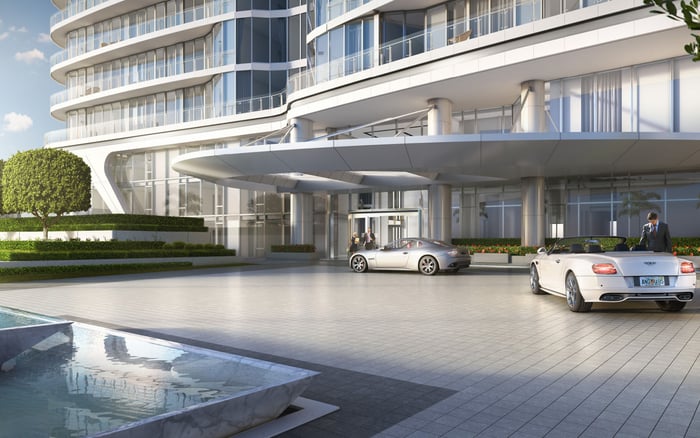
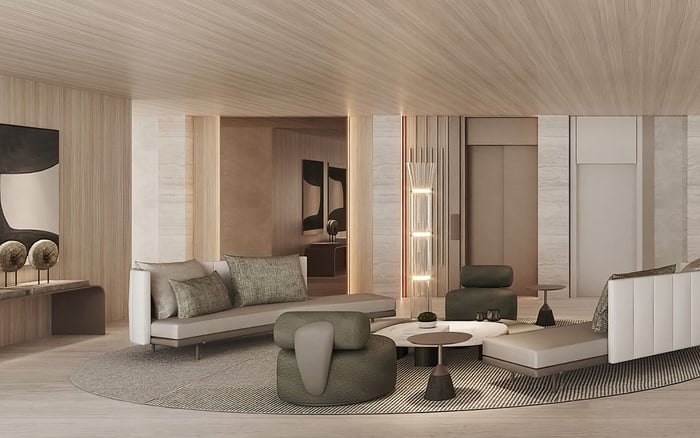
Waldorf Astoria combines 387 private residences with 205 hotel rooms. Its owners-only lobby and lounge offer this shortlist’s clearest evidence of dedicated resident arrival within a hotel-and-residences development. Residential amenities also include an elevated pool deck, hospitality suite, billiard room and children’s club.
The appeal is separation within a hospitality setting, not the absence of hospitality traffic. A seasonal buyer should distinguish documented resident spaces from unresolved questions about shared valet, service routes and amenity access. The owners-only lobby matters, but it does not establish a fully independent route through every part of the property.
2. Rivage Bal Harbour: Direct private-elevator arrival
Rivage comprises 56 oceanfront residences across 25 floors, with direct private-elevator entry to every home. Its strongest privacy credentials are the limited residence count and the approach to each home. The residential population is substantially smaller than Waldorf’s 387-home component.
Entry pricing is approximately $13 million, with delivery targeted for 2027. For a seasonal owner, the attraction is a clearly defined final stage of arrival. Still, private-elevator entry should be evaluated alongside elevator zoning, visitor authorization and service access; it does not, by itself, establish how people move through the rest of the building.
3. The Residences at Six Fisher Island: Private-island access
Six Fisher Island adds a layer of access control before visitors reach the building. That private-island setting is the principal reason for its position here: the surrounding environment contributes to privacy rather than leaving the residential lobby to carry the full burden.
Entry pricing is approximately $15 million or more. Buyers drawn to this setting should assess island access and building access separately. The first supports discretion at a broader level; the second requires confirmation of the residence’s arrival, visitor and service arrangements.
4. Rosewood Residences Hillsboro Beach: Private oceanfront enclave
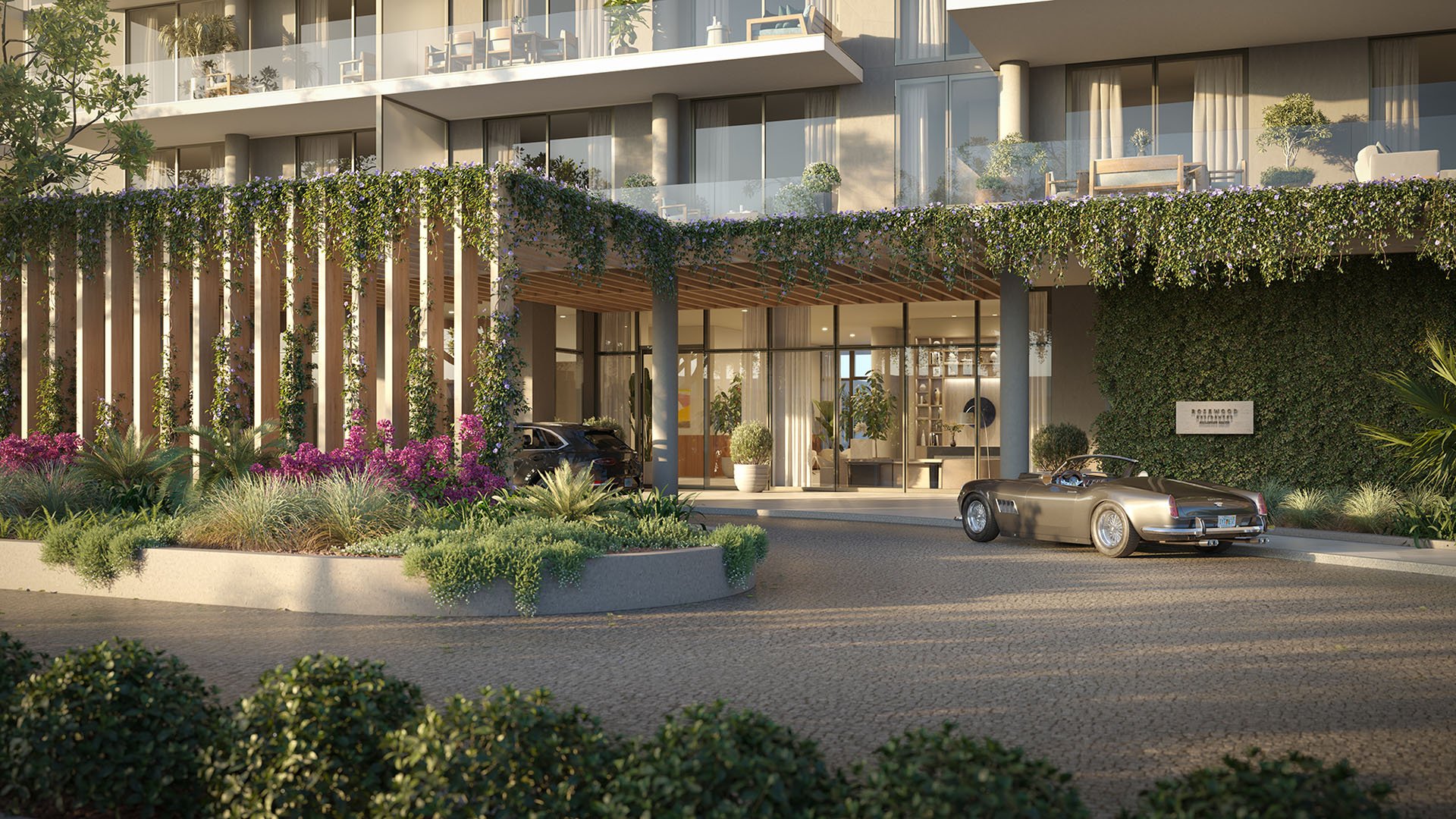
Rosewood Residences Hillsboro Beach has a private oceanfront enclave designation, with entry pricing from approximately $5.95 million and delivery targeted for 2027. Its appeal rests on the residential setting rather than chiefly on separation within a large mixed-use tower.
For seasonal buyers, that is a compelling starting point-not a substitute for operational detail. The enclave designation does not establish separate valet, loading or staff routes. Confirm those arrangements before translating a privacy-oriented setting into expectations about daily movement.
5. The Ritz-Carlton Residences Palm Beach Gardens: Gated Intracoastal living
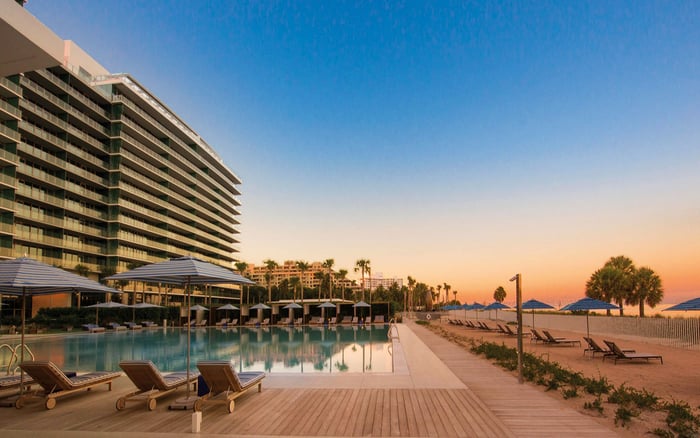
This development comprises 106 estate residences in a seven-story, low-rise enclave on approximately 14 Intracoastal acres. Gated entry and a private marina distinguish its access profile from those of the oceanfront towers and the Downtown Miami mixed-use option.
Its position reflects controlled access and low-rise waterfront living. For buyers considering the marina as part of their seasonal lifestyle, the next question is how marina access relates to residential access. A private marina is both an amenity and an access point to examine-not evidence that every circulation route is separate.
The useful comparison between Waldorf Astoria Residences Downtown Miami and Rivage Bal Harbour is where separation is most explicitly documented: owners-only lobby and lounge spaces at Waldorf, and direct private-elevator entry to every residence at Rivage. These features serve different stages of arrival and should not be treated as interchangeable.
A buyer seeking dedicated residential reception may give greater weight to the former. One focused on the transition from elevator to home may prioritize the latter. Neither feature alone establishes whether owners, guests, staff and deliveries cross paths elsewhere. The strongest choice is the one whose full access plan matches the buyer’s priorities, not the one with the most reassuring vocabulary.
At The Residences at Six Fisher Island, the private-island setting adds a layer of access control before building arrival. At Rosewood Residences Hillsboro Beach, the private oceanfront enclave is the defining setting. Both merit attention from buyers who want discretion to extend beyond their residence, though internal circulation still warrants detailed review.
For an Intracoastal alternative, The Ritz-Carlton Residences® Palm Beach Gardens brings gated entry, a private marina and a seven-story scale to the comparison. The practical question is how those access points work together. A controlled perimeter and a private residential threshold are complementary protections, but one does not prove the other.
Ask for elevator zoning, arrival and valet plans, and service-corridor layouts. Trace the owner’s path from vehicle to lobby, elevator and front door, then examine the routes used by visitors, deliveries and staff. Where a hotel component exists, request the hotel and residential access-control policies rather than assuming branding defines the boundary.
Rental restrictions deserve equal attention. A seasonal owner should understand both permitted use of the home during absences and the rules governing other residences. Request written confirmation of guest authorization, amenity access and any shared circulation points. Private elevators, gates and owners-only amenities do not establish separate loading, service-elevator or back-of-house routes.
Finally, align the purchase with the occupancy calendar. Rivage and Rosewood have 2027 delivery targets, not guaranteed move-in dates. Confirm current inventory, pricing and construction timing before treating either as a fixed seasonal plan.
The best fit depends on the priority: dedicated resident arrival, private-elevator entry, island-level access or a gated waterfront setting. None of these features proves zero hotel-guest overlap. The decisive test is a documented route home that supports the way the owner intends to live.
Explore a more tailored South Florida seasonal-home selection with MILLION.
If branded residences are on your mind — as a home or as an allocation — we would be glad to share what we are seeing, privately.
Begin a quiet conversationWaldorf Astoria Residences Miami has an owners-only lobby and lounge. Its 387 residences and 205 hotel rooms mean dedicated resident spaces should not be confused with zero hotel contact.
No. It is an editorial ordering based on documented separation features and access control, not measured guest encounters.
Rivage provides direct private-elevator entry to every residence. The project comprises 56 oceanfront residences across 25 floors.
Its private-island setting adds an access-control layer before visitors reach the building. Internal arrival and service arrangements still require confirmation.
Its principal distinction is a private oceanfront enclave setting. That description does not establish fully separate valet, staff or loading routes.
The project combines gated entry and a private marina with 106 estate residences in a seven-story enclave on approximately 14 Intracoastal acres.
The September 2026 pricing snapshots place Rivage at approximately $13 million, Six Fisher Island at approximately $15 million or more, and Rosewood from approximately $5.95 million. These are not live availability or pricing guarantees.
No; both have targeted 2027 delivery dates, which should not be treated as guaranteed completion or move-in dates.
Request elevator zoning, arrival and valet plans, service-corridor layouts, and applicable hotel and residential access-control policies. These help identify shared routes that headline privacy features may not address.
Rental restrictions clarify permitted use during an owner’s absences and the rules governing other residences. Review them alongside guest authorization and amenity-access policies.