A buyer-focused examination of Palm Beach County condominium insurance, with Enclave of Palm Beach as a pricing and dues benchmark and a practical framework for reviewing master deductibles, HO-6 coverage, reserves, and loss assessments. The available information does not establish five active county residences or support an insurance-risk ranking.

For a luxury condominium buyer in Palm Beach County, financial comfort extends beyond the purchase price. It means understanding what happens after a covered building loss, how the association allocates its deductible, and whether the owner's insurance covers that obligation. A beautifully managed residence and insurance-inclusive dues do not, by themselves, establish predictable exposure.
The essential distinction is between recurring costs and contingent obligations. Monthly maintenance is a budget item. An allocated master-policy deductible or uncovered assessment requires a different review: the association documents and the proposed HO-6 policy must be read together. For buyers prioritizing certainty, the decisive factor is a documented relationship between those layers, not a reassuring headline premium.
The available information identifies four Palm Beach County residences for review, not five verified active options ranked by insurance exposure. Current availability and comparable policy terms must be confirmed before treating any selection as a best-five list. The separate Broward County fee comparator below is not a fifth Palm Beach County candidate.
Enclave of Palm Beach: Palm Beach pricing and maintenance benchmark
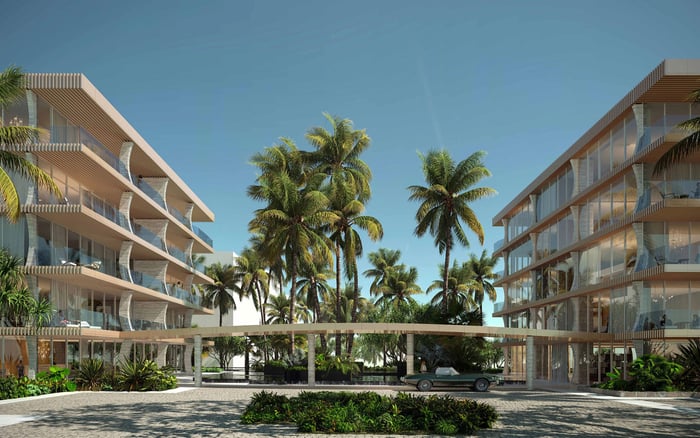
Enclave of Palm Beach provides a concrete starting point for a purchase review, with residence prices of approximately $1.35 million to $4.8 million. Monthly HOA figures of around $3,000 to $3,800 include insurance, management, maintenance, recreation facilities, and several utilities. These figures offer an ownership-cost benchmark, not an insurance rating or confirmation of current availability.
A separate HOA range of $3,516 to $4,549 makes current, unit-specific confirmation essential. Neither range establishes the master deductible, the owner's allocated share after a loss, or the amount recoverable under HO-6 loss-assessment coverage. Enclave belongs in an insurance-focused purchase review as a residence to evaluate against those documents, not as a promise of low exposure. Before treating its maintenance charge as predictable, obtain the current budget, applicable insurance terms, and assessment notices for the specific residence.
Florida condominium associations generally insure the building and common elements. Owners' HO-6 policies address property and exposures outside the master policy's coverage. The actual policies and applicable requirements determine how the pieces fit together.
First, examine the master policy: its coverage, deductible structure, and relevant exclusions. Second, review the HO-6 policy for the residence, including any association insurance requirements. Third, examine loss-assessment protection, which can respond to an owner's share of a covered association loss exceeding the master policy's coverage, subject to policy terms.
These protections are related, not interchangeable. A generous owner-policy limit does not mean every association assessment is insured. Nor does building insurance included in maintenance mean the owner's responsibility ends with the monthly payment. Ask the insurance adviser to reconcile the policies with the association's allocation rules rather than assess each document in isolation.
Florida residential unit-owner policies must include at least $2,000 in property loss-assessment coverage for covered direct property losses. The statutory deductible for that coverage cannot exceed $250 per direct property loss. Neither amount should be confused with the association's master-policy deductible, a separate exposure that requires review.
The $2,000 minimum does not guarantee adequate protection against an owner's potential share of a large association deductible. Equally important, a higher overall loss-assessment limit may not be fully available for an assessment arising from that deductible. Check deductible-related sublimits explicitly.
Request written confirmation of how the proposed policy would treat a deductible assessment under the association's documents. Compare the owner's potential obligation with the coverage that actually applies to it. Any remaining gap belongs in the buyer's financial planning, even when the headline loss-assessment limit appears substantial.
A West Palm Beach comparison involving Alba West Palm Beach should begin with the same requests: current master-policy documents, deductible allocation rules, the operating budget, reserves, and assessment notices. A project name is a starting point for inquiry, not evidence that insurance costs or future obligations are controlled.
For a buyer considering The Ritz-Carlton Residences® Palm Beach Gardens, the practical question remains how an association obligation would become a unit-owner obligation. Compare the applicable allocation with HO-6 loss-assessment terms and deductible-related sublimits. Do not substitute an assumed equal share for the allocation established in the governing documents.
In Boca Raton, the same discipline applies when considering Alina Residences Boca Raton. Reserves and assessment history deserve attention alongside insurance terms. These project references invite a consistent purchase review; they do not establish current availability, master deductibles, or insurance protection.
Luxury condominium maintenance fees can combine building insurance, reserves, staff, and amenities. A higher charge is therefore not necessarily a higher insurance cost, while a lower charge is not proof of lower exposure. Compare the budget components rather than treating total dues as an insurance premium.
A separate South Florida operating-cost comparator is Waldorf Astoria Residences Pompano Beach in Broward County, outside the Palm Beach County shortlist. Its HOA estimates are $1.61 per square foot without reserves and $1.74 per square foot with reserves. The billing period is unspecified, so neither figure should be converted into a monthly ownership charge without documentation.
This distinction illustrates why reserve inclusion matters when comparing fees. It does not establish deductible protection or verify insurance exposure. For any Palm Beach County residence, confirm what the quoted charge includes, which reserve contributions apply, and whether current or pending assessments fall outside the recurring budget.
Before committing, assemble the association budget, reserve studies, master-policy documents, recent and pending assessment notices, and structural or engineering records. Include flood coverage, deductible allocation rules, and claims history in the review. These materials help clarify both insured losses and potential obligations that should not be assumed covered.
Then have the insurance adviser assess the proposed HO-6 policy against the same document set, including limits, exclusions, and deductible-related loss-assessment sublimits. Distinguish confirmed terms from estimates, and separate recurring charges from contingent exposure. Predictability does not mean eliminating risk; it means understanding the obligations being accepted and the protection available for them.
For a discreet approach to your Palm Beach County residence search, explore MILLION.
If branded residences are on your mind — as a home or as an allocation — we would be glad to share what we are seeing, privately.
Begin a quiet conversationIt generally covers the building and common elements. Review the policy's coverage, exclusions, and deductible structure rather than assuming every building-related loss is covered.
An HO-6 policy addresses property and exposures outside the master policy's coverage. Its terms should be reviewed alongside the association's insurance and governing documents.
Florida residential unit-owner policies must include at least $2,000 for covered direct property losses. That minimum may not adequately protect against an owner's share of a large association deductible.
No; the $250 maximum applies to the statutory loss-assessment coverage deductible per direct property loss, not to the association's master-policy deductible.
Not necessarily; deductible-related sublimits and other policy terms can restrict the amount available for that assessment.
No; it identifies four county residences for further review, without confirming current availability or comparable insurance terms. The Pompano Beach reference is a separate Broward County fee comparator, not a fifth county candidate.
Monthly fee benchmarks are approximately $3,000 to $3,800, with a separate range of $3,516 to $4,549. Obtain the current charge and included services for the specific unit.
No; maintenance can include insurance, reserves, staff, amenities, and other costs without establishing the master deductible or the owner's potential assessment obligation.
Review the budget, reserves, master-policy documents, deductible allocation rules, assessment notices, and structural or engineering records. Include flood coverage and claims history in the review.
No billing period is specified for the $1.61-per-square-foot estimate without reserves or the $1.74 estimate with reserves. It is a comparator separate from the Palm Beach County shortlist.