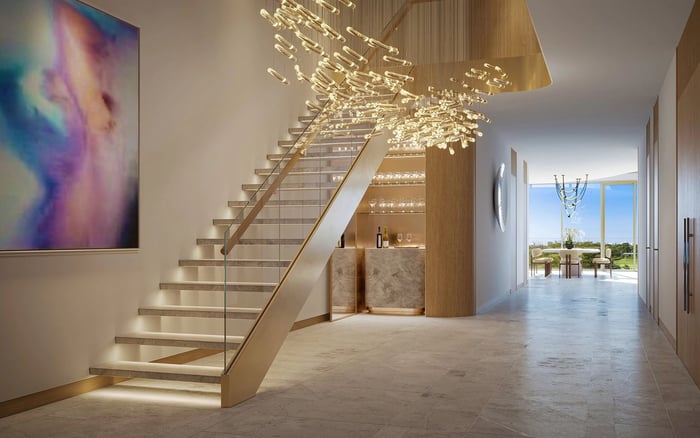
For families buying in Hallandale Beach, amenity value depends on more than design. Written rules for children, caregivers, guests, pool supervision, and liability forms should be tested against the household’s actual routine before diligence deadlines.

For a family considering Hallandale Beach, the decisive amenity question is not simply whether a residence offers an appealing place to swim or gather. It is whether those spaces accommodate the household’s actual routine: children with a nanny after school, grandparents visiting on weekends, or a babysitter accompanying younger residents while parents are elsewhere.
That distinction belongs early in purchase diligence. Children’s access to condominium amenities depends on the declaration, bylaws, and association rules. Marketing descriptions cannot substitute for current operating policies. A beautifully presented amenity may still carry supervision requirements, guest limits, reservation procedures, or owner-accompaniment conditions that shape its practical value.
For buyers considering 2000 Ocean Hallandale Beach, the practical exercise is to request the governing documents and test them against a specific family schedule. Nothing here establishes that property’s operating policies; those require written confirmation.
Florida law generally makes condominium common elements and recreational facilities available to unit owners and their invited guests, subject to reasonable rules governing use. That framework does not promise unrestricted access for every person, at every hour, in every facility.
Request current policies for each intended space: the pool, playroom, gym, lounge, and beach facilities, where applicable. Record permitted users, operating hours, age restrictions, adult-supervision requirements, guest limits, and reservation procedures. Distinguish everyday use from private gatherings, and ask whether permissions change when the owner is absent.
An effective comparison sheet has one row per amenity and separate columns for the child, caregiver, owner, and visiting guest. Add the required credential and any consent form. The goal is to identify mismatches between the family’s routine and the written rules before contractual diligence deadlines-not during the first weekend in residence.
A caregiver’s ability to enter the building does not, by itself, establish permission to accompany children into an amenity without the owner present. Ask management how it classifies a recurring nanny or babysitter: guest, invitee, household employee, or another category under its rules. Then obtain written confirmation of the privileges attached to that classification.
Request registration and credential policies, including identification requirements, caregiver fobs, transferable access cards, and owner-accompaniment conditions. Do not assume that lending an owner’s credential is permitted, or that a credential opening a door establishes authorized use.
For a household evaluating Shell Bay by Auberge Hallandale, frame the inquiry around an actual scenario: may a registered caregiver accompany the owner’s children to each intended facility while the owner is away? Ask management to identify the applicable rule and any registration or consent requirement. A facility-specific answer is more useful than a general assurance that caregivers are welcome.
Grandparents, cousins, and children’s friends raise a different set of questions. Review guest limits, reservations, hours, and accompaniment requirements rather than assuming an invitation confers unlimited access. Ask how a caregiver is counted when supervising children and whether the rules distinguish recurring visitors from occasional guests.
If the search extends to Sunny Isles Beach and Jade Signature Sunny Isles Beach, use the same comparison sheet rather than carrying assumptions from a Hallandale property into another building. These are diligence questions, not statements about either community’s policies.
The measure is operational fit. A family that frequently hosts visiting relatives may prioritize clear guest procedures; a household relying on daily childcare may place greater weight on caregiver authorization. Neither preference can be evaluated reliably from an amenity photograph.
Pool review should address both regulatory status and the household’s supervision plan. Florida’s condominium-pool exemptions depend partly on the number of units served and whether the property operates as a public lodging establishment.
Pools serving no more than 32 condominium or cooperative units that are not operated as public lodging establishments are exempt from supervision under Chapter 514 except for water-quality requirements. Larger condominium pools may qualify for exemptions subject to recorded rental restrictions and specified filing, construction-plan, and operating-permit requirements.
Here, “supervision” concerns regulatory oversight. It does not mean children may swim without adult supervision. Request the pool’s operating permit or exemption documentation and inspection records to establish the requirements applicable to the property.
Separately, ask whether the pool is lifeguarded and obtain written rules for direct adult supervision, unaccompanied minors, flotation devices, and pool toys. Parents’ and caregivers’ responsibility to supervise children is distinct from the association’s duties concerning safe premises and applicable safety measures. Neither substitutes for the other.
Obtain every required release, indemnity, assumption-of-risk, and parental-consent form before relying on amenity access. Verify who is authorized to sign each document, especially when a caregiver will manage daily attendance. Permission to supervise or accompany a child does not establish authority to execute a waiver for that child.
Have Florida counsel review the language in its specific context. Condominium-law provisions generally cannot be waived when doing so would adversely affect an owner’s rights or the provision’s purpose, subject to the specified meeting-notice exception. That principle alone does not determine whether a particular amenity release is enforceable.
A signed waiver does not demonstrate that maintenance or safety obligations have been satisfied. Pool-liability analysis can involve reasonable maintenance, applicable safety requirements, and unusual or concealed dangers. Older safety guidance and historical statutory language should not be treated as a current legal opinion for the transaction.
Hallandale Beach’s municipal recreation-registration system requires registration, permission forms, and waivers to come from someone confirmed as the child’s natural or legal guardian. Confirm a caregiver’s role in pickup, drop-off, or daily attendance separately.
That municipal requirement does not establish who may sign a private condominium’s waiver. Maintain separate authorization records for city programs and building amenities. Verify the accepted signer for each form rather than transferring assumptions between the two settings.
Review enforcement and suspension provisions alongside access rules. Associations may suspend an owner’s, tenant’s, guest’s, or invitee’s common-facility privileges for a reasonable period following violations of governing documents or reasonable rules. Children’s and caregivers’ conduct can therefore affect the household’s amenity experience.
Financial responsibility warrants a separate review. The 2023 version of Florida’s condominium statute assigns owners certain uninsured repair or replacement costs arising from specified misconduct by owners, household members, tenants, guests, or invitees. Ask counsel to confirm the current provision and its application rather than assuming every incident creates the same obligation.
Before diligence closes, assemble the current rules, management’s written answers, credential requirements, pool documentation, and required forms. The aim is a residence whose operating arrangements support the family’s life as convincingly as its design.
For a discreet perspective on your next South Florida residence, explore MILLION.
If branded residences are on your mind — as a home or as an allocation — we would be glad to share what we are seeing, privately.
Begin a quiet conversationReview the declaration, bylaws, and current association rules. Obtain facility-specific policies rather than relying on marketing descriptions.
Do not assume it does. Obtain written confirmation that the caregiver may accompany children into each intended facility, including when the owner is absent.
Ask management how the caregiver is classified and what privileges attach to that classification. Confirm registration, identification, credentials, and accompaniment requirements.
Florida law generally provides access for owners and invited guests subject to reasonable use rules. Review hours, guest limits, reservations, and supervision requirements.
No. The exemption concerns regulatory oversight under Chapter 514, not permission to leave children unsupervised.
Request the operating permit or exemption documentation and inspection records. Separately obtain written supervision rules and confirm whether the pool is lifeguarded.
Do not assume that caregiver access includes signing authority. Obtain each form and verify the authorized signer with management and counsel.
The municipal registration system requires someone confirmed as the child’s natural or legal guardian. Caregiver pickup, drop-off, and attendance authority should be confirmed separately.
Associations may suspend common-facility privileges for a reasonable period following violations of governing documents or reasonable rules. Review the building’s enforcement and suspension provisions.
No. A waiver does not demonstrate compliance with maintenance or safety obligations, and its enforceability requires a separate legal assessment.