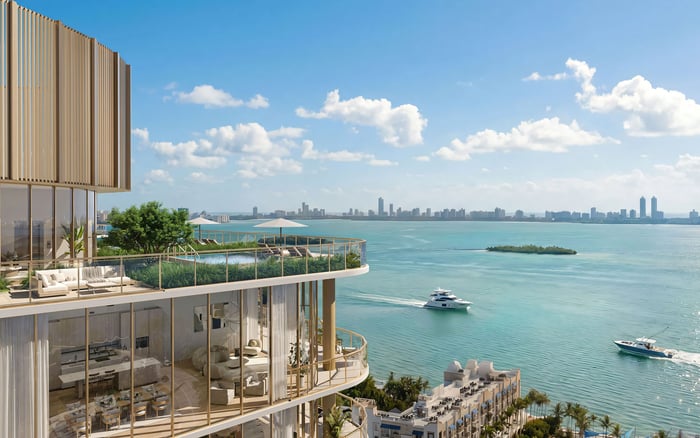
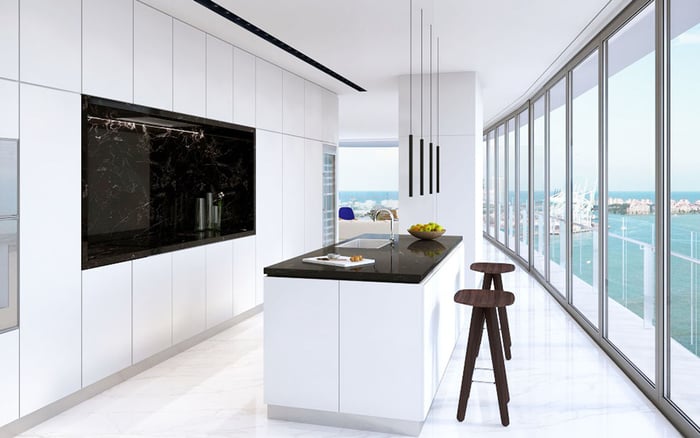
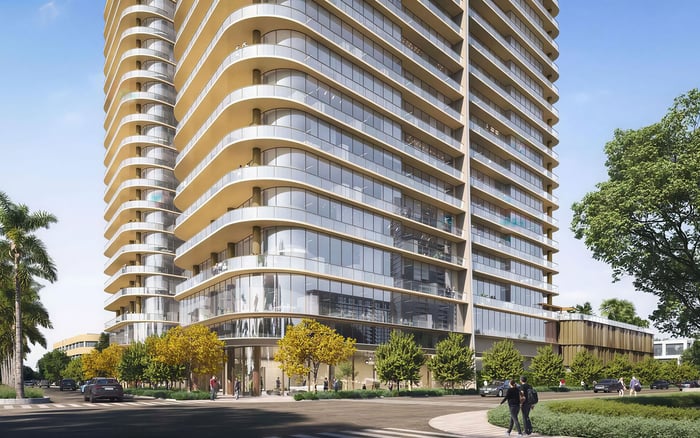
Five Miami residences offer distinctly different approaches to hosting, from resident-only guest suites to separately purchasable accommodations and flexible rental models. This buyer-focused ranking separates the appeal of each arrangement from the booking rights, event permissions, and costs that require written confirmation.
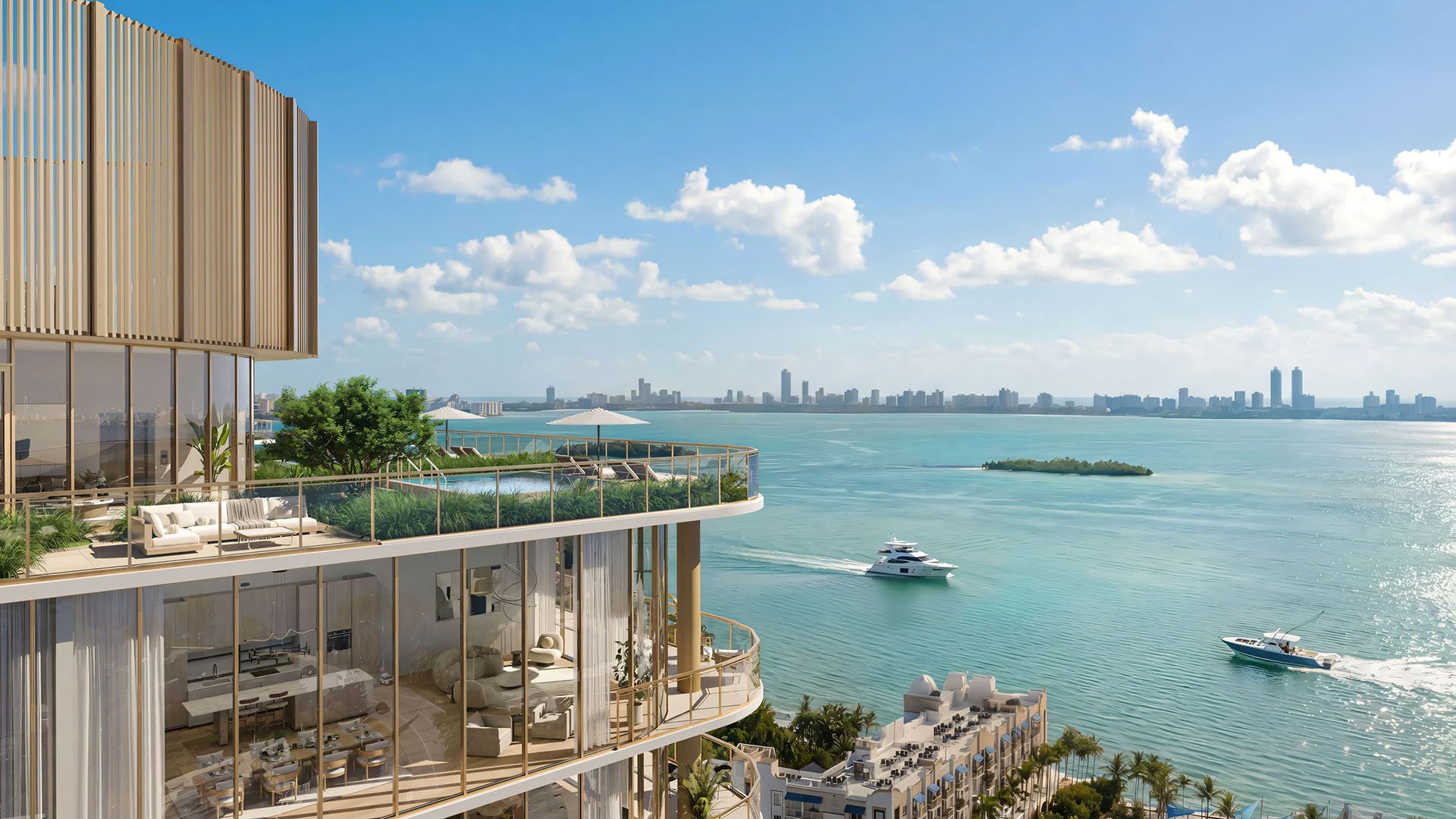
For a buyer who regularly welcomes family or entertains visiting friends, luxury is partly logistical. Where guests sleep, how they arrive, and whether a gathering can be reserved matter as much as the residence itself. Across Downtown Miami, Wynwood, and the Design District, those questions point to three distinct arrangements: resident-only guest suites, separately purchasable suites, and residences marketed for flexible rentals.
These benefits are not interchangeable. A resident-only suite does not establish booking priority; rental flexibility does not establish access to a dedicated guest-accommodation pool. Nor is a lounge automatically a private dining venue.
At Kempinski Residences Miami Design District, the stated resident-only suite inventory makes the hosting proposition especially tangible. The decisive next step is to understand the contractual rights behind that amenity.
The ranking below prioritizes fit for this buyer brief, not investment performance. Treat it as a buying shortlist, not confirmation of current availability or immediate occupancy. Confirm sales, completion, and occupancy status for each property.
1. Kempinski Residences Miami Design District: resident-only guest accommodation
Kempinski ranks first for its explicitly stated 17 guest suites reserved exclusively for residents. Alongside those suites, the development includes 132 private residences and six townhomes across two towers. For owners who want visiting family nearby without allocating another bedroom within their own home, this is the clearest dedicated guest-accommodation proposition in the group.
Advertised hospitality-trained staff, valet service, private beach service, and personalized resident assistance reinforce the service-led appeal. Exclusivity, however, does not guarantee availability. Booking windows, priority tiers, rates, cancellation terms, and maximum guest-suite stays remain unverified. Before counting on accommodation for a holiday visit, buyers should establish exactly how competing requests are handled.
2. Miami Design Residences by Fouquet’s: a guest-suite purchase option
Miami Design Residences by Fouquet’s reportedly offers buyers the option to purchase one of 17 guest suites for friends and family. It is expected to be fully residential, without a hotel component, and short-term rentals are reportedly restricted to preserve owners’ privacy. That combination makes it a strong fit for buyers seeking a more private family-hosting arrangement.
The crucial distinction is ownership rather than a communal booking pool. Buyers should not assume that every resident can reserve these suites or that purchase confers unrestricted use. Confirm suite availability, purchase eligibility, permitted occupants, ongoing charges, and any transfer conditions. Fouquet’s ranks second because its reported accommodation option is compelling but materially different from shared resident-only inventory.
3. NoMad Residences Wynwood: rental flexibility rather than verified guest suites
Ownership at NoMad is marketed with “no rental restrictions.” The development is described as comprising 329 furnished residences, with “no blackout dates” advertised for personal use or rental income. Its stated operating plan includes separate owner and short-term-guest lobbies with dedicated concierge services, potentially providing a useful separation between resident and visitor arrivals.
NoMad ranks third as an alternative hosting model, not as a verified guest-suite program. Listed amenities include a rooftop pool, spa, lounges, game room, meeting room, and fitness center, with hours subject to building regulations. These spaces suggest possibilities for spending time together; they do not establish event capacities, exclusive reservations, catering permissions, or party rights.
4. DUOS Wynwood: a specific short-term-stay framework
At 335 Northwest 28th Street, DUOS stands out for a concrete qualification within its stated rental framework: the zoning district is described as permitting short-term rentals with no minimum stay and a maximum stay of 30 days. Ownership is also marketed with “no short-term rental restrictions.”
The 30-day maximum is therefore essential to interpreting that broader language. DUOS ranks fourth for the specificity of the disclosed stay framework, not for an established guest-suite inventory or entertaining capacity. Buyers should reconcile the zoning statement, condominium documents, and management terms before planning repeat visits or longer guest stays.
5. Delano Residences & Hotel Miami: collection-specific rental rules
Delano is described as comprising 421 fully finished and furnished residences across two collections. The Delano Collection includes furnished suites and one- to two-bedroom units marketed without rental restrictions. The separate Delano Residences collection offers one- to three-bedroom homes and deeded office space, and reportedly prohibits daily rentals.
The collection designation is therefore central to any purchase decision. A suite in the Delano Collection is not the same as a resident guest-suite amenity, and one collection’s advertised flexibility should not be applied to the other. Delano ranks fifth because it offers distinct choices, but buyers must match the exact residence to their intended hosting pattern.
The most useful hosting brief begins with two calendars: overnight visits and social gatherings. A building may suit one beautifully without accommodating the other. No verified event-capacity comparison supports declaring a winner for private entertaining among these five.
For each residence, request written answers on maximum attendees, resident-presence requirements, outside catering, alcohol service, music, cleanup, security, and booking deposits. Distinguish overnight guests from dinner visitors: their registration and amenity rights may need separate confirmation.
When considering Delano Residences & Hotel Miami, start with the collection’s rental policy, then investigate guest access and event permissions separately. Rental permission alone establishes neither.
Apply the same discipline to a broader Wynwood search that includes Frida Kahlo Wynwood Residences: request the relevant agreements before comparing hosting rights. An address or brand name is no substitute for a written operating policy.
Ask for the declaration and amendments, guest-suite agreement where applicable, rental-management terms, guest-registration rules, event policies, fee schedules, and applicable municipal requirements. For each promised benefit, identify the document that establishes it and determine whether the terms can change.
For shared suites, prioritize advance-booking windows, competing-request procedures, annual usage limits, cancellation charges, and peak-period access. For purchasable suites, establish purchase and carrying costs alongside occupancy and transfer conditions. For rental-flexible homes, clarify owner-use procedures and management obligations rather than relying on a broad marketing phrase.
Comparable prices and annual guest-suite costs are not established here, so this ranking is not a value comparison. The strongest purchase is the one whose documented rights accommodate the buyer’s actual visits and gatherings, with costs understood in advance.
For a discreet conversation about matching a Miami residence to your hosting priorities, connect with MILLION.
If branded residences are on your mind — as a home or as an allocation — we would be glad to share what we are seeing, privately.
Begin a quiet conversationKempinski Residences Miami Design District ranks first for its stated 17 resident-only guest suites. That exclusivity does not establish booking priority or guaranteed availability.
Fouquet’s reportedly offers buyers the option to purchase one of 17 guest suites. These should not be treated as a communal reservation pool.
A dedicated resident guest-suite inventory is not verified. NoMad is included for its advertised rental flexibility rather than an established guest-suite program.
DUOS’s stated zoning framework permits short-term rentals with no minimum stay and a 30-day maximum. Buyers should confirm how that limit applies alongside condominium documents and management terms.
The Delano Collection is marketed without rental restrictions, while Delano Residences reportedly prohibits daily rentals. Buyers should confirm the rules for their specific collection and residence.
Verified event capacities and private-event rights are not established for these five projects. Listed lounges or meeting rooms alone do not support choosing a winner.
Confirm booking windows, priority procedures, rates, cancellation terms, and maximum stays. Resident-only access should not be interpreted as guaranteed access on a preferred date.
The shortlist does not establish current sales availability, completion, or occupancy status for every project. Confirm each property's status before making plans.
NoMad’s advertised lack of blackout dates for personal use or rental income does not establish unrestricted amenity access. Listed amenity hours remain subject to building regulations.
Request declarations and amendments, applicable guest-suite agreements, rental-management terms, registration rules, event policies, and fee schedules. Also confirm applicable municipal requirements.