Kempinski advertises a defined workspace program, while One Thousand Museum offers a completed architectural landmark. Neither property’s available disclosures establish generator-backed internet, making operational documentation essential for buyers who work from home.
For a buyer whose residence also serves as a base for investment decisions, confidential calls and international business, luxury includes the ability to work without unnecessary friction. A beautifully furnished lounge is not necessarily a private office. Building-wide WiFi is not a continuity commitment. And an emergency generator, however reassuring, does not establish which connections will remain available during an outage.
The comparison between Kempinski Residences Miami Design District and One Thousand Museum Downtown Miami turns on those distinctions. Kempinski has clearer advertised provisions for dedicated workspaces. One Thousand Museum is a completed architectural landmark. Neither property’s available disclosures establish generator-backed internet. The useful comparison is therefore not which building promises more effortless living, but which operating details a buyer can verify before committing.
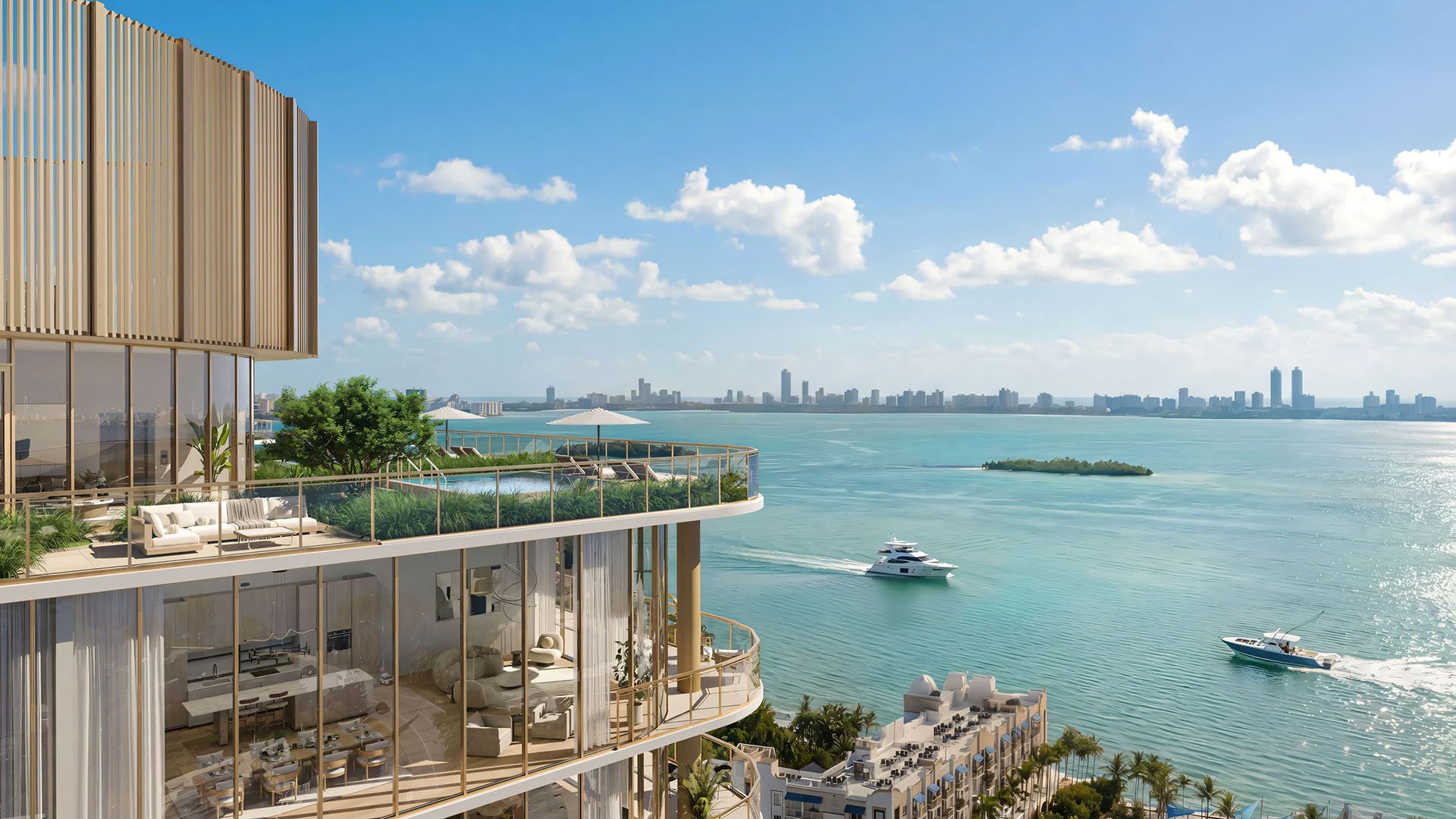
Planned for 3801 and 3883 Biscayne Boulevard, adjacent to the Design District, Kempinski Residences Miami Design District is a two-tower development with 132 private residences, six townhomes and 17 guest suites reserved exclusively for residents. Approximately 70,000 square feet of planned indoor and outdoor amenities span the towers, which are connected by an elevated amenity bridge.
The planned allocation matters to a working resident: health and wellness occupy the North Tower, while social, entertainment and business functions sit in the South Tower. Advertised South Tower spaces include a business center, conference room, meeting pods and maker space. Co-working space and private offices are also explicitly advertised.
That language gives buyers a concrete starting point. It does not establish how many offices will be available, whether residents may reserve recurring appointments, or whether confidential conversations will be acoustically protected. A private office warrants as much scrutiny of its access and use policies as of its finishes.
Emergency generators and WiFi throughout the building are also advertised. These are separate claims. Generator capacity, runtime and supported electrical loads are not specified, nor are internet speeds, providers, redundant connections or outage performance. Advertising both does not demonstrate that the network will remain powered during an interruption.
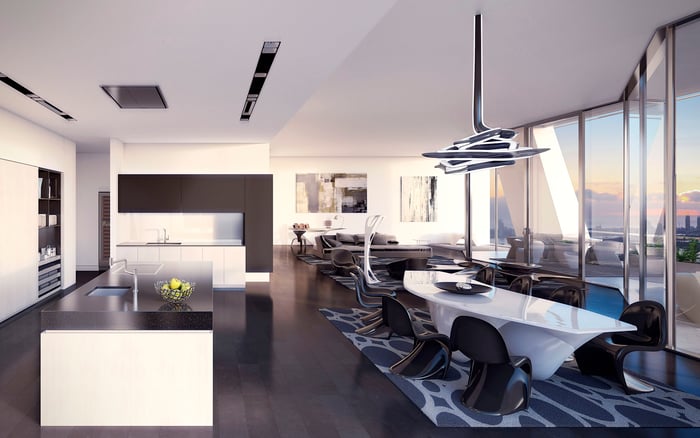
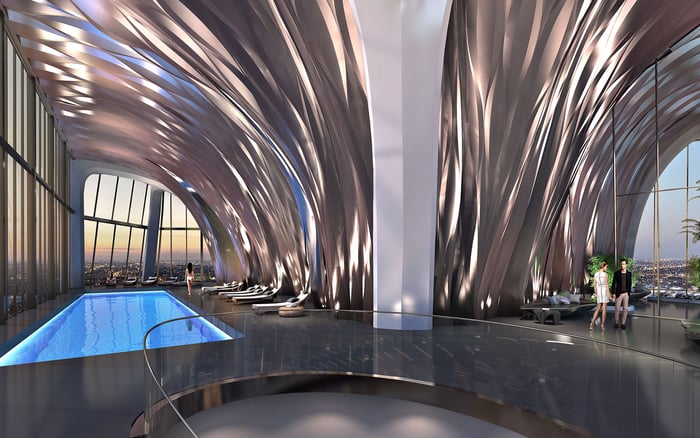
Completed in 2019, One Thousand Museum Downtown Miami is a 62-story residential tower designed by Zaha Hadid. Its curving exoskeleton gives the Biscayne Boulevard building, across from Museum Park, a distinctive architectural identity.
The amenities described for its uppermost floor include an aquatic center, leisure area and event space. Those uses should not be read as dedicated offices or bookable workrooms without supporting amenity rules. A business center, co-working space and private offices are not explicitly identified in the available disclosures. That is a limit of the disclosures, not evidence that such facilities are absent.
Nor do the available disclosures document telecom redundancy or generator-protected connectivity. Architectural sophistication cannot substitute for an operating specification. For a buyer assessing One Thousand Museum as a working residence, the next step is to request current building documentation and workspace policies-not to infer capabilities from the tower’s design or amenity stature.
The distinction between the properties is meaningful: Kempinski offers a planned workspace program to scrutinize before delivery; One Thousand Museum is an existing building whose current arrangements should be assessed directly.
The phrase generator-backed connectivity is useful only when its scope is clear. Buyers should ask which elements of the connection have protected power, how the transition between power sources is handled, and what remains dependent on infrastructure outside the building. Neither property’s disclosures answer that full set of questions.
A focused technical review should request:
Generator-backed circuit schedules: Identify whether telecom rooms, network equipment, workspace outlets and any in-residence equipment are included.
Battery-backup coverage: Ask which network components have interim power and whether the transition to generator supply has been tested.
Fuel and runtime specifications: Establish the stated operating duration, supported load assumptions and replenishment arrangements.
Carrier and connection diversity: Request details of available providers, separate connection paths and any documented failover configuration.
Testing and responsibility: Seek failover test records where available and clarify who maintains each part of the system.
These are diligence requests, not descriptions of either building’s installed systems. The objective is to replace a broad assurance with a precise account of what is protected, for how long and under whose supervision. A promise of WiFi coverage answers a different question from a promise of internet continuity.
For buyers handling sensitive material, a dedicated room is only the beginning. Request the booking policy, permitted hours, guest-access rules, call restrictions and any charges. Ask whether doors lock, whether conversations can be overheard and whether the network arrangements meet the resident’s own security requirements.
At Kempinski, the advertised mix of offices, meeting pods and a conference room makes those questions particularly relevant. Each space may serve a different working pattern, but the descriptions do not establish exclusive access or guaranteed availability. Nor should a maker space be assumed to function as a quiet meeting room.
At One Thousand Museum, leisure and event areas should remain in those categories unless current rules expressly support business use. A buyer who needs reliable daily privacy should evaluate the residence’s own working layout alongside any shared facilities. Shared amenities are most useful when their availability complements, rather than determines, the working day.
For buyers also considering Aston Martin Residences Downtown Miami, the same documentation standard should apply across the shortlist. This is a diligence principle, not a claim that the buildings share workspace or backup-power capabilities. Compare documented scope, not the prominence of an amenity label.
Before selecting a residence, define the actual requirement: occasional video calls, daily confidential meetings, or continued access during a power interruption. Then request a written response that separates planned features, current services and unconfirmed capabilities. For a planned development, distinguish the advertised program from the delivery specifications; for a completed tower, distinguish physical facilities from current operating policies.
Kempinski’s clearer advertised workspace offering deserves attention, but it does not establish superior telecom resilience. One Thousand Museum’s completed status permits a different inquiry, not an assumption of uninterrupted service. The decisive luxury is a residence whose documented arrangements fit the way its owner intends to live and work.
For a discreet conversation about matching your residence to your working life, connect with MILLION.
If branded residences are on your mind — as a home or as an allocation — we would be glad to share what we are seeing, privately.
Begin a quiet conversationA broker feature list advertises private offices and co-working space. These are planned amenities, not confirmation of current operations or guaranteed access.
No. Emergency generators and building-wide WiFi are advertised separately, without specifications establishing that the network is generator-backed.
The available engineering description does not document generator-protected connectivity or telecom redundancy. Buyers should request current operating specifications.
Advertised spaces include a business center, conference room, meeting pods and maker space. Their booking arrangements and operating policies require separate confirmation.
The available architectural description does not explicitly identify dedicated offices or co-working facilities. That omission does not establish that they are absent.
The 62-story tower was completed in 2019 and was designed by Zaha Hadid.
The two-tower development is planned for 3801 and 3883 Biscayne Boulevard, adjacent to Miami’s Design District.
Request generator-backed circuit schedules, network battery-backup coverage, fuel and runtime specifications, carrier-diversity details and failover test records where available.
Confirm booking rights, hours, guest access, charges, acoustic privacy and network arrangements. An advertised private office does not establish exclusive or recurring availability.
Kempinski has the clearer advertised program, including private offices and several planned business amenities. That distinction does not establish better telecom resilience.