A buyer-oriented comparison of Bentley Residences Sunny Isles and Regalia Sunny Isles Beach through the lens of privacy logistics, arrival choreography, parking allocation, and valet visibility.
In the upper tier of Sunny Isles living, privacy is often framed as a mood or a marketing promise. In practice, it is a systems question. How do you enter the property? Where do you pause? Who sees you arrive? How many points of overlap exist between residents, guests, staff, and amenities? Those are the questions that separate a genuinely discreet building from one that simply looks exclusive.
That is what makes the comparison between Bentley Residences Sunny Isles and Regalia Sunny Isles Beach so useful for a serious buyer. Both sit in the same rarefied coastal market. Both appeal to purchasers who expect a polished front-of-house experience. Yet the two properties seem to express different philosophies of arrival.
Bentley is conceived as a residential-only environment with privacy embedded in the mechanics of entry. Regalia, by contrast, reads more like a resort-influenced luxury tower, where the lobby remains a central social and operational threshold. Neither model is inherently better for every buyer. But they create distinctly different day-to-day realities.
Bentley’s strongest distinction is that the arrival sequence appears designed to reduce exposure from the moment a resident enters the property. The building centers on a private porte-cochère and direct elevator access, minimizing time spent in shared lobby space. That matters because the most public moment in luxury living is often not poolside or in a restaurant. It is the transition from street to home.
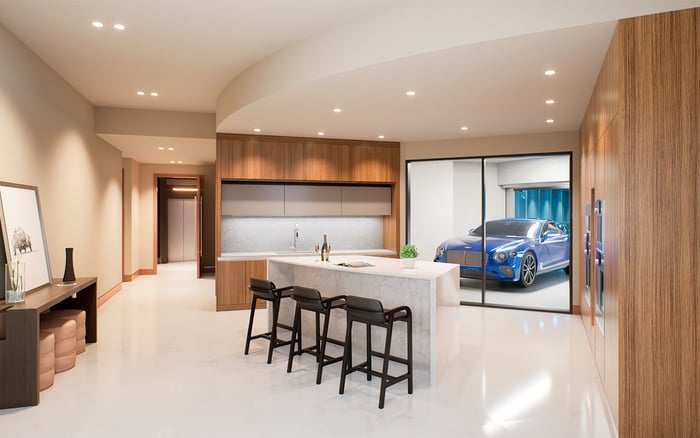
The project’s in-building vehicle system and integrated private garages extend that logic. Rather than relying on a conventional curbside handoff followed by a separate garage routine, Bentley emphasizes enclosed vehicle handling and direct vertical movement. It is a configuration intended to make arrival feel less performative and more controlled.
There is also a practical dimension to the privacy story. With roughly 2.5 parking spaces per residence, Bentley appears to offer an unusually generous allocation. That supports resident-focused parking logistics rather than a more compressed system in which space assignment and vehicle turnover become operational friction points. For households with multiple cars, visiting family, drivers, or collectors, that added capacity is not just a convenience. It can materially shape how smoothly the building functions day to day.
Bentley’s circulation strategy also appears to separate private living areas from amenity access more clearly, which can reduce resident and guest overlap. In a market where some branded towers prioritize social theater, Bentley’s concept aligns more closely with the quiet, insulated sensibility seen in highly private oceanfront addresses such as Arte Surfside or Apogee South Beach, where the arrival sequence itself is part of the value proposition.
Regalia takes a different approach. Its arrival model is framed around a more traditional main-lobby experience, with separate service or delivery access but without the same degree of isolated resident routing from drive to elevator. For some owners, that feels familiar and elegant. For others, it introduces more touchpoints than they would prefer.
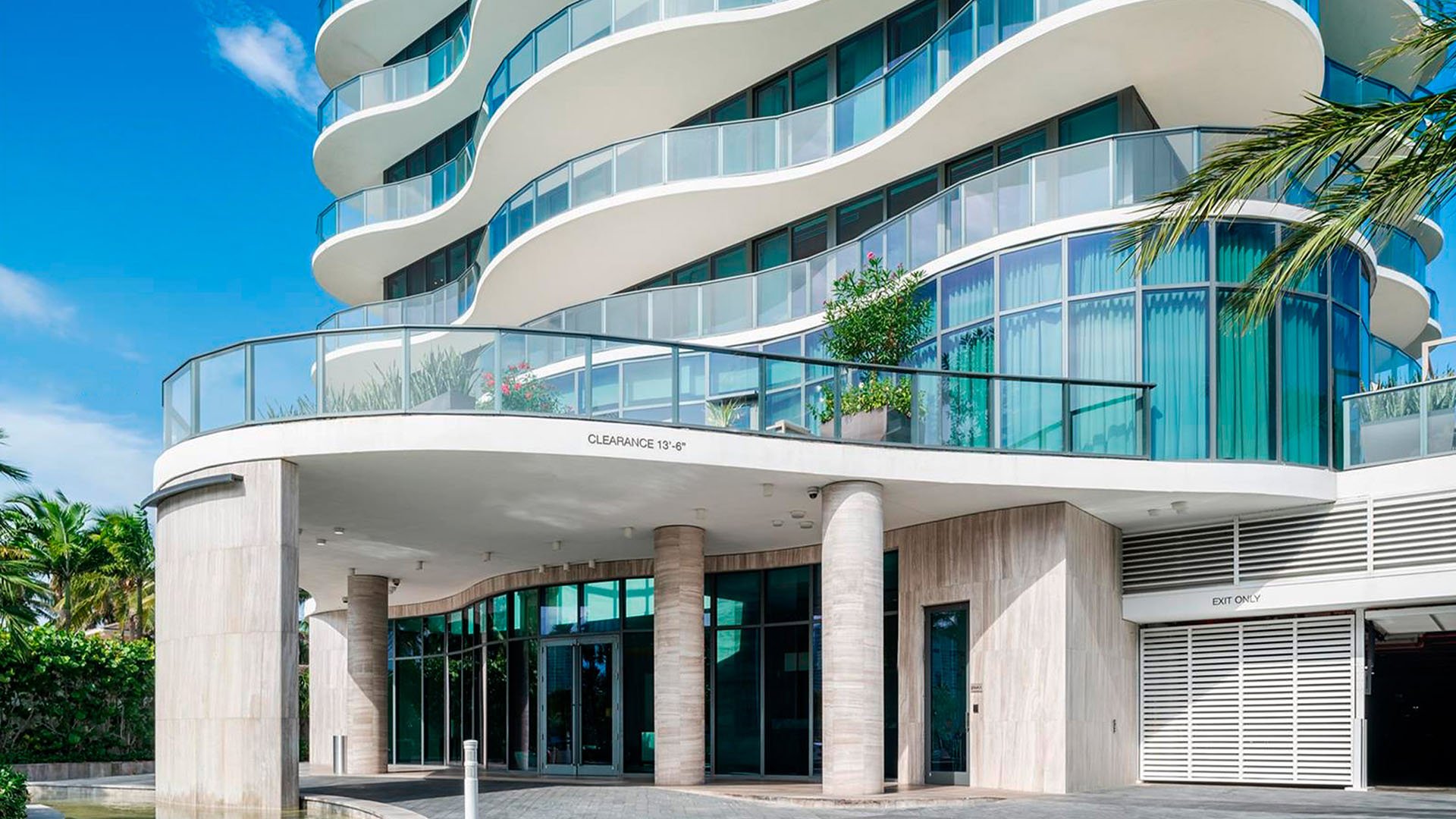
The valet experience is also understood as a ground-level pickup and drop-off system, with vehicles directed to a separate garage rather than to private in-residence or directly adjacent garages. That arrangement is entirely consistent with luxury hospitality norms. It can be efficient and gracious. But it is typically more visible, especially when the primary approach sits close to the main drive and street frontage.
That distinction matters on Collins Avenue. A more public-facing ground-floor orientation generally means greater visual exposure at the moment of arrival. If discretion is the brief, the difference between an exposed drop-off and a recessed private court is meaningful.
Regalia’s lobby character also appears more open and hotel-influenced, which can increase shared circulation. Add a resort-style amenity layout with more vertical integration, and the result is a building that may feel more animated in the common areas. Buyers who like a sense of service, ambience, and a visibly staffed front-of-house environment may find that appealing. It shares some of the social energy found at polished Sunny Isles neighbors such as Jade Signature Sunny Isles Beach or Turnberry Ocean Club Sunny Isles, where arrival is part of the building’s lifestyle expression as much as its privacy profile.
In this comparison, parking serves as a proxy for operational philosophy.
Bentley’s approximately 2.5 spaces per residence suggests a building planned around resident autonomy and vehicle accommodation. More spaces can mean simpler household logistics, less dependence on pooled valet management, and greater separation between resident parking and guest handling. That separation tends to support discretion.
Regalia is described as offering roughly 1 to 2 spaces per residence depending on unit type. That still falls within luxury norms, but it points to a different operating model. Parking and valet management appear more integrated across residents and guests, which can create a less insulated feel during peak arrival windows, weekends, or event-heavy periods.
For a buyer, the right question is not simply, How many spaces do I get? It is, How much of my daily movement depends on shared systems? Owners with staff, teenagers, multiple vehicles, or frequent out-of-town visitors should take that distinction seriously.
The most persuasive privacy advantage in Bentley’s concept is not a single amenity. It is the cumulative effect of several design decisions. Arrival is under cover and within the building footprint. The site planning is recessed, with a secondary-drive orientation that creates more distance from Collins Avenue visibility. Resident and guest parking functions are more clearly separated. A dedicated service approach further preserves the privacy of the main resident path.
Regalia, by contrast, appears more exposed at grade. Its orientation is more public-facing toward Collins Avenue, and its valet activity is more visible from the main drive. None of that makes it insecure or substandard. Both buildings operate within standard code requirements, and publicly disclosed materials do not establish a special certification advantage for either property. It simply means the lived experience of discretion is different.
That distinction becomes especially relevant for owners who value routine anonymity. High-profile residents, family offices, and buyers who prefer not to move through a lobby-centered environment will likely read Bentley’s planning as intentionally quieter.
Choose Bentley if your definition of luxury begins with controlled arrival, reduced visibility, and minimal overlap between your private life and the building’s public zones. It is the stronger fit for residents who want the architecture to do the work of discretion before staff intervention is required.
Choose Regalia if you appreciate a more classic luxury-tower rhythm, where valet, lobby presence, and amenity circulation are part of the building’s social texture. Some buyers do not want total seclusion. They want polish, presence, and a more hotel-adjacent sense of welcome.
In other words, this is not merely Bentley versus Regalia. It is residential insulation versus resort-style choreography. In Sunny Isles, that is a meaningful divide.
If privacy logistics are the primary brief, Bentley appears to hold the clearer architectural advantage. Its direct elevator orientation, enclosed vehicle handling, higher parking allocation, resident-focused circulation, and recessed arrival sequence create a more insulated experience from curb to residence.
Regalia remains compelling for buyers who value a refined, lobby-led entry and a more open luxury atmosphere. But on the narrow question posed here-privacy logistics, arrivals, and valet realities-the center of gravity tilts toward Bentley.
The caveat is simple. Exact staffing ratios, valet response times, surveillance layouts, and other security protocols are not publicly disclosed in detail for either property. So the smartest way to evaluate both is to tour them with attention not only to finishes, but to movement. Count the thresholds. Notice the sightlines. Watch where residents, visitors, and service paths converge.
Which building appears more private at arrival? Bentley appears more privacy-driven because its approach is designed around enclosed vehicle handling and direct elevator access.
Does Regalia have valet? Yes. Its valet is understood as a ground-level pickup and drop-off experience tied to a separate garage structure.
Is Bentley’s arrival less visible from the street? Broadly, yes. Its recessed planning and under-cover approach are intended to reduce Collins Avenue exposure.
Does Regalia feel more like a hotel-style residence? In circulation terms, it appears closer to that model, with a more prominent lobby and more shared arrival space.
How does parking differ between the two? Bentley is described at about 2.5 spaces per residence, while Regalia is generally framed around roughly 1 to 2 spaces.
Why does parking matter for privacy? Parking affects how often residents rely on shared valet systems and how much their routine movement intersects with others.
Is Bentley better for multi-car households? On the disclosed parking allocation, it appears better suited to households that want more resident-dedicated vehicle capacity.
Are either of these buildings presented as having unique public security certifications? No special public-record certification distinction is established between them in the available information.
Which building is likely better for buyers who enjoy a social arrival atmosphere? Regalia may appeal more to buyers who prefer a polished, lobby-centered welcome and a livelier front-of-house feel.
What should a serious buyer focus on during a tour? Pay close attention to the route from car to residence, sightlines at arrival, and where resident, guest, and service circulation overlap.
For a confidential assessment and a building-by-building shortlist, connect with MILLION Luxury.
If branded residences are on your mind — as a home or as an allocation — we would be glad to share what we are seeing, privately.
Begin a quiet conversation