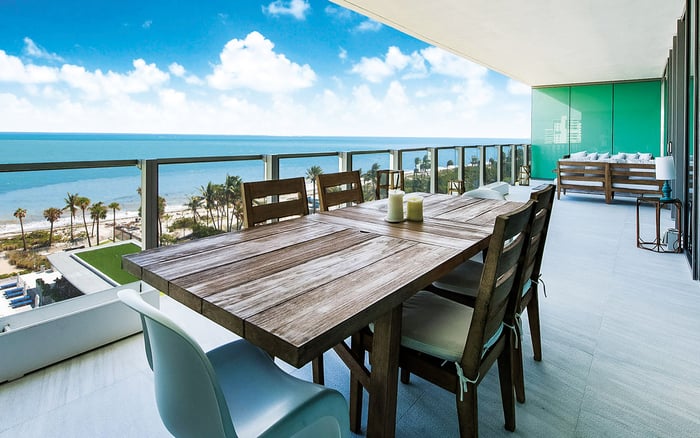
A disciplined Key Biscayne purchase begins below the building level. Resale depth, line-specific evidence, view durability, and carrying costs should be assessed together before a buyer assigns a premium.

A Key Biscayne condominium purchase can appear straightforward at the building level: select an address, compare asking prices, and choose the residence with the most compelling finish package. For a luxury buyer, however, the more consequential analysis often begins one level deeper. The relevant market is not merely the building, but the specific line, elevation, exposure, condition, and view category a future buyer will compare.
That distinction changes the ownership equation. Two residences under the same roof may not be close substitutes if one offers a more desirable orientation, a more efficient plan, or a view that is materially harder to replicate. Conversely, an exceptional interior may not fully compensate for an outlook or layout that narrows the future buyer pool.
This Buyer's Guide framework treats resale, line selection, and view scarcity as interconnected variables. The objective is not simply to identify the most beautiful residence today. It is to understand how readily the asset can be explained, compared, and valued when ownership priorities change.
Resale depth is the pool of plausible buyers and competing residences surrounding a particular asset. It should not be confused with the number of listings visible at a given moment. A line may appear scarce because owners rarely sell, demand absorbs opportunities quickly, or the underlying buyer pool is narrow. Each scenario carries very different implications.
Begin by separating direct substitutes from loose comparisons. A direct substitute should resemble the target in the attributes that materially shape the ownership experience: bedroom utility, floor position, orientation, outdoor space, parking arrangement, renovation level, and view. Broader building sales can provide context, but they should not automatically determine value.
A buyer considering Oceana Key Biscayne should therefore evaluate each available residence as a distinct proposition rather than treating every transaction at the address as interchangeable. The same discipline applies when comparing island ownership with Apogee South Beach. The purpose is not to declare one market superior, but to determine which future buyer profile is most likely to value the selected combination of privacy, plan, outlook, and location.
A unit line is the architectural framework through which ownership is experienced. Before discussing finishes, map the arrival sequence, room proportions, circulation, bedroom separation, service access, storage, and relationship between the interiors and terraces. A plan that photographs beautifully can still impose compromises in daily life.
Orientation warrants equally close attention. When possible, visit at more than one time of day. Observe the light, glare, privacy, neighboring sightlines, and whether the primary view can be enjoyed from the rooms that matter most. A wide panorama from the terrace is less compelling if the principal living area has little visual connection to it.
Use labels such as high floor, low floor, flow-through unit, water view, and balcony only as screening tools. Each term requires verification at the residence level. Floor height alone does not guarantee privacy or a superior outlook, and a water-facing description does not convey the angle, framing, or experience from seated eye level.
View quality describes what the residence offers now. View scarcity asks how difficult that experience would be to replace. The second question is often more important when deciding whether to pay a premium.
Evaluate the outlook in layers. Consider the primary focal point, breadth of the view, foreground quality, nighttime character, privacy, and the extent to which the outlook is available from multiple rooms. Then test its durability. Buyers should review the surrounding context and commission appropriate professional diligence rather than assume any view will remain unchanged.
The term waterfront can also obscure meaningful differences. Water may serve as a direct visual centerpiece, a partial side outlook, or simply part of the address narrative. Price the experience the residence actually delivers, not the category attached to it.
Cross-market comparisons can sharpen judgment. A purchaser weighing Key Biscayne against Park Grove Coconut Grove or Una Residences Brickell can assess how each candidate expresses water, skyline, greenery, privacy, and arrival. Such comparisons are most useful as tests of preference, not as automatic pricing equivalents.
A rational offer should account for more than the acquisition price. Model recurring carrying costs, anticipated improvements, insurance considerations, financing terms when applicable, transaction expenses, and a reserve for future work. Obtain current documents and professional advice for each component, as assumptions can materially alter the result.
Next, create three exit cases. In the first, the residence competes with few close substitutes. In the second, several comparable units become available. In the third, the future buyer discounts the feature for which today’s buyer paid the largest premium. This is not a forecast, but a way to expose concentration risk.
Then ask whether the premium is attached to something durable. A thoughtful floor plan, meaningful privacy, and a genuinely difficult-to-reproduce outlook may remain legible to future buyers. Highly personal finishes can hold substantial value for the present owner while contributing less to resale. That distinction helps separate lifestyle expenditure from asset value.
The strongest negotiation narrative is precise. Rather than arguing that the building is expensive or inexpensive, identify how the target compares with its closest substitutes. Account for floor, orientation, condition, terrace usability, privacy, and any functional compromise. Avoid relying on price per square foot alone when residences deliver materially different experiences.
Request the documents needed to test the complete ownership picture. With qualified advisers, review association materials, financial information, insurance documentation, rules, pending work, and any obligations that may affect use or cost. Inspect the residence and confirm that the features driving the premium are present, usable, and consistent with the buyer’s expectations.
Finally, write a concise investment thesis before signing: why this line, why this view, why this price, and who is the likely next buyer? If the thesis depends primarily on décor or optimistic resale assumptions, reconsider the premium. If it rests on a coherent plan, a scarce experience, and manageable ownership costs, the decision is better grounded.
What does resale depth mean for a Key Biscayne condo? It is the likely pool of future buyers and close substitutes for the specific residence, not simply the level of activity across the building.
Why can two units in the same building trade differently? Floor position, orientation, plan, condition, privacy, terrace utility, and view can make them imperfect substitutes.
Should price per square foot drive the offer? It is a useful reference, but it should be adjusted for the residence-level attributes that shape utility and scarcity.
How should a buyer assess a unit line? Study circulation, room proportions, bedroom separation, storage, service access, exposure, and the connection to outdoor space.
Is a higher floor always more valuable? No. Height should be evaluated alongside privacy, glare, wind exposure, sightlines, elevator reliance, and the actual view.
How can view scarcity be tested? Compare the outlook with realistic substitutes and investigate whether surrounding conditions could affect its durability.
Do renovations fully translate into resale value? Not necessarily. Personal finishes may enhance present enjoyment while contributing less to what a future buyer is willing to pay.
What documents deserve attention before purchase? Buyers should review current association, financial, insurance, rule, and property-condition materials with qualified professionals.
Why model several exit scenarios? Multiple cases reveal how competition, carrying costs, and changing buyer preferences could affect an eventual sale.
What should a buyer decide before negotiating? Define the maximum premium justified by the line, view, condition, and ownership costs, then keep the offer aligned with that thesis.
For a confidential assessment and a building-by-building shortlist, connect with MILLION.
If branded residences are on your mind — as a home or as an allocation — we would be glad to share what we are seeing, privately.
Begin a quiet conversation