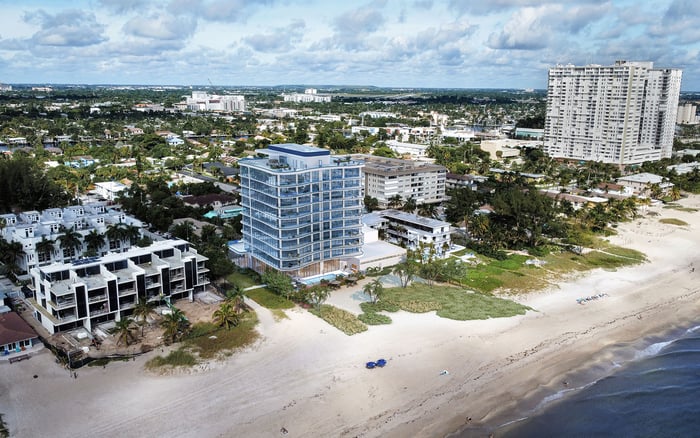
A practical operating guide for Pompano Beach buyers who value predictable airport transfers, disciplined driver staging, and dependable lock-and-leave ownership.

For an owner who moves between homes, the quality of a residence is measured partly by what happens before arrival and after departure. The most revealing questions are often operational: Where will the chauffeur wait? Who can admit a home-watch professional? What happens when a delayed flight overlaps with event-week traffic? Can luggage move from vehicle to residence without improvisation?
These considerations deserve the same scrutiny as views, finishes, and floor plans. A polished ownership plan begins with coordination rather than a quoted drive time. Airport procedures, roadway conditions, baggage delivery, and building access can change, so buyers should verify each part of the journey with the relevant operator before relying on it.
This is a practical lens through which to compare residences such as Armani Casa Residences Pompano Beach and The Ritz-Carlton Residences® Pompano Beach. The decisive issue is not a brand promise but whether the building’s current procedures suit the owner’s actual travel pattern.
For a lock-and-leave owner, dependable handoffs matter as much as elegant arrivals.
An airport pickup has several moving parts: the traveler’s actual readiness, luggage delivery, the assigned meeting point, the driver’s permitted waiting location, and the vehicle’s route into the terminal area. Treating scheduled touchdown as the sole timing reference can create avoidable friction.
Before travel, confirm the current pickup instructions shown by the airport, transportation provider, or booking service. The traveler and driver should agree on a live communication method and a clear trigger for approaching the pickup area. If the assigned location changes, follow the current instruction rather than relying on a meeting point saved from an earlier trip.
Buyers who expect frequent private-car service should also distinguish between curbside collection and an inside meet-and-greet. Ask the operator where the driver may wait, where the traveler will be greeted, how parking is handled, and which charges are included. The answers should be reconfirmed for each important journey because operating procedures can change.
A prearranged sedan, a rideshare pickup, and a private pickup may follow different procedures. The correct approach is to verify the rules that apply to the selected vehicle and service on the day of travel. A driver should not be asked to improvise a waiting location or remain where staging is not permitted.
For families, guests unfamiliar with the airport, or travelers carrying substantial luggage, an inside greeting may offer a more composed sequence. Specify the passenger name, mobile contact, luggage needs, vehicle capacity, and meeting point before travel day. If several vehicles are involved, assign each passenger group and driver in advance.
Vehicle dimensions also deserve attention when a larger van, coach, or specialty vehicle is planned. Confirm clearances, loading access, and the current terminal procedure directly with the relevant airport and transportation operator before the movement.
Event-week travel should not be reduced to a guaranteed drive time. Roadway conditions, terminal activity, baggage readiness, building circulation, and driver availability can all affect the sequence. A more useful plan defines decision points and responsibilities rather than promising an exact duration.
For a high-stakes departure, the owner, concierge, and driver should agree in advance on the pickup window, luggage-down time, primary contact, and fallback procedure. The buffer should reflect the owner’s tolerance for uncertainty and be reviewed against current conditions close to departure.
A rehearsal can reveal more than a theoretical estimate. Walk the route from the residence to the vehicle, review the property exit, confirm where a driver can pause, and identify who will intervene if access is delayed. Record the handoffs that need improvement rather than treating one successful trip as a permanent benchmark.
A buyer comparing W Pompano Beach Hotel & Residences with Waldorf Astoria Residences Pompano Beach should request current, building-specific answers. Confirm lobby coverage, controlled-access procedures, valet availability, guest-driver rules, and the process for admitting an owner’s service providers.
Ask to walk through a late arrival and an early departure. Where may a chauffeur pause without disrupting circulation? Who receives advance vehicle details? How is a guest handled if the owner is delayed? What is the procedure for oversized luggage, deliveries, or multiple vehicles? Document the answers and verify them again before periods of heavy travel.
For an oceanfront residence, buyers should also ask how the building coordinates access for inspections, cleaning, maintenance, and urgent service during an owner’s absence. The relevant lifestyle advantage is not simply the freedom to leave. It is a clear chain of responsibility for the residence, authorized vendors, and vehicle handoffs.
Before purchase, determine whether the building permits the owner’s preferred property-checking provider, how credentials are recorded, where keys or digital permissions are controlled, and who receives an exception alert. Do not assume that a vendor accepted at one property will follow the same process at another.
A concise second-home operating brief should identify primary and backup contacts, approved visitors, the property-check schedule, access authorization, the urgent-maintenance approval process, and post-visit reporting expectations. It should also state who may move a vehicle, accept a delivery, or authorize work when the owner cannot be reached.
Test the procedures before they are needed. Conduct an airport pickup rehearsal, a vendor-entry exercise, and an after-hours access review. Reconfirm the arrangements before a major event or group arrival, particularly when several parties must coordinate.
Before committing, ask the sales or management team for the current written rules governing valet operations, private chauffeurs, rideshare collection, guest vehicles, and third-party property checks. Confirm whether parking, staging, key custody, vendor entry, or after-hours assistance carries an additional charge. Separate what the building provides from what the owner must arrange privately.
Then align the residence plan with the transportation plan. A refined experience depends on precise handoffs: the traveler signals readiness, the driver follows the current pickup instruction, and the building is prepared for arrival. When those responsibilities are resolved in advance, lock-and-leave ownership can become more orderly and predictable.
For discreet guidance on selecting a Pompano Beach residence around your travel and ownership routine, connect with MILLION.
If branded residences are on your mind — as a home or as an allocation — we would be glad to share what we are seeing, privately.
Begin a quiet conversationUse the traveler’s actual readiness, luggage status, and current pickup instructions rather than scheduled touchdown alone.
No. The traveler and driver should follow the current airport or booking-service instruction because pickup procedures can change.
Ask where the driver may wait, where the traveler will be greeted, how parking works, and which charges are included.
Use a flexible buffer and define responsibilities, communication steps, and fallback procedures instead of relying on a guaranteed drive time.
It can expose weak handoffs between the residence, vehicle, property exit, and traveler before an important trip.
Verify access controls, lobby coverage, valet availability, guest-driver rules, and the process for admitting authorized service providers.
Confirm where the driver may pause or wait and how the building receives advance vehicle details.
Include contacts, approved visitors, access permissions, property-check schedules, maintenance authority, and reporting expectations.
No. Buyers should verify the building’s current vendor-entry and credentialing procedures before selecting a provider.
Ask whether parking, staging, key custody, vendor entry, and after-hours assistance are included or separately charged.